
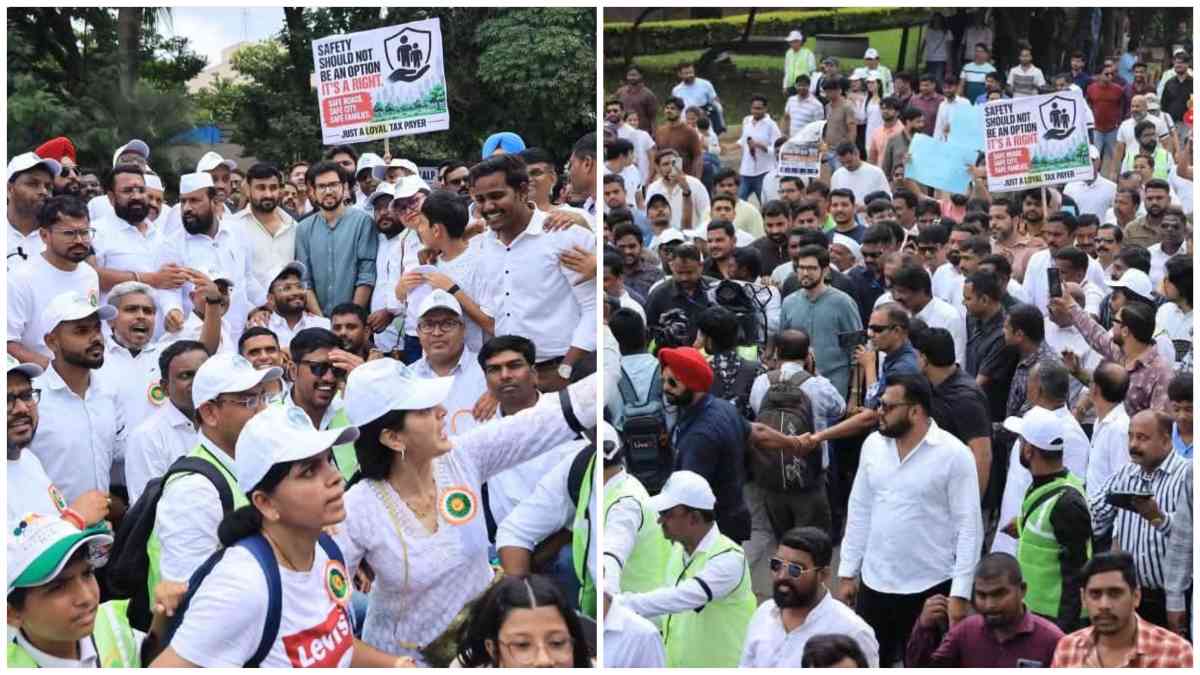

Pune: In an unprecedented display of collective civic outrage, thousands of software engineers, corporate employees, and resident welfare associations (RWAs) from Hinjawadi, Maan, Marunji, and Mhalunge took to the streets on Sunday morning, September 6, 2026, protesting the acute collapse of basic infrastructure across Rajiv Gandhi Infotech Park. Spearheaded by the Smart City Sankalp Morcha Committee, the peaceful march commenced from Infosys Circle in Hinjawadi Phase 1, with participants waving black flags and carrying placards reading 'No Road, No Tax', 'Basic Infrastructure Now', and 'It's Now or Never'. For official town planning blueprints, regional transit updates, and metropolitan road works, visit the Pune Metropolitan Region Development Authority (PMRDA) Portal.
Aaditya Thackeray Joins Tech Workforce on the Ground
Shiv Sena (UBT) leader and former state minister Aaditya Thackeray arrived at Infosys Circle to join the marching professionals, lending high-profile political backing to the grassroots movement:
"Today is not a political demonstration; it is a collective cry of frustration from citizens and IT professionals who power the state's economy. In 2026, residents in India's premier wealth-creation IT corridor are forced to hit the streets to demand basic drinking water, waste management, and pothole-free roads. What kind of regime is this?"— Aaditya Thackeray, Shiv Sena (UBT) Leader
Thackeray lashed out at Chief Minister Devendra Fadnavis, alleging that while the elevated Pune Metro Line 3 infrastructure between Hinjawadi and Shivajinagar is practically completed and undergoing trial runs, commercial operations remain stalled solely because the government is waiting for VIP schedules for ceremonial inaugurations. He also condemned the alleged preventive house arrest of vocal housing society activists by police ahead of ministerial reviews, terming it an unconstitutional tactic to suppress legitimate civic dissent.
The Non-Negotiable 9-Point Charter of Demands
Agitation convenors and IT workforce representatives submitted a detailed charter demanding immediate time-bound solutions:
- Elimination of Potholes: Comprehensive milling and permanent asphalt resurfacing of the spine corridors between Wakad, Bhumkar Chowk, Shivaji Chowk, and Phase 3.
- Pedestrian Safety: Construction of continuous, encroachment-free paved walkways and functional street lighting along all main corridors.
- Immediate Metro Commissioning: Immediate opening of operational metro stretches to remove thousands of private vehicles from choked arterial roads.
- Municipal Water Supply: Reliable piped potable water delivery to end the stranglehold of private water tanker operators charging exorbitant rates to housing societies.
- Solid Waste Management: Daily municipal door-to-door trash collection and an immediate halt to open roadside garbage fires.
- Stormwater Drainage: Desilting and channelization of culverts along the Mula River basin to eliminate monsoon road flooding.
Corporate Exodus Warnings and Commuter Fatigue
Local industry observers and tech employees emphasized that travelling a 4-km stretch from Wakad into Hinjawadi Phase 2 and Phase 3 routinely takes between 75 to 110 minutes during peak hours. Protesters warned that unless basic utilities and road connectivity are restored on a war footing, multinational enterprises will follow automobile vendors in Chakan by diverting their capital expansions to competing tech hubs in Bengaluru, Hyderabad, and Chennai, eroding Pune's IT supremacy.
Frequently Asked Questions
Ketan
adminPassionate journalist and digital news editor committed to delivering accurate, timely, and fact-checked news.
Related Articles

Latest Articles

Trump, Tech Giants Ink Voluntary AI Pact Amid Glob...
Oct 01, 2026
Khanna Targets 'Recursive' AI with Landmark Safety...
Oct 01, 2026
Election Commission–SIR Row: INDIA Bloc Announces...
Oct 01, 2026
WHO Unveils Critical Global Guidance to Combat Hea...
Oct 01, 2026
Comments (0)
Leave a Comment
No comments yet. Be the first to comment!