

Political and Civic Confrontation in Delhi
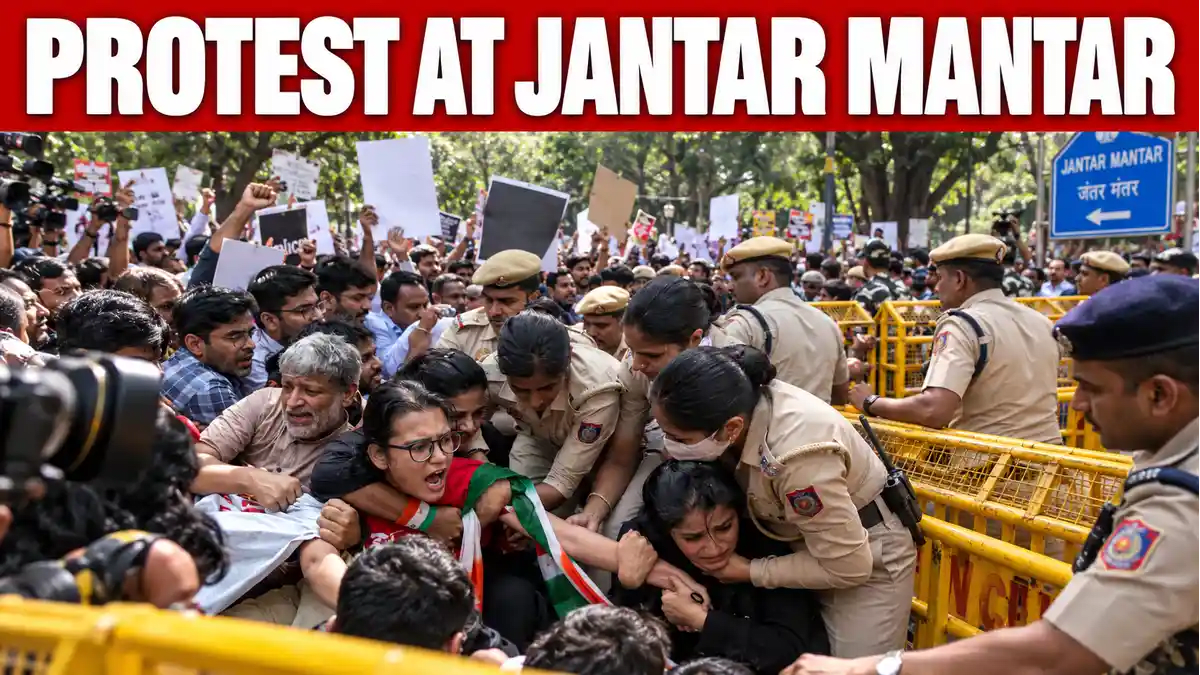
NEW DELHI: A political and civic confrontation over India's electoral rolls moved to the streets of Delhi on October 2, as opposition parties, student organisations and civil-society groups attempted to gather near Jantar Mantar demanding the resignation of Chief Election Commissioner Gyanesh Kumar.
Delhi Police stopped protesters from reaching the designated protest site after refusing permission for the gathering. Barricades were placed across central Delhi and large numbers of police and security personnel were deployed. By the end of the day, reports said around 1,000 people or more had been detained across the capital.
What Happened in Delhi?
The protest was scheduled for Jantar Mantar on October 2, with participation planned by the Aam Aadmi Party (AAP), AISA, SFI, NSUI, Indian Youth Congress and other student and youth organisations. Police had already stated that permission for the demonstration had not been granted. Among those detained were AAP leaders including Atishi and Saurabh Bharadwaj, along with leaders and activists associated with Left parties, Congress organisations and student groups.
How Many People Were Detained?
The exact figure varied across reports. Hindustan Times reported police sources put the number at around 1,000, including approximately 750 around Jantar Mantar and another 400 from other parts of Delhi. India Today cited Delhi Police sources at around 1,100 across the city. PTI, carried by NDTV, reported nearly 1,000 people were detained. Many of those detained were subsequently released.
Why Are Protesters Demanding Resignation?
The protest is rooted in a wider dispute over the Special Intensive Revision (SIR) of electoral rolls. Opposition parties and activist groups have alleged irregularities including deletion of eligible voters. They have used these allegations to demand accountability from the Election Commission and Kumar's resignation. These claims remain politically contested. The Election Commission maintains that roll revision is part of its statutory and constitutional responsibilities.
Why Has SIR Become Such a Major Issue?
Electoral rolls are the foundation of voting. The legal framework is based on Article 324, Representation of the People Act and Registration of Electors Rules. If an eligible voter is missing from final roll, that person can face difficulties exercising franchise. The central challenge: How can authorities clean electoral rolls without accidentally excluding eligible voters?
Election Commission Announces Corrective Measures
Reuters reported on Sept 26 that EC ordered a review of its voter-roll software after concerns were raised. A committee including senior election official and independent tech expert was announced. According to recent reporting, a special enrolment drive has been ordered in 20 states and UTs, with officials instructed to compare rolls before and after SIR and identify missing eligible voters.
Delhi Security Measures
According to Hindustan Times, entry and exit at 12 Metro stations were temporarily closed including Rajiv Chowk, Central Secretariat, Janpath, Patel Chowk and Mandi House. Road movement around Jantar Mantar, Parliament Street and Ashoka Road was also affected.
What Happens Next?
Focus will shift back from streets to electoral-roll process. Key questions are whether voters wrongly excluded can be restored, whether EC's software review produces further changes, and whether parties and election authorities can resolve differences through institutional mechanisms. For voters, checking whether their name appears correctly on electoral roll remains more important than political slogans.
Frequently Asked Questions
Ketan
Editor-in-ChiefPassionate journalist and digital news editor committed to delivering accurate, timely, and fact-checked news.














Comments (0)
Leave a Comment
No comments yet. Be the first to comment!