
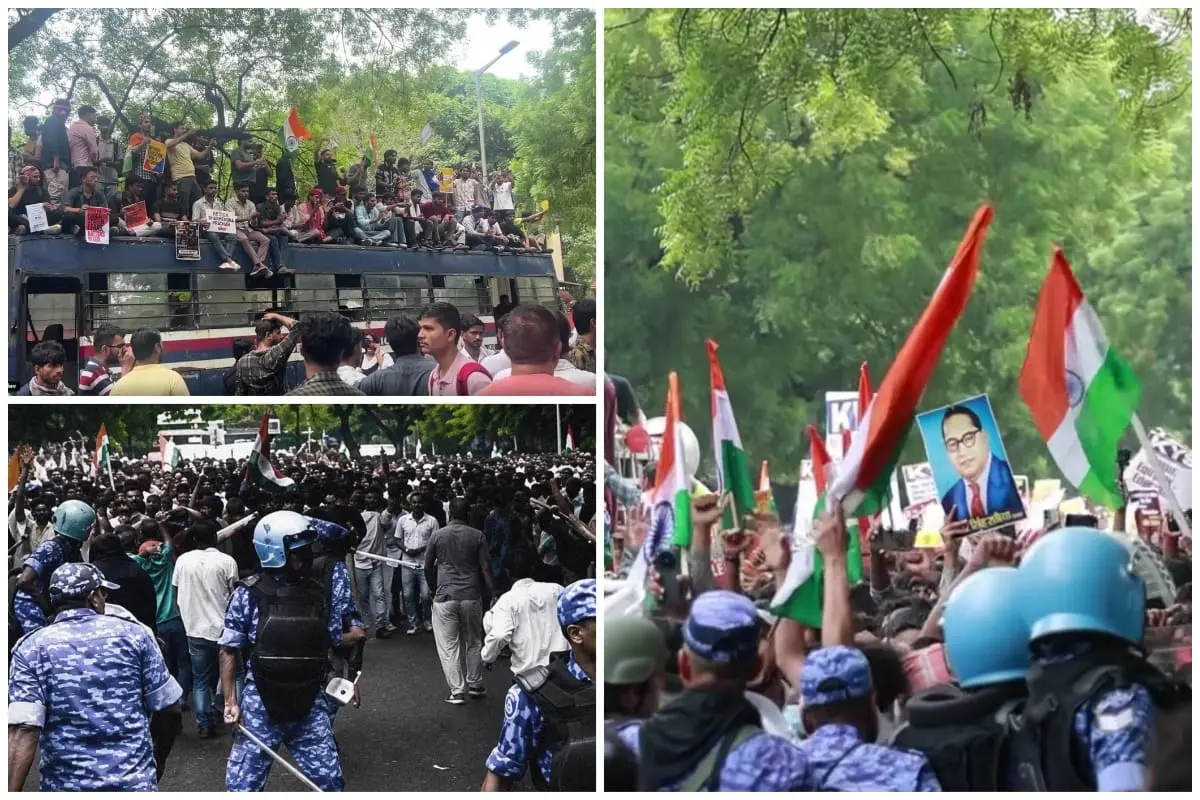

The student-led 'Parliament March' in New Delhi has triggered significant political developments, prompting the Central Government to open dialogue with representatives of the Cockroach Janta Party (CJP). The large turnout at the demonstration also dominated proceedings in Parliament, where opposition leaders raised concerns over student issues and examination-related controversies.
Government Begins Talks With CJP Representatives
Following the demonstration, the government initiated discussions with CJP representatives in an effort to address the concerns raised during the protest. Union Health Minister and Leader of the House in the Rajya Sabha J.P. Nadda met with CJP spokespersons Saurabh Das and Ashutosh Danka to hear the organisation's demands. Officials have not yet disclosed the outcome of the meeting, but it marks the first formal engagement between the government and the protest organisers.
Parliament Witnesses Heated Debate
The issue quickly reached Parliament, where Leader of the Opposition in the Rajya Sabha Mallikarjun Kharge criticised the government's handling of student concerns and examination-related issues. Amid repeated disruptions and protests by opposition members, proceedings in both Houses were affected. The Lok Sabha witnessed multiple adjournments as members continued to raise the matter.
Protest Draws National Attention
The Parliament March witnessed participation from students and youth groups from several states. Organisers described the gathering as one of the largest demonstrations in recent months, with participants carrying the national flag and demanding greater accountability over examination reforms and student welfare.
The scale of the protest led to heightened security arrangements around central Delhi. Authorities implemented traffic diversions and crowd-management measures in several areas to maintain public order during the demonstration.
Allegations Over Police Action
CJP representatives alleged that police used tear gas and force to disperse protesters gathered near Jantar Mantar. They also claimed internet connectivity was disrupted in parts of the protest area. These allegations have been made by protest organisers and political leaders. Authorities have not issued a detailed public response addressing each specific allegation at the time of publication.
Political Reactions Intensify
BJP MP Kangana Ranaut described the ongoing protest as an attempt to pressure the government, referring to it as 'arm-twisting' during her remarks to the media. Her comments triggered criticism from opposition parties and several student organisations.
Samajwadi Party chief Akhilesh Yadav accused the government of ignoring the concerns of students and failing to adequately address examination controversies. He urged the Centre to respond with transparency and accountability instead of confrontation.
Government's Changing Approach
Political observers believe the decision to engage in dialogue reflects the government's willingness to open communication channels after the protest gained widespread public attention. While officials have not announced any immediate policy decisions, the talks are being viewed as an important first step toward addressing the demands presented by the protesters.
What Happens Next?
With discussions now underway, attention will shift to whether the negotiations produce any concrete commitments from the government. Student organisations have indicated that future decisions regarding the movement will depend on the outcome of these talks. Meanwhile, Parliament is expected to continue witnessing political debate over examination reforms and youth-related issues during the ongoing session.
Frequently Asked Questions
Ketan
adminPassionate journalist and digital news editor committed to delivering accurate, timely, and fact-checked news.
Related Articles

Latest Articles

Trump, Tech Giants Ink Voluntary AI Pact Amid Glob...
Oct 01, 2026
Khanna Targets 'Recursive' AI with Landmark Safety...
Oct 01, 2026
Election Commission–SIR Row: INDIA Bloc Announces...
Oct 01, 2026
WHO Unveils Critical Global Guidance to Combat Hea...
Oct 01, 2026
Comments (0)
Leave a Comment
No comments yet. Be the first to comment!