
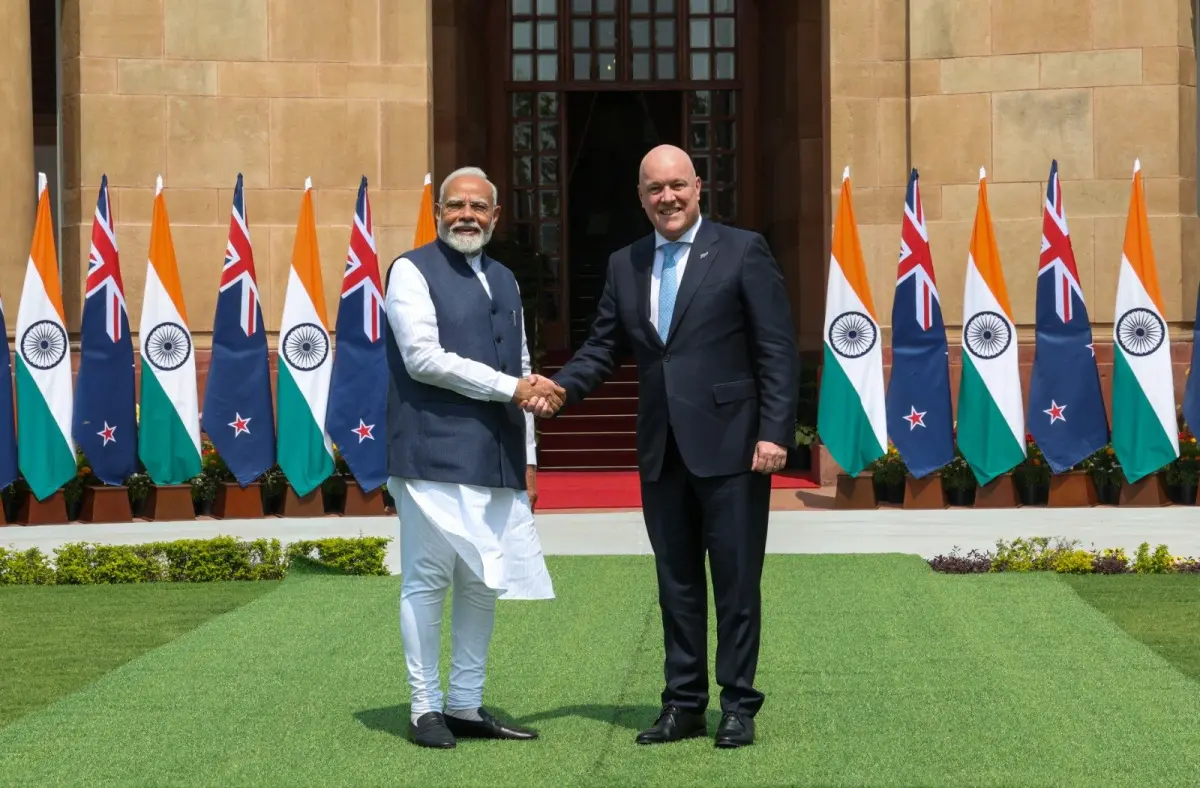

Ties Elevated to Strategic Partnership
India and New Zealand on Saturday elevated their bilateral relationship to the level of a Strategic Partnership, following talks between Prime Minister Narendra Modi and his New Zealand counterpart, Christopher Luxon, in Auckland. The visit marks the first trip by an Indian Prime Minister to New Zealand in four decades. "We have decided to elevate our ties to a Strategic Partnership. We will move forward across every sector with clear goals and concrete outcomes," Modi said in a post on X following the talks.
18 Outcomes, Including 10 Agreements
The talks produced 18 concrete outcomes, including 10 formal agreements. Among the key deliverables were a roadmap to expand ties over the next four years, a framework to strengthen Indo-Pacific maritime cooperation, and a reciprocal logistics support arrangement between the Indian Navy and the New Zealand Defence Force. The two countries also agreed to establish a maritime security dialogue to strengthen coordination and information-sharing in the region.
According to New Zealand's public broadcaster RNZ, the agreed 'Roadmap to 2030' is structured around seven pillars, with political and diplomatic engagement, defence and security cooperation, and trade and economic cooperation forming the first three. The two governments also committed to jointly combat transnational and organised crime, including drug trafficking, financial crime, cyber-enabled crime, and human trafficking.
Trade Target: Rs 35,000 Crore by 2030
The two countries set a five-year target to double their annual bilateral trade in goods and services to Rs 35,000 crore by 2030. The push builds on the recently signed India-New Zealand free trade agreement, which Modi said would add "depth and dynamism" to economic ties. According to Business Standard, the free trade agreement includes a provision for $20 billion in New Zealand investment into India over the next 15 years.
Speaking at an India-New Zealand business event later in the day, Modi told a gathering of CEOs and business leaders that the two nations' shared democratic values and commitment to sustainable development provided a strong foundation for an ambitious economic partnership. New Zealand is home to more than 300,000 people of Indian origin, who officials say continue to play an important role in the country's politics, economy, and business community.
Indo-Pacific and Maritime Security in Focus
The visit's central focus was expanding cooperation in the Indo-Pacific against the backdrop of China's increasing assertiveness in the region. In a joint statement, Modi and Luxon reaffirmed their commitment to a free, open, and prosperous Indo-Pacific, and called for freedom of navigation and overflight in accordance with international law, particularly the 1982 United Nations Convention on the Law of the Sea. "As two maritime nations, our close cooperation gives new strength to the Indo-Pacific, and our relationship can bring new energy toward achieving our shared goals of peace," Modi said during the talks.
Discussion on West Asia and Ukraine
Modi and Luxon also discussed the ongoing conflict in West Asia, expressing concern over renewed escalation and calling on all parties to exercise restraint, de-escalate tensions, and protect civilians. The joint statement called for the full restoration of freedom of navigation through the Strait of Hormuz and opposed any restrictions on shipping movement. On Ukraine, the two leaders expressed concern over the continuing war and its global humanitarian consequences.
The two Prime Ministers further condemned terrorism in all its forms, including cross-border terrorism, specifically citing the Pahalgam attack and last year's incident near Red Fort, and called for a zero-tolerance approach along with efforts to disrupt terror financing networks.
UN Reform and Broader Cooperation
Modi and Luxon also called for "bold and effective" reform of the United Nations and reaffirmed mutual support for the expansion of the UN Security Council. Beyond trade and security, the two leaders agreed to deepen cooperation in agriculture, dairy, food processing, healthcare, traditional medicine, education, sports, and creative industries, describing people-to-people ties as the foundation of the India-New Zealand relationship.
Frequently Asked Questions
Ketan
adminPassionate journalist and digital news editor committed to delivering accurate, timely, and fact-checked news.
Related Articles


Latest Articles

Trump, Tech Giants Ink Voluntary AI Pact Amid Glob...
Oct 01, 2026
Khanna Targets 'Recursive' AI with Landmark Safety...
Oct 01, 2026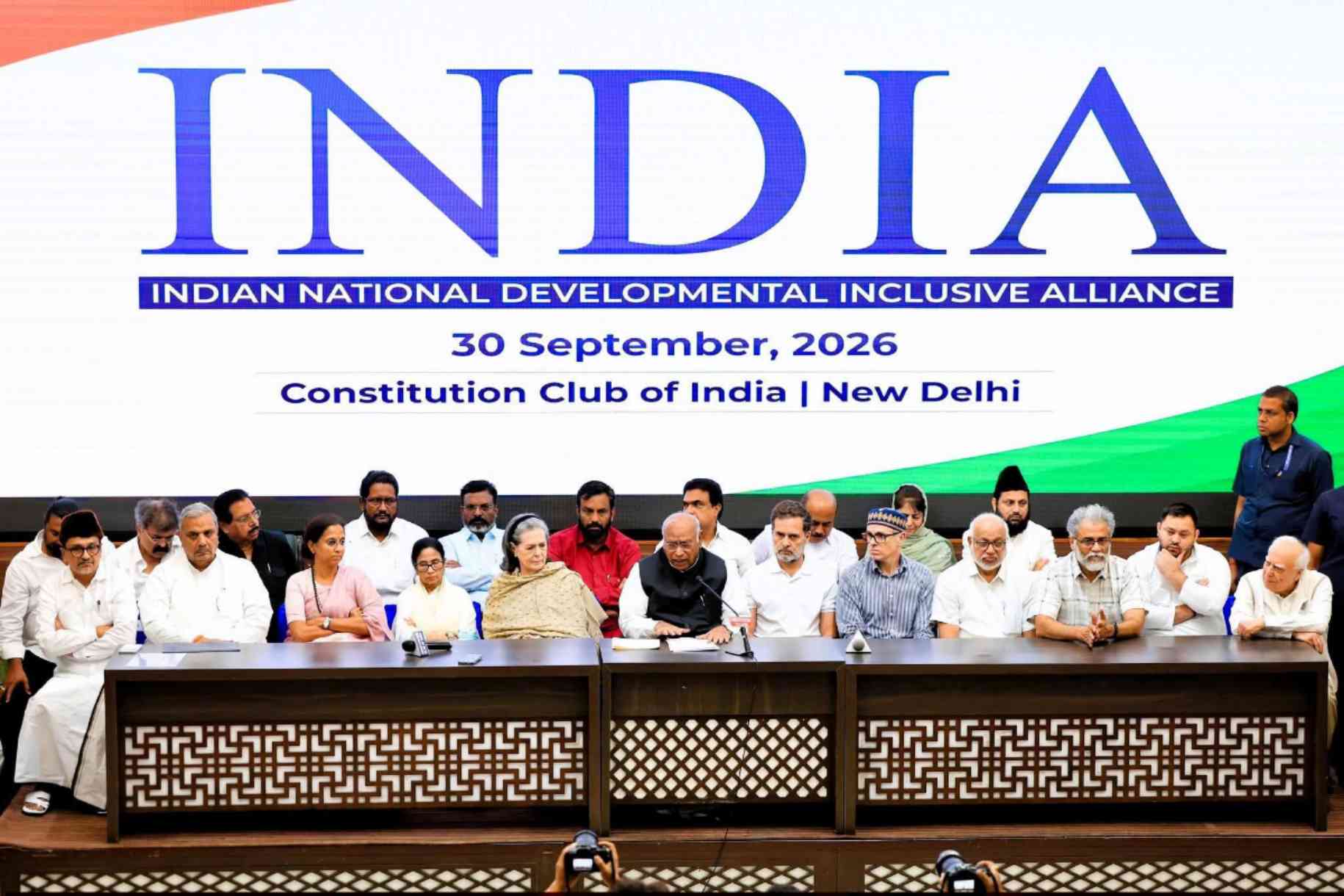
Election Commission–SIR Row: INDIA Bloc Announces...
Oct 01, 2026
WHO Unveils Critical Global Guidance to Combat Hea...
Oct 01, 2026
Comments (0)
Leave a Comment
No comments yet. Be the first to comment!