
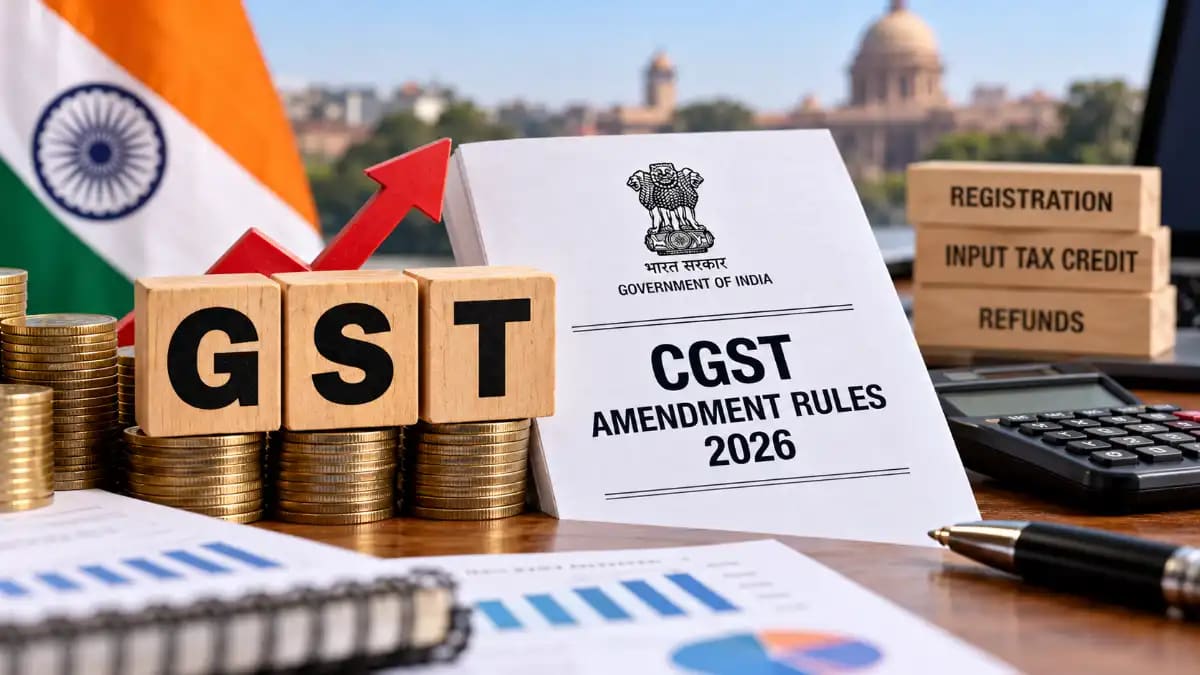

India's CGST Amendment Rules 2026 Set to Reshape Tax Landscape
New Delhi: The Indian government is preparing to roll out comprehensive amendments to the Central Goods and Services Tax (CGST) rules, effective from 2026, signaling a major overhaul in the nation's indirect tax regime. These forthcoming 'CGST Amendment Rules 2026' are expected to introduce significant changes across key operational areas, including taxpayer registration, the claiming of Input Tax Credit (ITC), and the processing of refunds, according to preliminary information obtained from finance ministry sources.
The move is part of the government's broader strategy to enhance digital compliance, curb tax evasion, and streamline processes for businesses, fostering a more robust and transparent tax ecosystem. Experts suggest these amendments will necessitate a proactive approach from businesses to adapt to the updated regulatory framework.
Overhauling Registration Procedures for Businesses
The new rules are anticipated to bring substantial modifications to the GST registration process. Sources indicate a stronger emphasis on digital verification and integration with other government databases.
- Mandatory Biometric Authentication: Proposals suggest the introduction of mandatory biometric authentication for new registrations, aimed at preventing the creation of shell companies and fraudulent entities.
- Revised Thresholds: While specific figures are yet to be officially released, there is speculation about revised turnover thresholds for mandatory GST registration, potentially impacting a wider segment of Micro, Small, and Medium Enterprises (MSMEs).
- Enhanced Due Diligence: Tax authorities are expected to be granted expanded powers for pre-registration verification, including physical site visits and detailed document scrutiny, to ensure the legitimacy of applicants.
Stricter Norms for Input Tax Credit (ITC) Claims
One of the most critical areas of amendment will likely be the Input Tax Credit (ITC) mechanism, a cornerstone of the GST system. The 2026 rules are expected to tighten existing provisions to prevent fraudulent ITC claims and ensure greater accountability.
- Real-time Matching and Reconciliation: The system is likely to move towards near real-time matching of invoices between suppliers and recipients, with stricter penalties for discrepancies that remain unresolved within specified periods.
- Conditional ITC Availability: There could be new conditions imposed on ITC availability, potentially linking it more directly to the payment of tax by the supplier, thereby addressing the issue of 'fake invoices'.
- Expanded Scope of ITC Reversal: The rules might broaden the circumstances under which ITC is liable for reversal, particularly in cases of non-compliance or fraudulent activities detected post-claim.
Streamlining and Expediting Refund Mechanisms
While aiming for stricter compliance, the amendments also seek to improve the efficiency of the refund process, a long-standing demand from exporters and businesses with inverted duty structures. The goal is to reduce liquidity blockages for legitimate claims.
- Digital-First Refund Processing: The new rules are expected to mandate a completely digital refund application and processing system, minimizing human intervention and potential delays.
- Automated Risk Assessment: An automated risk assessment engine could be deployed to fast-track low-risk refund claims, while flagging high-risk cases for detailed scrutiny.
- Time-bound Processing: Clearer, legally binding timelines for refund sanction and disbursement are anticipated, along with provisions for deemed approval if authorities fail to act within the stipulated period.
Implications for Indian Businesses and Taxpayers
The impending CGST Amendment Rules 2026 will undoubtedly present both challenges and opportunities for Indian businesses. While increased compliance requirements may initially pose an administrative burden, the long-term benefits of a more transparent and efficient tax system are significant.
Companies will need to invest in upgrading their accounting and GST compliance software, train their personnel, and establish robust internal processes to align with the new regulations. Early preparation will be crucial for navigating the transition smoothly and avoiding potential penalties.
Frequently Asked Questions
Sadashiv Shinde
Senior EditorSadashiv Shinde is an editorial writer and journalist for Digital Bharat Times, specializing in verified news reporting, regional developments, and national policy analysis.















Comments (0)
Leave a Comment
No comments yet. Be the first to comment!