


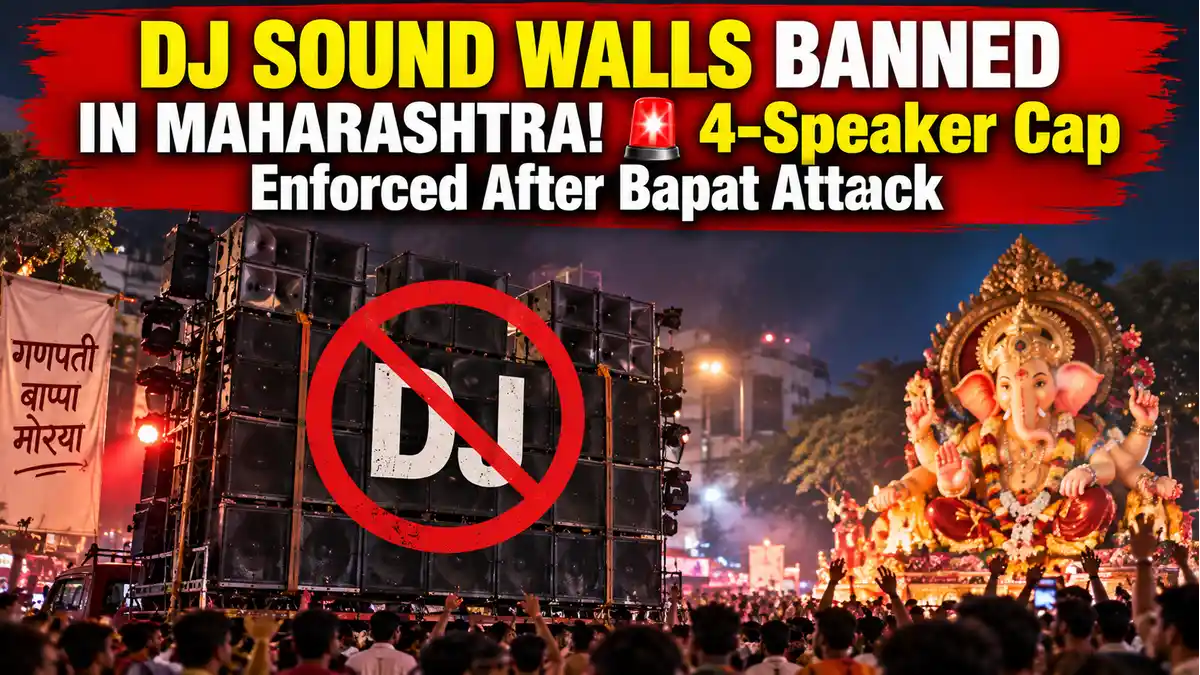
Pune: As Maharashtra prepares for the ten-day Ganeshotsav festivities commencing September 14, 2026, administrative preparations in Pune have converged on two defining fronts: massive rapid transit operations and an uncompromising law-and-order enforcement drive against high-decibel audio pollution. To manage the immense pedestrian rush across the historic Peth zones, Maha Metro has notified an unprecedented 41-hour continuous train operation window on Anant Chaturdashi, running without interruption from 6:00 AM on Friday, September 25, through 11:00 PM on Saturday, September 26. Concurrently, public fury over an on-camera physical assault on veteran civic activist Vidyanand Bapat on Tilak Road has galvanized police departments across Pune, Nagpur, and the Marathwada region to invoke Section 163 of the Bharatiya Nagarik Suraksha Sanhita (BNSS), enforcing strict caps on speaker stacks and issuing a zero-tolerance prohibition against hazardous beam lasers. For official route maps, crowd advisories, and transit ticketing guidelines, explore the Pune Metro Rail Official Portal.
The Sound Wall Flashpoint: Activist Assault and Civic Backlash
The long-standing conflict over amplified audio walls during public processions transformed into a statewide civic issue following a sequence of confrontations:
- The PMC Preparatory Clash: The friction began during a joint coordination meeting hosted by the Pune Municipal Corporation (PMC) on August 24. Civic activist Vidyanand Bapat strongly advocated for a total prohibition of amplified DJ sound walls and high-intensity beam lasers, pointing to severe cardiovascular and neurological distress among senior citizens, infants, and hospital patients residing along congested Peth routes. His presentation was interrupted by vocal shouting and heckling from vocal mandal representatives.
- On-Camera Assault on Tilak Road: On September 3, while conducting a live television interview regarding noise limits on Tilak Road, Bapat was physically confronted and slapped on camera by an individual. The attacker was arrested immediately, and law enforcement provided dedicated security personnel for the activist.
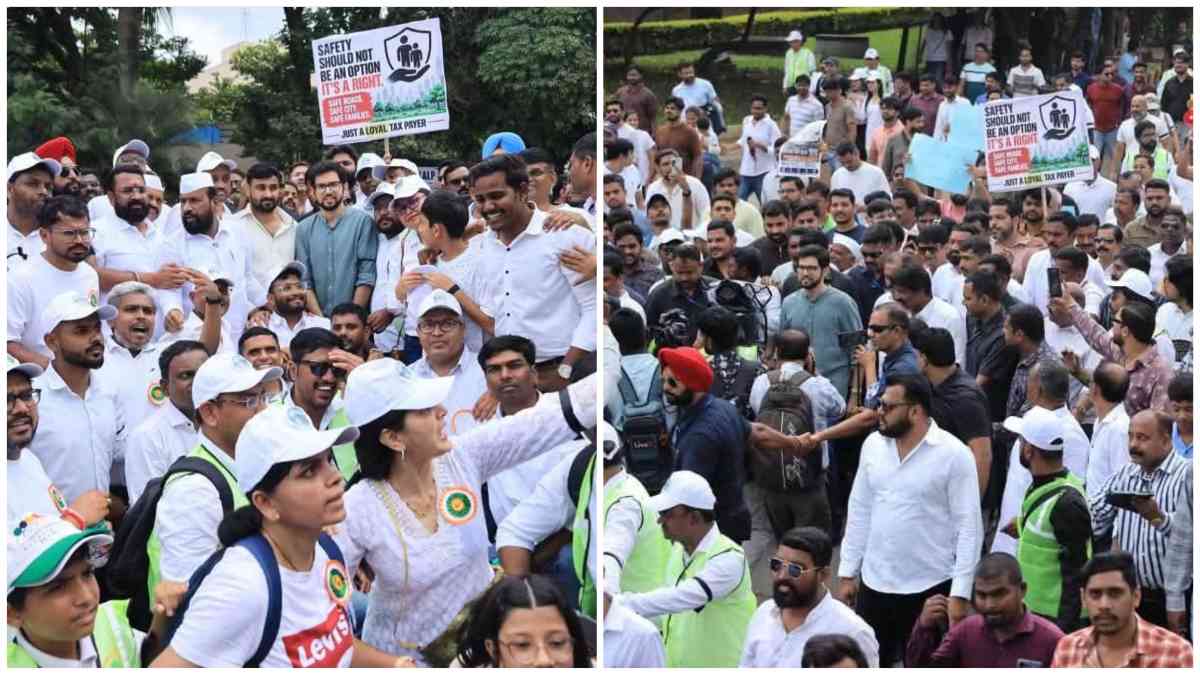
- Medical Alerts and Civil Society Mobilization: The incident triggered rallies by Resident Welfare Associations (RWAs) at Goodluck Chowk. Concurrently, the Indian Medical Association (IMA) issued clinical advisories documenting the risks of irreversible acoustic trauma, sudden cardiac arrhythmia, and retinal injuries linked to high-powered green and blue laser fixtures.
- Acoustic Baseline Breach: Historical ambient monitoring showed immersion processions in Pune repeatedly breaching permissible thresholds, reaching 105.2 dB in 2022 and 101.3 dB in 2024—far surpassing the Central Pollution Control Board (CPCB) residential thresholds of 55 dB during the day and 45 dB at night.
Statewide Police Directives: Speaker Caps, Laser Bans, and FIRs
To ensure public safety, police commissionerates have instituted strict enforcement protocols:
- Pune City Police (CP Amitesh Kumar): Sound setups are capped at a strict maximum of four bass and four top speakers per mandal. Unregulated beam lasers and plasma floodlights are banned. Enforcement units in Bibwewadi and Bharati Vidyapeeth have already seized unauthorized audio setups. Violations will result in FIRs against executive mandal trustees and immediate confiscation of modified generator trucks.
- Nagpur Commissionerate (CP Vishwas Nangre Patil): Prohibitory notices under Section 163 of the BNSS have been issued from September 3 to November 1, barring multi-tier sound walls and modified trucks under the Environment Protection Act, carrying penalties of up to five years in prison and ₹1 lakh in fines.
- Solapur and Sangli Police: Implemented a calibrated single-unit framework restricting mandals to one bass and one top unit (or traditional acoustic horns), revoking route permits for non-compliant processions.
- Traffic Diversions: Heavy commercial transport vehicles are barred during daytime hours across 12 central arterial corridors in Pune throughout the festival period.
Pune Metro Blueprint: 41-Hour Continuous Service on Anant Chaturdashi
To eliminate vehicular gridlock across central Pune, Maha Metro announced an expanded timetable covering the entire festival:
- Phased Operational Schedule: Standard operations run from 6:00 AM to 11:00 PM (Sept 14–16); extended service operates until 2:00 AM past midnight (Sept 17–24); and a 41-hour non-stop marathon service operates continuously from 6:00 AM on Friday, September 25, through 11:00 PM on Saturday, September 26.
- Headway Compression: Train frequency will be maintained at 5-minute intervals across operational lines during peak crowd hours.
- Crowd Circulation at Mandai Station: Strict unidirectional entry-exit channels have been established at Mahatma Phule Mandai Metro Station. Gate No. 3 (near the Lokmanya Tilak Statue) is designated for boarding passengers only, while Gate No. 2 (Chhatrapati Shivaji Maharaj Road) is reserved for deboarding. Commuters are advised to utilize Mandai primarily for outbound return journeys.
- Dispersal Stations: Devotees are advised to utilize Kasba Peth Station on Line 1, Deccan Gymkhana Station for Line 2 passengers traveling from Vanaz, and PMC Station for passengers arriving from Ramwadi to distribute foot traffic evenly across heritage areas.
Frequently Asked Questions
Ketan
adminPassionate journalist and digital news editor committed to delivering accurate, timely, and fact-checked news.
Related Articles

Latest Articles

Trump, Tech Giants Ink Voluntary AI Pact Amid Glob...
Oct 01, 2026
Khanna Targets 'Recursive' AI with Landmark Safety...
Oct 01, 2026
Election Commission–SIR Row: INDIA Bloc Announces...
Oct 01, 2026
WHO Unveils Critical Global Guidance to Combat Hea...
Oct 01, 2026
Comments (0)
Leave a Comment
No comments yet. Be the first to comment!