
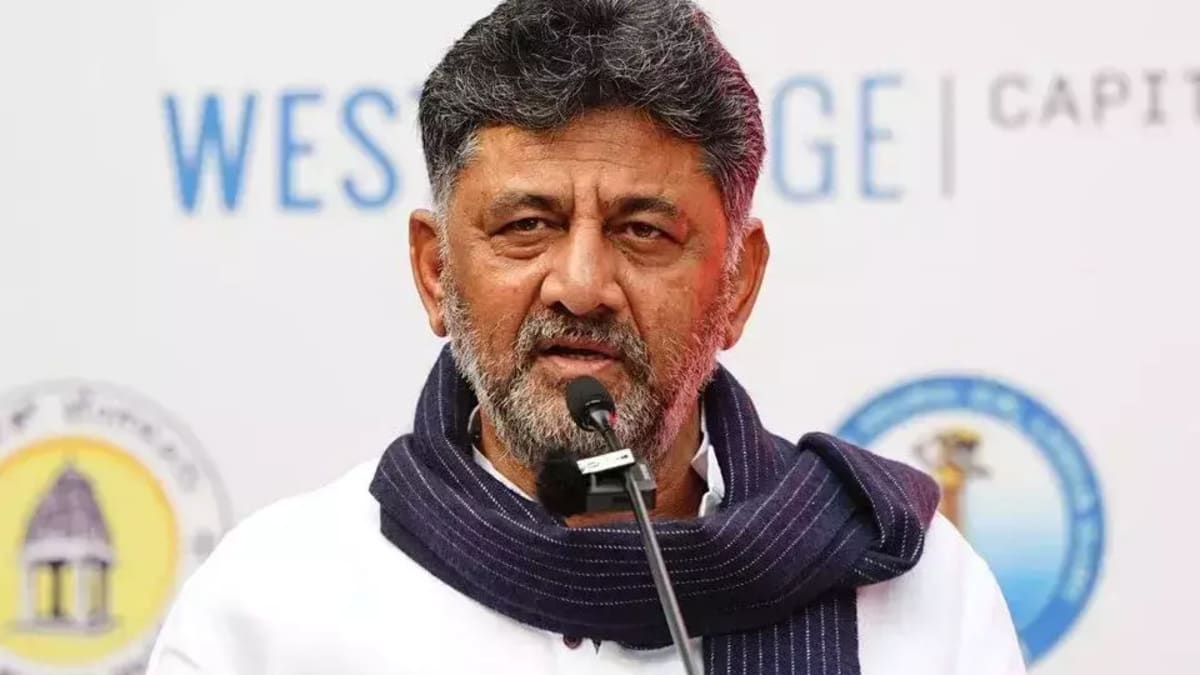

Shivakumar's 'Sting' Claim Ignites Karnataka Political Firestorm
Karnataka Deputy Chief Minister D.K. Shivakumar ignited a political firestorm across the state this week by alleging a clandestine "sting operation" targeting Congress MLAs, designed to destabilize the ruling coalition. This explosive claim, made publicly, has plunged the state's political landscape into renewed uncertainty, drawing sharp retorts from opposition parties and raising profound questions about the stability of the Siddaramaiah-led government and the ethical boundaries of political maneuvering.
The Allegation: A Plot to Destabilize
Shivakumar, a seasoned political strategist and the Congress party's troubleshooter in Karnataka, asserted that he possessed evidence of an elaborate scheme to poach elected representatives. While specifics regarding the alleged perpetrators or the exact nature of the inducements remained under wraps, the implication was clear: a concerted effort by rival political forces to engineer defections and undermine the mandate delivered by the electorate just months ago. The very mention of a "sting operation" immediately conjures images of covert recordings, financial transactions, and backroom deals, elements that have historically plagued Karnataka's volatile political arena.
A State Prone to Political Volatility
Karnataka has a storied, often tumultuous, history of political instability, marked by frequent allegations of 'horse-trading' and 'Operation Kamala' – a term coined to describe the alleged strategy of the Bharatiya Janata Party (BJP) to engineer defections from rival parties to secure a majority. The most recent and prominent instance was in 2019, when a coalition government of the Congress and Janata Dal (Secular) collapsed after a spate of resignations by MLAs, paving the way for the BJP to form the government. This historical context lends a chilling credibility to Shivakumar's current allegations, even as they are vociferously denied.
The Congress party secured a comfortable majority in the May 2023 assembly elections, winning 135 out of 224 seats. Despite this seemingly robust mandate, the shadow of potential defections and political machinations appears to loom large, a testament to the deep-seated mistrust and cut-throat competition that defines state politics.
Immediate Fallout and Stakeholder Reactions
- Congress's Stance: The ruling party has swiftly rallied behind Shivakumar, condemning the alleged attempts at destabilization as an affront to democracy. Party spokespersons have reiterated their unity and warned against any attempts to undermine the government, urging Shivakumar to present his evidence at an appropriate forum.
- BJP's Vehement Denial: The principal opposition, the BJP, has vehemently denied any involvement, dismissing Shivakumar's claims as baseless and a desperate attempt to deflect from internal squabbles within the Congress or to gain political mileage. Senior BJP leaders have challenged Shivakumar to produce concrete evidence rather than making "wild allegations."
- JD(S) Perspective: The Janata Dal (Secular), often a kingmaker in past hung assemblies, has largely remained cautious, observing the unfolding drama. Their historical experience with coalition politics and defections positions them as keen, albeit often silent, observers.
The Ethics of 'Sting Operations' and Legal Implications
The use of "sting operations" in politics, while often revealing malfeasance, also raises significant ethical and legal questions. While secretly recorded conversations can be admissible as evidence in court, their veracity, context, and the methods used to obtain them are subject to intense scrutiny. The Anti-Defection Law (Tenth Schedule of the Constitution) aims to prevent such political horse-trading, but its implementation has often been fraught with legal challenges and delays, sometimes failing to deter determined defectors.
The constant threat of defections and the ensuing political slugfest inevitably divert focus from critical governance issues. Public trust, already fragile, further erodes when elected representatives are perceived as commodities in a political marketplace. This controversy risks overshadowing the government's agenda, potentially impacting policy implementation and administrative efficiency.
The Road Ahead: Evidence or Political Bluster?
The onus is now squarely on D.K. Shivakumar to substantiate his claims. The political landscape of Karnataka awaits with bated breath: will he produce the promised evidence, leading to a major political upheaval and potentially legal action against those involved? Or will these allegations remain in the realm of political bluster, serving as a warning shot to potential defectors and a rallying cry for party unity?
Regardless of the outcome, Shivakumar's "sting operation" claim has undeniably intensified the political temperature in Karnataka, reminding observers that even a clear electoral mandate does not guarantee immunity from the relentless machinations of power politics. The coming weeks are likely to witness further political maneuvering, accusations, and counter-accusations, keeping the state's political future under a cloud of speculation.
Frequently Asked Questions
Ketan
Editor-in-ChiefPassionate journalist and digital news editor committed to delivering accurate, timely, and fact-checked news.













Comments (0)
Leave a Comment
No comments yet. Be the first to comment!