
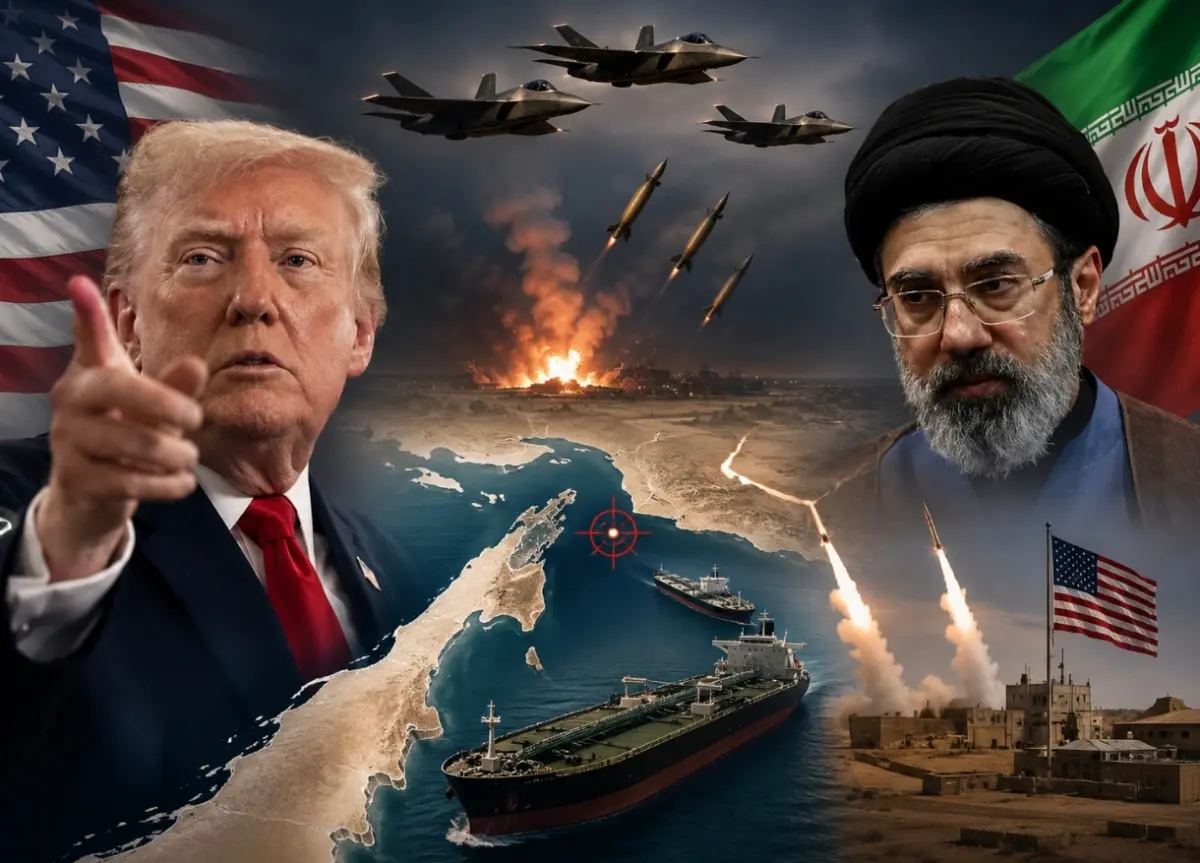

US Strikes Iran for Third Time in a Week
US Central Command (CENTCOM) forces began launching fresh strikes against Iran at 5 p.m. ET on Sunday, marking the third round of US attacks on Iranian targets within a week and pushing the total number of sites struck past 300. CENTCOM said the strikes were ordered by President Donald Trump to "continue degrading Iran's ability to attack civilian mariners and commercial ships freely transiting the Strait of Hormuz."
What Triggered the Latest Round
The renewed strikes followed a Saturday night assault in which CENTCOM said it hit approximately 140 Iranian military targets after Iran attacked another commercial vessel in the Strait of Hormuz. A CENTCOM spokesperson said Iran fired at commercial shipping in the strait again within the hour, though US aircraft successfully intercepted an Iranian cruise missile and a one-way attack drone during the exchange.
Casualties and Damage Reported in Iran
Iranian state media reported explosions in several cities, including Sirik and Bandar Abbas, shortly after midnight local time. In Khuzestan province, a security guard was killed and four others wounded after a projectile struck a water pumping station in Mahshahr County, according to state news agency IRNA. Iranian officials also reported US strikes near the city of Ahvaz, known for its petroleum industry, with an additional strike reported north of the city in Andimeshk county. At least 10 projectiles also reportedly struck Iran's Qeshm Island in the Strait of Hormuz, though the island's governor said all targets were military installations with no casualties.
Iran's Retaliation Across the Gulf
In response, Iran's Islamic Revolutionary Guard Corps (IRGC) said it launched a new wave of missile and drone attacks toward US bases in the region. Gulf allies of the US reported Iranian fire in Kuwait, Oman, Jordan, the UAE, and Qatar. Bahrain urged residents to take shelter for a second consecutive day as air raid sirens sounded across the country. Oman formally summoned Iran's ambassador to protest attacks on its Musandam region, a notable development given Oman's role as a key mediator in the broader conflict.
CENTCOM Rejects Casualty Claims
CENTCOM publicly rejected claims circulating on Iranian state channels that three American service members had been killed in strikes on Kuwait, calling the reports "Iranian propaganda" and stating there were zero confirmed US casualties from the exchange.
Dispute Over Control of the Strait
Iran's newly formed Persian Gulf Strait Authority claimed the Strait of Hormuz remained closed "until further notice," citing what it called illegal movements by CENTCOM over the past week. CENTCOM directly disputed this, posting on X that "Iran does not control the strait" and that traffic continued to flow. Speaking to NBC's "Meet the Press," Trump said the US had hit Iran "very hard" and declared the strait "open," adding that Tehran had agreed to a peace deal following earlier strikes before reneging just hours later when it struck a commercial ship with a drone.
Nuclear Talks Continue Despite the Fighting
Even as strikes continue, US National Security Adviser Michael Waltz said technical negotiations around Iran's nuclear program, including inspections and the disposition of its highly enriched uranium stockpile, are still ongoing. "We are not going to stand for these attacks on civilian ships," Waltz said, adding that Trump had responded "proportionally" but that "Iran is going to pay the price."
Frequently Asked Questions
Ketan
adminPassionate journalist and digital news editor committed to delivering accurate, timely, and fact-checked news.
Related Articles



Latest Articles

Trump, Tech Giants Ink Voluntary AI Pact Amid Glob...
Oct 01, 2026
Khanna Targets 'Recursive' AI with Landmark Safety...
Oct 01, 2026
Election Commission–SIR Row: INDIA Bloc Announces...
Oct 01, 2026
WHO Unveils Critical Global Guidance to Combat Hea...
Oct 01, 2026
Comments (0)
Leave a Comment
No comments yet. Be the first to comment!