
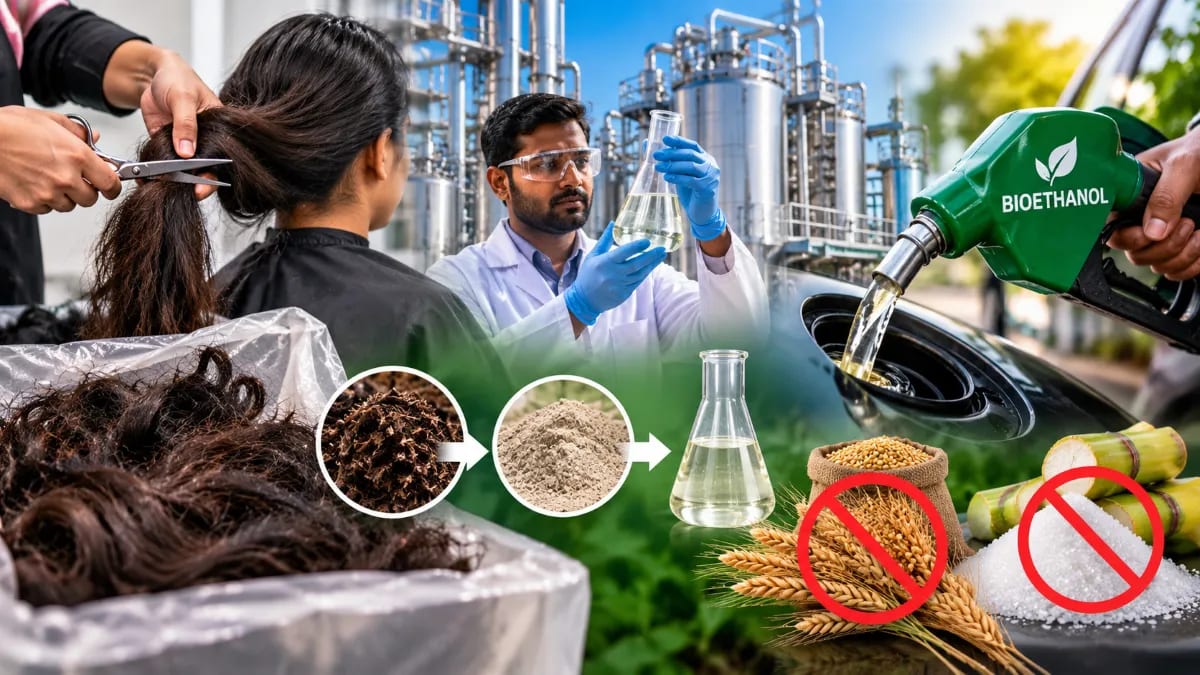

Gujarat-based start-up Techofest Global has pioneered a groundbreaking method to produce bioethanol from human hair, a development announced on October 19, positioning India at the forefront of what experts are calling the fifth generation (5G) of biofuels. This innovative approach offers a potential solution to the escalating prices of traditional feedstocks like grains and sugar, which currently fuel India's ambitious bioethanol blending program. This novel process, described as non-cellulosic and non-sugar-based, marks a significant departure from conventional bioethanol production. By utilizing human hair, a readily available waste product, Techofest Global aims to circumvent the contentious 'food versus fuel' dilemma and reduce the agricultural burden associated with biofuel mandates.
India's Ambitious Biofuel Trajectory
India has aggressively pursued its National Biofuel Policy, targeting a 20% ethanol blending in petrol (E20) by 2025, an accelerated goal from the initial 2030 deadline. This initiative is crucial for reducing the nation's colossal crude oil import bill, enhancing energy security, and mitigating carbon emissions. The primary feedstocks for ethanol production in India have historically been sugarcane molasses and surplus rice, maize, and other food grains.
The 'Food Versus Fuel' Conundrum
The reliance on food crops for ethanol production has increasingly come under scrutiny. Recent surges in global commodity prices, coupled with domestic inflation and unpredictable monsoons affecting agricultural yields, have intensified the debate. Diverting grains like rice and maize from the food supply chain to fuel production can exacerbate food security concerns and drive up prices for consumers, creating a delicate balance for policymakers. The government has, at times, restricted the use of rice for ethanol production to ensure food availability, highlighting the inherent tension.
Human Hair: A Novel, Abundant Feedstock
Human hair presents an abundant, non-food, and largely untapped resource. Globally, billions of kilograms of human hair are discarded annually from salons, homes, and religious sites. Its composition, rich in keratin protein, makes it a viable candidate for biochemical conversion processes. This approach aligns perfectly with circular economy principles, transforming waste into valuable energy.
The Science Behind Waste-to-Fuel
While specific details of Techofest Global's proprietary process remain under wraps, the general principle for converting protein-rich waste into biofuels often involves hydrolysis (breaking down complex molecules with water), followed by fermentation. Keratin, a complex protein, can be broken down into amino acids and then further processed into fermentable sugars or directly into ethanol precursors using specific enzymes or microbial pathways. This contrasts sharply with first-generation (1G) biofuels from sugar/starch or second-generation (2G) from cellulosic biomass.
Environmental and Economic Implications
The environmental benefits are multi-fold. It diverts a significant waste stream from landfills, reducing methane emissions from decomposition. It lessens the carbon footprint associated with cultivating, harvesting, and processing food crops for fuel. Economically, if scalable and cost-effective, human hair bioethanol could offer a stable, predictable feedstock source, insulating the biofuel industry from agricultural price volatility. It could also create new industries for hair collection and processing, generating employment and fostering local economies.
The Evolution of Biofuels: From 1G to 5G
The development of human hair bioethanol marks a significant leap in the biofuel industry's evolution:
- First Generation (1G): Bioethanol derived from food crops like corn and sugarcane, and biodiesel from vegetable oils. Widely criticized for the 'food versus fuel' conflict.
- Second Generation (2G): Biofuels produced from non-food lignocellulosic biomass, such as agricultural waste, forest residues, and dedicated energy crops. More sustainable but technically complex and costly.
- Third Generation (3G): Focuses on biofuels from algae, promising high yields and minimal land use, though still largely experimental and expensive for large-scale production.
- Fourth Generation (4G): Involves genetically engineered crops or microbes to maximize fuel production and incorporate carbon capture technologies.
- Fifth Generation (5G): Often refers to advanced non-food, non-cellulosic feedstocks, or integrated biorefineries, emphasizing waste-to-energy solutions and circular economy principles. Techofest Global's innovation fits squarely into this emerging category, leveraging waste for sustainable energy.
Challenges and Future Outlook
Scaling up production from a laboratory or pilot stage to industrial levels presents significant hurdles. Reliable and consistent collection of human hair across a vast country like India requires robust logistics and infrastructure. Regulatory frameworks might need adaptation to classify and manage this new feedstock. Furthermore, the energy efficiency and overall lifecycle emissions of the process must be rigorously evaluated to ensure genuine sustainability. Investment in research and development will be critical to optimize the conversion efficiency and reduce production costs, making it competitive with existing fuel sources.
What This Means for India's Energy Security and Agriculture
The emergence of human hair as a viable feedstock for bioethanol represents a paradigm shift for India's energy landscape and agricultural sector. For a nation grappling with both energy import dependence and the delicate balance of food security, this innovation offers a compelling alternative.
Reducing Import Dependency
India spends billions annually on crude oil imports. Diversifying the feedstock for bioethanol production beyond traditional agricultural commodities means a more resilient and less volatile domestic fuel supply chain. This directly contributes to the nation's energy security goals, making it less susceptible to geopolitical oil price fluctuations.
Alleviating Agricultural Strain
The 'food versus fuel' debate has long cast a shadow over biofuel policies. By tapping into a non-food waste stream, Techofest Global's solution could significantly ease the pressure on agricultural land and food prices. Farmers would no longer face the dilemma of choosing between growing crops for food or for fuel, potentially stabilizing food markets and ensuring adequate supply for the populace. This also frees up agricultural resources for food production, enhancing overall food security.
Promoting Circular Economy Principles
This innovation champions the principles of a circular economy, transforming what was once considered waste into a valuable resource. It creates a new value chain for discarded human hair, potentially leading to new collection, processing, and manufacturing industries. This not only reduces landfill burden but also fosters sustainable resource management.
Paving the Way for 5G Biofuels
Techofest Global's work positions India as a leader in advanced biofuel research and development. The concept of 5G biofuels, focusing on waste-to-energy and non-conventional feedstocks, is critical for the long-term sustainability of the global energy transition. This pioneering effort could inspire further research into other unconventional waste materials, unlocking new avenues for renewable energy.
"This breakthrough signifies a pivotal moment in India's journey towards sustainable energy. Utilizing human hair not only addresses the 'food versus fuel' conundrum but also champions waste valorization, aligning perfectly with our national goals for energy independence and environmental stewardship," stated a senior official from the Ministry of Petroleum and Natural Gas, speaking on condition of anonymity due to ongoing policy reviews.
The path ahead involves rigorous testing, scaling, and policy support to integrate this novel feedstock into the national biofuel program. However, the potential for a truly sustainable, waste-derived fuel source is immense, promising a cleaner, greener, and more energy-secure future for India.
Frequently Asked Questions
Ketan
Editor-in-ChiefPassionate journalist and digital news editor committed to delivering accurate, timely, and fact-checked news.














Comments (0)
Leave a Comment
No comments yet. Be the first to comment!