
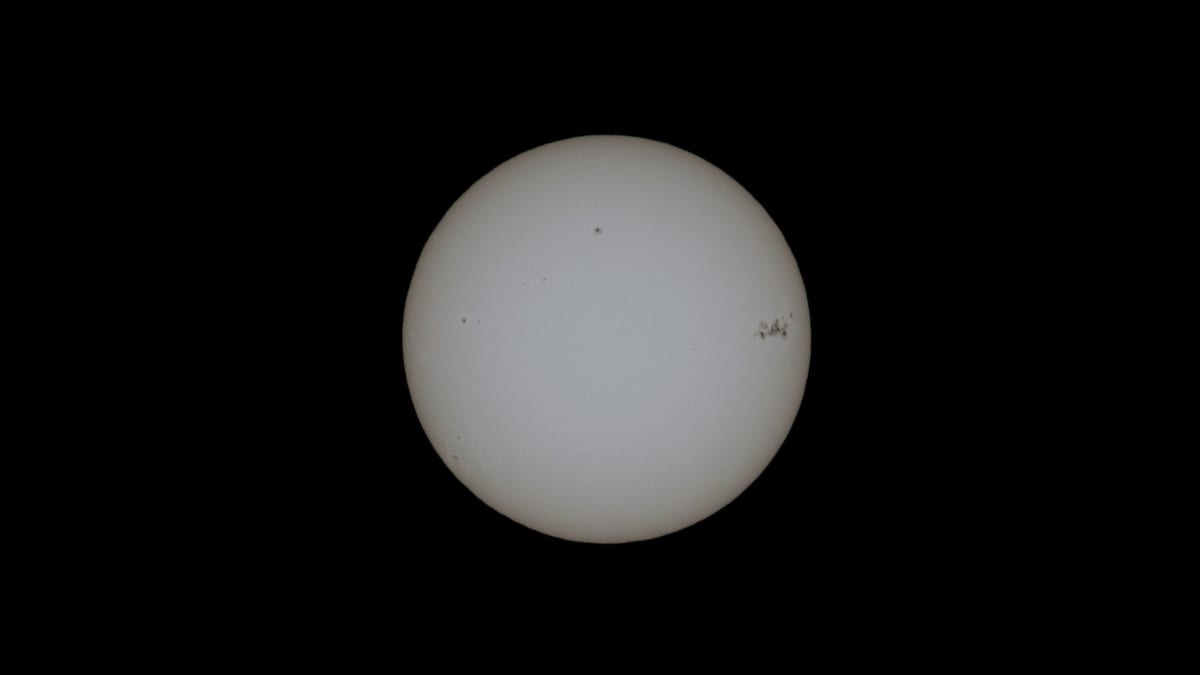

India, Europe Probe Sun's Fury: Unprecedented Data Reveals Eruption Dynamics
Bengaluru, India – In a landmark international collaboration, India's Aditya-L1 solar observatory and Europe's Proba-3 mission are jointly observing and decoding the Sun's violent eruptions, providing unprecedented insights into the dynamics of coronal mass ejections (CMEs). Scientists analyzing data from these missions in Bengaluru have uncovered new clues, including observations of one solar eruption racing at an astonishing 645 kilometers per second, while another moved at a comparatively sluggish 145 kilometers per second.
The Collaborative Endeavor
This synergistic approach leverages the unique capabilities of both spacecraft. Aditya-L1, India's first dedicated solar mission, is strategically positioned in a halo orbit around the Sun-Earth Lagrange Point 1 (L1), offering an uninterrupted view of the Sun. Proba-3, a mission by the European Space Agency (ESA), is pioneering precise formation flying to create an artificial solar eclipse, allowing for continuous observation of the Sun's faint corona, where CMEs originate.
- Aditya-L1: Launched by the Indian Space Research Organisation (ISRO), it carries seven payloads to study the Sun's photosphere, chromosphere, and the outermost layers of the corona. Its vantage point at L1 provides real-time data on solar activities.
- Proba-3: Comprises two satellites flying in formation, one casting a shadow on the other to create a sustained coronagraph effect. This allows for detailed imaging of the inner corona, crucial for tracking the early stages of CMEs.
Historical Context and Significance
Understanding solar eruptions, particularly CMEs and solar flares, has been a paramount goal for space agencies worldwide for decades. These phenomena release billions of tons of plasma and magnetic fields into space, capable of traveling millions of kilometers per hour. When directed towards Earth, they can trigger geomagnetic storms.
Previous missions like NASA's Solar and Heliospheric Observatory (SOHO) and the Solar Dynamics Observatory (SDO) have provided foundational data. However, the combined, complementary observations from Aditya-L1 and Proba-3 offer a new dimension, particularly in capturing the initial acceleration phases of CMEs, which are notoriously difficult to measure accurately.
"The ability to track coronal mass ejections from their genesis in the solar corona with such precision, combining the strengths of two distinct missions, marks a significant leap in heliophysics. This dual perspective is invaluable for refining our models of space weather," stated a senior scientist involved in the project.
What This Means for Citizens / The Sector
The detailed data on CME speeds and trajectories gleaned from this Indo-European partnership has profound implications for global space weather forecasting and infrastructure protection:
- Enhanced Space Weather Prediction: More accurate predictions of when and with what intensity a solar storm might impact Earth. This provides crucial lead time for mitigation efforts.
- Satellite Safety: Geomagnetic storms can damage satellites, disrupt GPS signals, and interfere with radio communications. Better forecasting allows operators to take protective measures, such as temporarily shutting down sensitive equipment or reorienting satellites.
- Power Grid Resilience: Severe solar storms can induce currents in long power lines, leading to widespread blackouts. Early warnings enable utility companies to implement preventative measures, safeguarding critical infrastructure.
- Astronaut Safety: Astronauts in low-Earth orbit or on future lunar/Martian missions are vulnerable to radiation from solar particle events. Improved forecasts are vital for their safety protocols.
- Advancement in Solar Physics: The varied speeds observed (145 km/sec vs. 645 km/sec) highlight the complex and diverse mechanisms driving solar eruptions, pushing the boundaries of our understanding of the Sun's magnetic field and plasma dynamics.
This collaboration underscores a growing trend in international scientific partnerships, pooling resources and expertise to tackle complex cosmic phenomena that affect life on Earth. As both missions continue their operations, the scientific community anticipates a wealth of data that will further demystify the Sun's powerful and unpredictable nature.
Aniket More
Senior EditorAniket More is an editorial writer and journalist for Digital Bharat Times, specializing in verified news reporting, regional developments, and national policy analysis.















Comments (0)
Leave a Comment
No comments yet. Be the first to comment!