
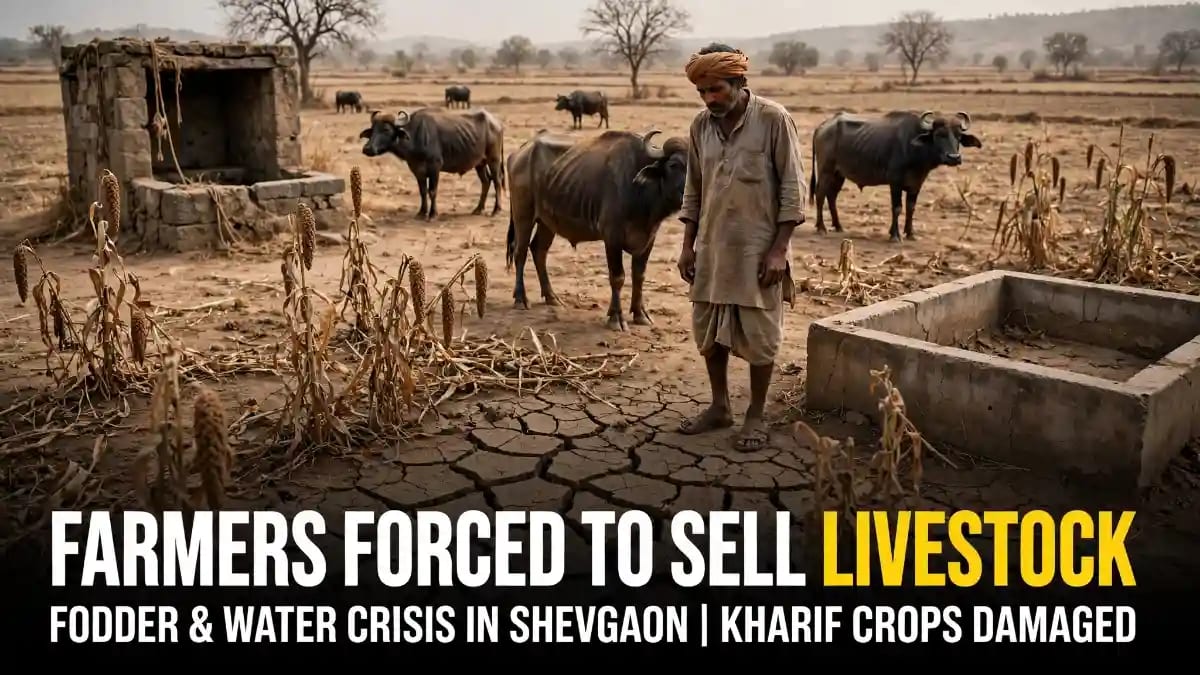

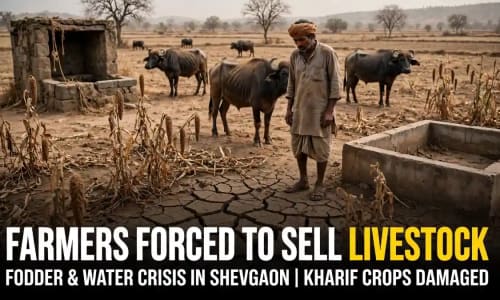
Farmers in the eastern part of Shevgaon taluka, Ahmednagar district, are facing an unprecedented crisis, forcing them to sell their livestock as an acute shortage of fodder and water grips the region. Insufficient rainfall has led to extensive damage to Kharif crops, making it increasingly difficult for agricultural communities, particularly in areas like Bodhegaon, to sustain their animals.
Shevgaon's Agricultural Crisis Deepens
The lack of adequate monsoon showers has severely impacted the agricultural landscape of eastern Shevgaon. According to preliminary reports, the deficit rainfall has resulted in significant losses for Kharif crops, which form the backbone of the local economy and provide crucial fodder for livestock. This widespread crop failure has directly translated into a critical scarcity of animal feed.
Livestock Sales Surge Amid Desperation
With fodder and water resources dwindling rapidly, farmers are finding it economically unviable to maintain their cattle, goats, and other livestock. Many have been compelled to bring their animals to local markets for sale, often at distress prices, to avoid further financial burden and the tragic loss of their animals due to starvation or thirst. This trend signifies a deeper economic strain on farming families already grappling with crop failures.
“How are we supposed to keep our animals alive when there is no fodder and no water? Selling them is our only option to cut losses,” a farmer from Bodhegaon reportedly stated, echoing the sentiments of many in the region.
Urgent Demand for Fodder Camps
In response to the escalating crisis, farmers across the affected areas are vehemently demanding the immediate establishment of fodder camps by the state government. These camps are crucial for providing subsidized or free fodder and water, offering a lifeline to thousands of livestock and, by extension, the livelihoods of countless farming families. Local agricultural bodies and community leaders are pressing authorities to acknowledge the severity of the situation and implement prompt relief measures before it spirals further out of control.
Frequently Asked Questions
Ketan
Editor-in-ChiefPassionate journalist and digital news editor committed to delivering accurate, timely, and fact-checked news.









Comments (0)
Leave a Comment
No comments yet. Be the first to comment!