
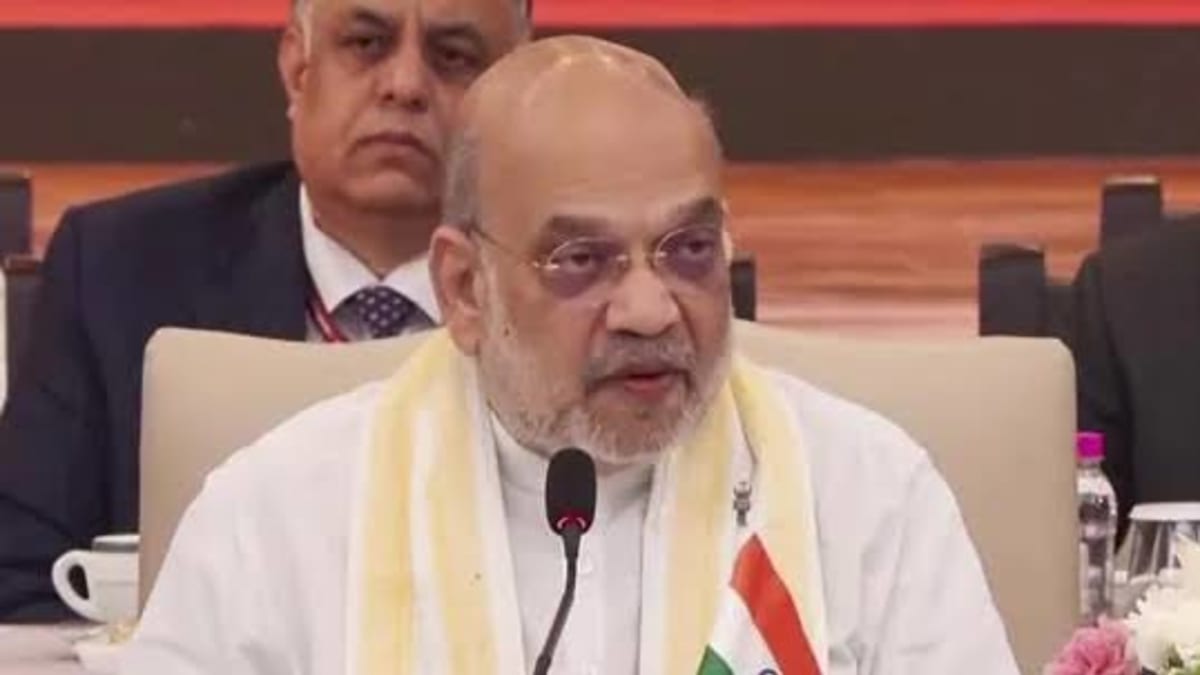

Union Home Minister Amit Shah Vows CBI Probe into Punjab Drug Deaths Amid AAP Criticism
Union Home Minister Amit Shah arrived in Punjab on a high-stakes visit, engaging directly with families of anti-drug campaigners, including the kin of Parvinder Singh Jhota from Sangrur, who tragically died by suicide after actively raising concerns about the pervasive drug issue. Shah pledged a comprehensive investigation by the Central Bureau of Investigation (CBI) into drug-related deaths across the state, simultaneously launching a scathing attack on the ruling Aam Aadmi Party (AAP) government for its alleged inaction and failure to control the escalating drug menace.
Shah Meets Kin of Slain Anti-Drug Crusader Parvinder Singh Jhota
During his visit, a significant focus was placed on offering solace and assurance to the families directly impacted by Punjab's drug crisis. Shah's meeting with the relatives of Parvinder Singh Jhota in Sangrur underscored the gravity of the situation. Jhota, an ardent anti-drug activist, had reportedly taken his own life after his persistent efforts to highlight and combat local drug peddling went unheeded, turning his case into a poignant symbol of the challenges faced by community crusaders against the illicit trade. The Union Home Minister assured the grieving families that the central government would leave no stone unturned in bringing justice.
Blistering Attack on AAP Government's Drug Policy
The visit quickly escalated into a political confrontation, with Amit Shah directly targeting the Aam Aadmi Party government led by Chief Minister Bhagwant Mann. Shah accused the state administration of failing to tackle the 'open drug trade' that he claimed was flourishing under their watch. His remarks suggested a significant lapse in governance and law enforcement, implying that the drug problem has worsened rather than improved since the AAP took power.
"The CBI will hunt culprits even in hell," Shah declared, emphasizing the central government's resolve to pursue those responsible for the drug trade and associated deaths, irrespective of their influence or hiding places.
This strong statement signals a potential escalation in the Centre-state dynamic, placing immense pressure on the AAP government to demonstrate tangible results in its anti-drug efforts.
Punjab's Enduring Scourge: A Historical Perspective on the Drug Crisis
Punjab's battle against drug abuse is a deeply entrenched, multi-generational crisis, exacerbated by its geographical proximity to major drug trafficking routes, particularly the 'Golden Crescent' comprising Afghanistan, Pakistan, and Iran. The state has long struggled with the influx of heroin, opium, and synthetic drugs, leading to widespread addiction, particularly among its youth. Previous state governments, irrespective of political affiliation, have initiated various campaigns and policies, but the problem has persisted, evolving in its forms and distribution networks.
- Early 2000s: Emergence of widespread opioid abuse, particularly heroin.
- 2010s: Political discourse heavily dominated by the 'Chitta' (heroin) crisis, leading to significant public outcry.
- Economic Impact: The drug menace has not only devastated public health but also crippled families financially and socially, impacting agricultural productivity and overall economic development.
- Border Challenges: The porous international border with Pakistan remains a critical conduit for drug smuggling, posing a continuous challenge for law enforcement agencies.
What This Means for Citizens and State Governance
Shah's visit and the promise of a CBI investigation carry significant implications for Punjab's citizens and its governance. For the affected families and anti-drug activists, it offers a glimmer of hope for justice and accountability, potentially restoring faith in the system. For the state government, it represents increased scrutiny and pressure from the Centre, demanding a more robust and transparent approach to drug eradication. This central intervention could lead to:
- Enhanced Accountability: A CBI probe bypasses state police, potentially unearthing deeper networks and political patronage, ensuring a more impartial investigation.
- Policy Review: The AAP government may be compelled to re-evaluate and strengthen its existing anti-drug policies and enforcement mechanisms.
- Public Confidence: A credible investigation could help rebuild public trust, which has been eroded by years of perceived governmental inaction and corruption surrounding the drug trade.
- Political Ramifications: The issue is likely to remain a potent political weapon, shaping future electoral narratives and central-state relations.
The Union Home Minister's direct engagement signals a heightened central focus on Punjab's drug crisis, setting the stage for intensified efforts and potentially significant shifts in the state's fight against this enduring scourge.
Frequently Asked Questions
Ketan
Editor-in-ChiefPassionate journalist and digital news editor committed to delivering accurate, timely, and fact-checked news.













Comments (0)
Leave a Comment
No comments yet. Be the first to comment!