
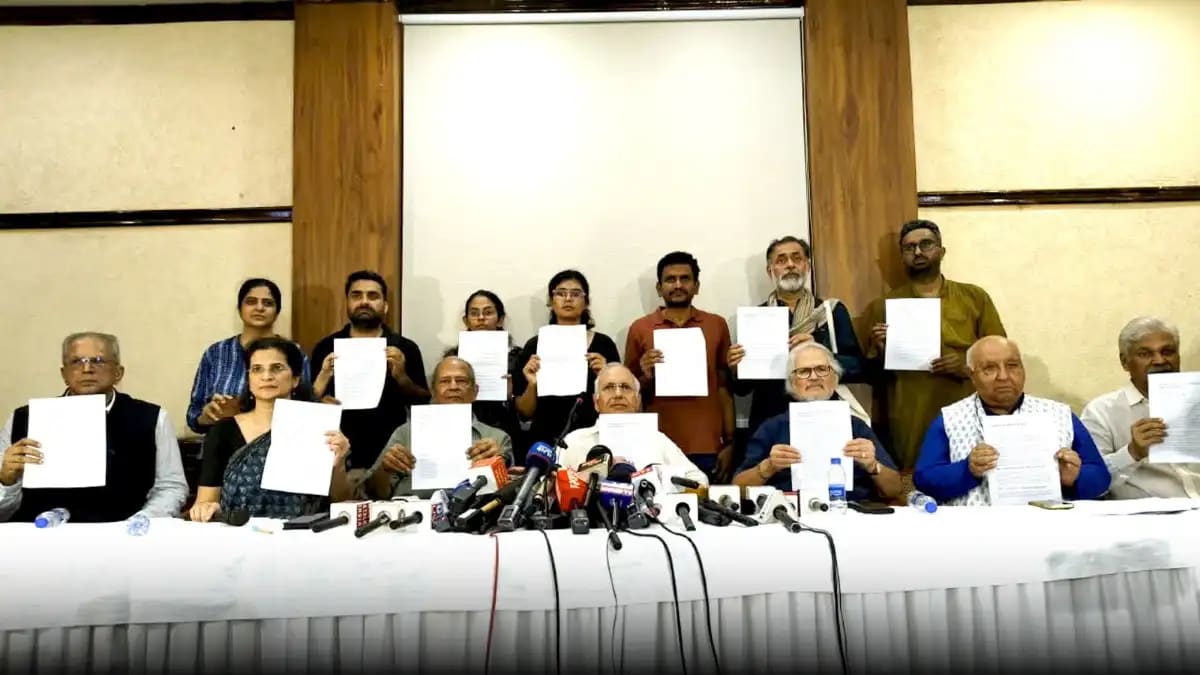

The confrontation over India's electoral rolls has entered an unprecedented institutional phase. On October 5, 2026, a delegation comprising former senior civil servants, diplomats, legal scholars, and civil-society leaders issued a formal "People's Charge Sheet and Notice of Impeachment" against Chief Election Commissioner (CEC) Gyanesh Kumar, calling for his resignation and invoking the constitutional standards governing the removal of top election authorities. The signatories include former Delhi Lieutenant Governor Najeeb Jung, former Union Home Secretary G.K. Pillai, former Union Secretary Amitabha Pandey, former Ambassador Ashok Sharma, former Intelligence Bureau Special Director and Central Information Commissioner Yashovardhan Azad, former civil servant Ashish Joshi, and social activists Yogendra Yadav and Anjali Bhardwaj.
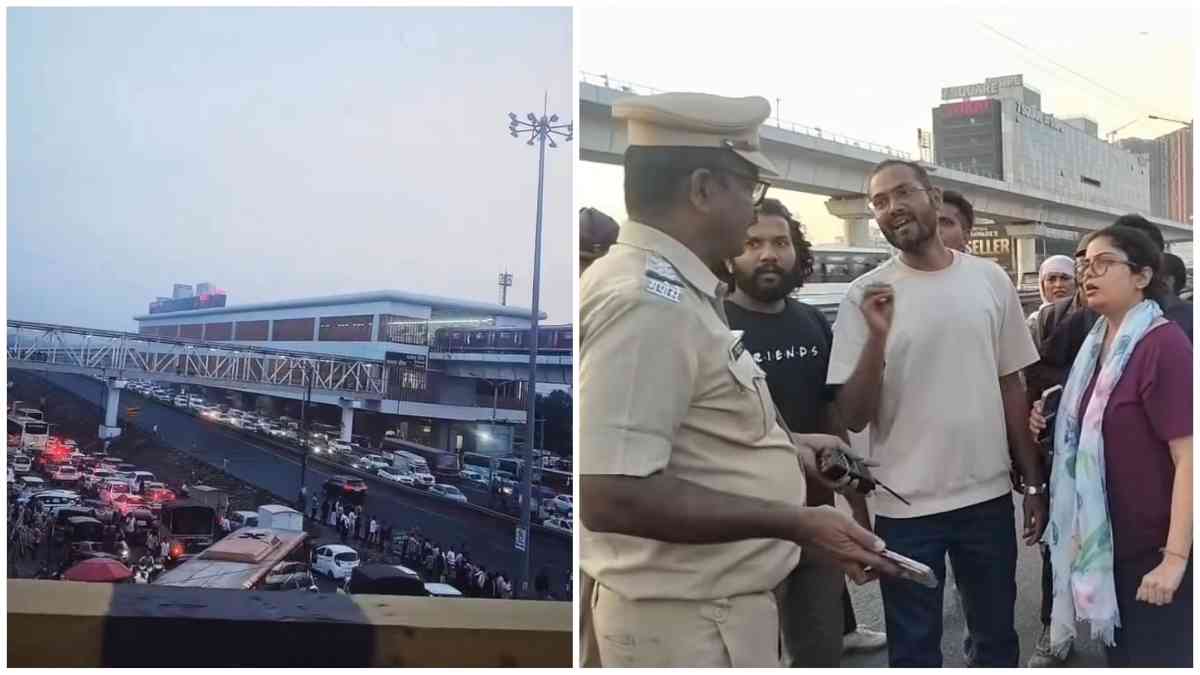
After security barricades prevented the delegation from delivering the document directly to the Election Commission of India (ECI) headquarters at Nirvachan Sadan, the charter was formally released at the Press Club of India in New Delhi. While the document uses the dramatic language of an "impeachment notice," the underlying significance points to a far broader governance question: Who holds the nation's election machinery accountable when its own administrative procedures and digital tools become the subject of institutional dispute?
Deconstructing the 'People's Impeachment': A Political Exercise vs Constitutional Process
From a legal and jurisprudence standpoint, the initiative represents a civic and political accountability exercise rather than a standalone constitutional impeachment. Under Article 324(5) of the Constitution of India, the Chief Election Commissioner enjoys tenure protection equivalent to that of a Supreme Court judge and cannot be removed except through a formal address by both Houses of Parliament on grounds of proved misbehaviour or incapacity.
A civil-society delegation cannot unilaterally initiate parliamentary removal proceedings. Instead, the signatories have formulated a structured indictment of administrative conduct, arguing that the threshold for constitutional scrutiny has been crossed and calling on Kumar to step aside voluntarily or face formal parliamentary and judicial intervention.
"The referee in a democratic election must not only be independent; the referee must also be demonstrably independent. When procedural modifications to statutory forms and roll-management software take place without transparent audit trails, the institutional cost extends far beyond a single administrative cycle."
Form 6 and the Supreme Court's Critical Clarification
Among the six charges, the controversy surrounding Form 6—the statutory application used by citizens seeking new inclusion in the electoral roll—has emerged as the primary legal flashpoint. During the Special Intensive Revision (SIR), an additional declaration field was added to the online application on the ECINET portal, requiring applicants to disclose whether their own name, or that of a parent or grandparent, was enrolled in older historical registers.
Critics argued that this condition created an unconstitutional hurdle for first-time voters, urban migrants, and marginalized groups whose families lacked documentation from previous revision decades. Two Election Commissioners reportedly raised internal objections to the addition, pointing out that statutory forms prescribed under the Registration of Electors Rules, 1960 cannot be amended without formal legal amendments.
The controversy gained fresh momentum on October 5 when a Supreme Court bench led by Chief Justice Surya Kant clarified during hearings that the apex court had never approved the modified Form 6. The bench stated that it would examine the origins of the amendment once the ECI files its comprehensive explanatory report. This judicial intervention shifts the debate away from partisan complaints toward a factual inquiry: Who authorized the addition to Form 6, under what legal mandate, and through what internal decision-making process?
The 13-Crore Deletion Figure: Fact-Checking Political Claims
The charge sheet also highlights widespread disenfranchisement during the SIR exercise, echoing opposition claims that nearly 13 crore voters have had their names struck from the lists. However, responsible analysis requires separating draft revisions from permanent deletions.
The 13-crore figure refers to entries flagged, unmapped, or removed during initial draft-roll sweeps across states. In any large-scale revision, roll maintenance includes identifying duplicate entries, deceased electors, and citizens who have permanently changed residences. The genuine test of fairness is not the raw volume of preliminary deletions, but how many eligible citizens were wrongly omitted and whether accessible, transparent statutory avenues exist for their swift restoration.
ECINET and the Technological Shift in Election Governance
The third major axis of the charge sheet targets ECINET, the centralized digital ecosystem governing voter enrollment. The former bureaucrats allege that algorithmic centralization has undermined the discretionary authority of Electoral Registration Officers (EROs), who bear statutory responsibility for additions and corrections under the Representation of the People Act.
While the ECI denies transferring statutory authority away from field officers, the commission did establish an internal expert committee in late September—featuring independent computer science specialists from the IIT/IIIT network—to audit the software. This underscores an emerging reality: in a digital democracy, election integrity is shaped not only by who signs an administrative file, but by the code, algorithms, and access logs of the platforms that record citizen rights.
The Multi-Track Accountability Framework
The involvement of retired senior administrators shifts this dispute beyond an ordinary opposition protest. Former officials like Najeeb Jung and G.K. Pillai approach the issue from the perspective of constitutional procedure and administrative precedent. Currently, the controversy is progressing across three parallel channels:
- Political Track: Opposition alliances and civil-society groups mobilizing street protests and demanding the CEC's resignation.
- Constitutional Track: The statutory removal procedure outlined in Article 324(5), which requires evidence of proved misbehaviour presented before Parliament.
- Judicial Track: The Supreme Court's ongoing review, which includes examining the decision-making records of the commission and determining the validity of Form 6 modifications.
Ultimately, resolving this dispute will require more than political rhetoric. Ensuring long-term public trust in India's election system demands verifiable procedures, transparent administrative records, and clear legal mechanisms to protect every eligible voter's constitutional franchise.
Frequently Asked Questions
Ketan
Editor-in-ChiefPassionate journalist and digital news editor committed to delivering accurate, timely, and fact-checked news.













Comments (0)
Leave a Comment
No comments yet. Be the first to comment!