
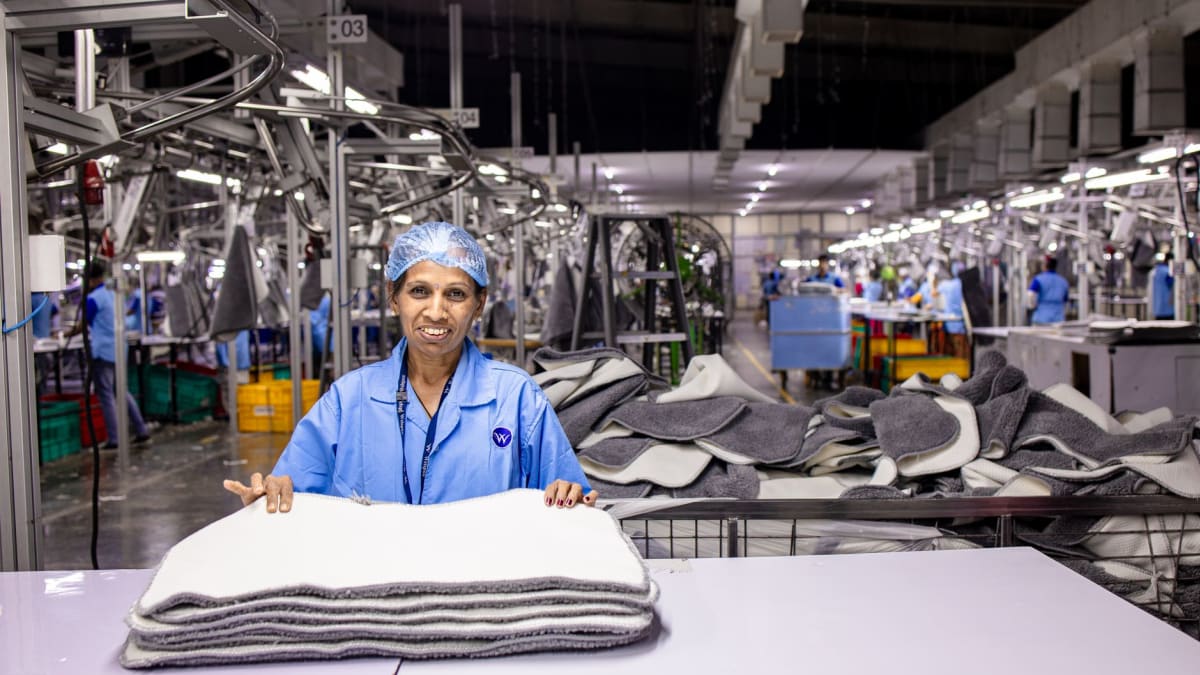

India's Industrial Ascent: Seizing the Global Manufacturing Mantle
NEW DELHI – After decades of fits and starts, India’s manufacturing sector is poised at a critical juncture, signaling a potential renaissance that could fundamentally reshape global supply chains and domestic economic fortunes. A confluence of geopolitical realignments, robust government policy interventions, and a burgeoning domestic market is converging, creating an unprecedented window of opportunity for the nation to establish itself as a formidable global industrial hub.
This moment, long anticipated by economists and policymakers, is characterized by significant foreign direct investment inflows and an aggressive push towards indigenous production across key sectors, moving beyond the traditional service-sector dominance that has defined India's growth story for much of the 21st century.
The Geopolitical Tailwind: 'China Plus One' Strategy
The impetus for India’s manufacturing surge is significantly fueled by the global 'China Plus One' strategy. International corporations, seeking to de-risk their supply chains following pandemic disruptions and escalating geopolitical tensions, are actively diversifying their production bases away from China. India, with its vast labor pool, democratic stability, and increasingly favorable business environment, presents a compelling alternative.
- Supply Chain Resilience: Companies like Apple suppliers (Foxconn, Pegatron, Wistron) have significantly ramped up iPhone production in India, aiming to shift a substantial portion of their global output to the country in the coming years.
- Trade Bloc Dynamics: Ongoing discussions around free trade agreements with key economic blocs further enhance India's appeal as an export-oriented manufacturing base.
Government's Proactive Policy Push
The Indian government has played a pivotal role in cultivating this environment through a series of targeted policy initiatives designed to boost domestic manufacturing and attract foreign investment. The 'Make in India' campaign, launched in 2014, laid the groundwork, which has since been significantly strengthened by more specific, outcome-oriented schemes.
- Production-Linked Incentive (PLI) Schemes: Introduced across 14 key sectors, including electronics, automobiles, pharmaceuticals, textiles, and advanced chemistry cell batteries, these schemes offer financial incentives on incremental sales from products manufactured in India. The government has committed over ₹1.97 lakh crore (approximately $26 billion) towards these schemes, aiming to attract investments worth over ₹30 lakh crore and create 60 lakh new jobs.
- 'Atmanirbhar Bharat' (Self-Reliant India): This overarching vision emphasizes reducing import dependence and boosting domestic capabilities, particularly in strategic sectors.
- Infrastructure Development: Massive investments under the PM Gati Shakti National Master Plan are streamlining logistics, improving connectivity, and reducing the cost of doing business, addressing a historical bottleneck for manufacturing.
Demographic Dividend and Domestic Demand
India's demographic profile offers a unique advantage. A young, large, and increasingly skilled workforce provides a robust labor supply, while a burgeoning middle class fuels a substantial domestic consumer market. This dual advantage makes India attractive not just as an export hub but also as a market for goods produced locally.
"The convergence of global recalibrations and our proactive policy framework has created a fertile ground for manufacturing. We are witnessing a fundamental shift in how the world views India's industrial capabilities," stated a senior official from the Ministry of Commerce and Industry, speaking on condition of anonymity.
Challenges and the Path Forward
Despite the palpable optimism, significant challenges persist. Bureaucratic hurdles, though reduced, still exist. Land acquisition remains complex, and the need for continuous skill development to match evolving industrial demands is paramount. Furthermore, global economic headwinds and intense competition from established manufacturing powerhouses require sustained policy focus and agility.
For India's manufacturing moment to translate into a sustained era of industrial growth, consistent investment in research and development, fostering innovation, and ensuring ease of doing business at state levels will be crucial. The journey from potential to preeminence demands unwavering commitment and strategic execution.
The current trajectory suggests that India is not merely participating in the global manufacturing shift but actively shaping it, promising a transformative impact on its economy and its standing on the world stage.
Frequently Asked Questions
Sushant
Senior EditorSushant is an editorial writer and journalist for Digital Bharat Times, specializing in verified news reporting, regional developments, and national policy analysis.












Comments (0)
Leave a Comment
No comments yet. Be the first to comment!