
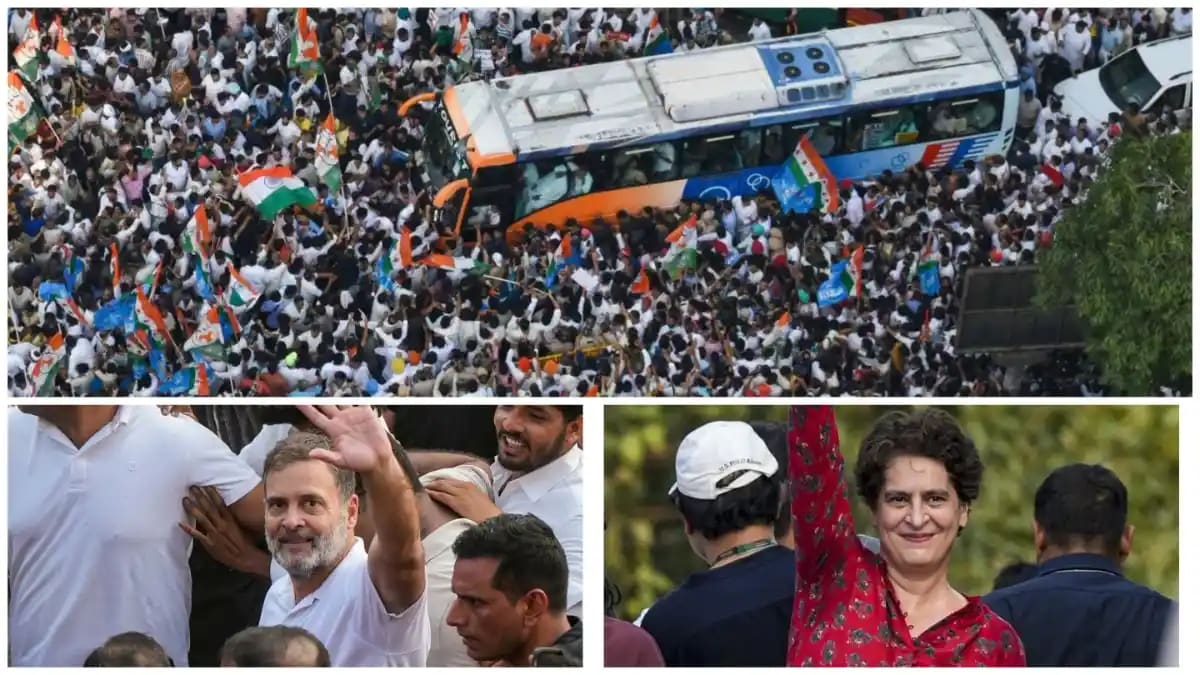

New Delhi, October 12, 2026: A large gathering of opposition supporters converged in central Delhi on Monday as Rahul Gandhi led an INDIA bloc march towards the Supreme Court, turning the dispute over electoral-roll revision into a major political mobilisation. The procession was organised to demand accountability over alleged irregularities in the Election Commission's Special Intensive Revision (SIR) of voter lists and to seek the resignation of Chief Election Commissioner Gyanesh Kumar.
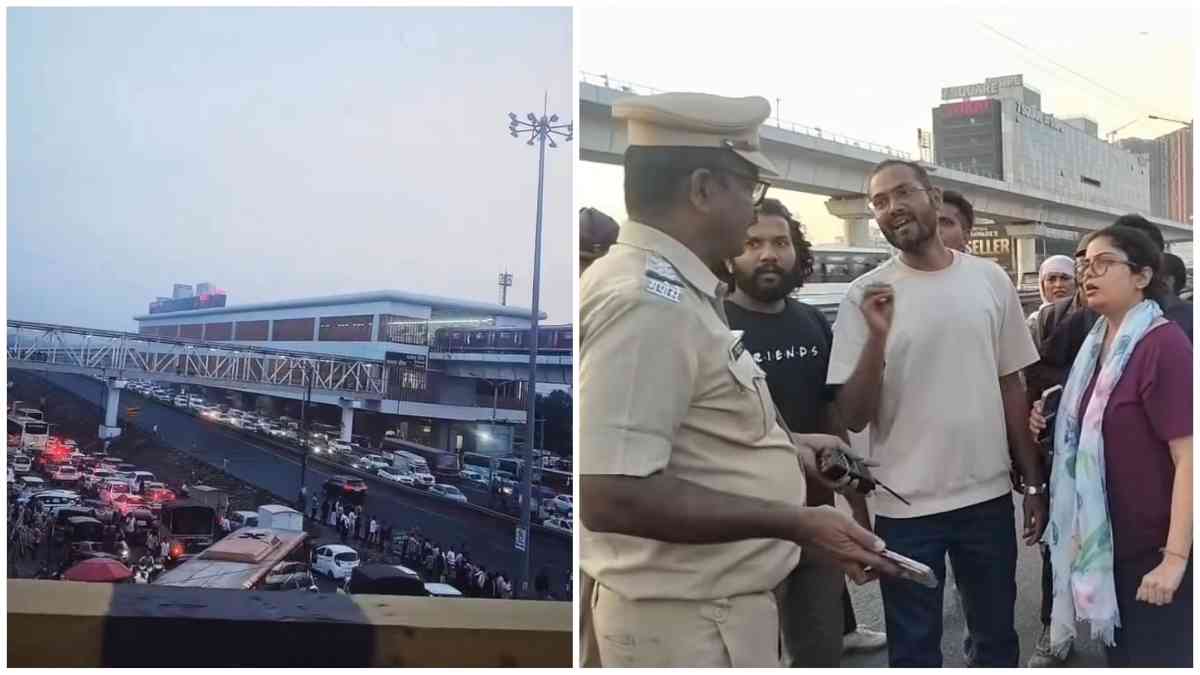
The march brought together prominent opposition leaders, including Priyanka Gandhi Vadra, Akhilesh Yadav and Tejashwi Yadav. Supporters gathered around Connaught Place and Barakhamba Road before the procession encountered police barricades at Bhagwan Das Marg. The march was stopped before reaching the Supreme Court.
The turnout gave the opposition a visible platform to project its concerns about electoral transparency. However, no verified official crowd estimate was available in the supplied reports, and the size of the gathering should not be converted into an exact number without confirmation.
A street mobilisation meets a police barricade
The procession was planned as a march towards the Supreme Court, linking a public demonstration with demands for institutional accountability. Police barricades prevented participants from continuing along the intended route, leaving the opposition to pursue its demands through political statements and legal action.
The police response also affected movement in central Delhi. Entry and exit at six Metro stations were temporarily restricted for security reasons, according to the supplied reports, before Delhi Metro announced that the station gates had reopened. The episode highlighted how security arrangements around a high-profile demonstration can affect not only protesters but also commuters and other residents.
Authorities must manage crowd safety, traffic and public order during large gatherings. At the same time, the scale of a political demonstration does not by itself establish that participants pose a threat. The necessity and proportionality of restrictions must be assessed on the basis of the specific circumstances and applicable law.
Why has the INDIA bloc taken to the streets?
The immediate issue is the Election Commission's Special Intensive Revision of electoral rolls. Opposition parties allege that the process lacks adequate transparency and risks removing eligible voters from the lists. They have demanded the resignation of Chief Election Commissioner Gyanesh Kumar and safeguards against the deletion of voters' names without prior notice.
The Election Commission and BJP reject allegations of political manipulation and maintain that voter-list revision is intended to identify duplicate, ineligible or otherwise incorrect entries. The competing claims remain contested. Allegations of wrongful deletion or deliberate manipulation should not be presented as established findings without supporting evidence or an authoritative determination.
For the opposition, the mobilisation is an attempt to keep the issue in public view and press for answers. For election authorities, the central question is whether the revision process follows applicable rules and provides affected voters with effective notice, verification and grievance-redressal mechanisms.
From the streets to a legal petition
After the march was halted, opposition leaders pursued the dispute through a petition concerning alleged irregularities in the SIR process. Reports identified Rahul Gandhi as a lead petitioner alongside leaders including Mallikarjun Kharge, Akhilesh Yadav, Tejashwi Yadav and Saugata Roy. The petition reportedly seeks safeguards, including protection against deleting a voter's name without prior notice.
The opposition also sought a meeting with the Chief Justice of India, but the request was declined in view of the judicial process and pending matters, according to the supplied report. The leaders then pursued formal legal proceedings.
Filing a petition does not mean the court has accepted the allegations or granted the requested relief. The claims, supporting evidence and responses from the relevant authorities must be assessed through the judicial process.
What the massive turnout does—and does not—show
A large political gathering can demonstrate organisational capacity, public interest and a party's ability to bring an issue into the public debate. It does not, on its own, establish the truth of the allegations being raised, nor does it prove that every person attending shares the same political position.
The more consequential test will be whether the protest produces verifiable answers about electoral-roll revision, transparent procedures and effective remedies for voters who believe their names have been wrongly omitted. The legal proceedings will be important in determining whether the safeguards sought by the opposition are warranted.
The day's events therefore extend beyond the spectacle of a large crowd facing police barricades. They place electoral transparency, protest management and institutional accountability at the centre of a political dispute that is now being pursued both on the streets and through the courts.
Frequently Asked Questions
Ketan
Editor-in-ChiefPassionate journalist and digital news editor committed to delivering accurate, timely, and fact-checked news.






Comments (0)
Leave a Comment
No comments yet. Be the first to comment!