
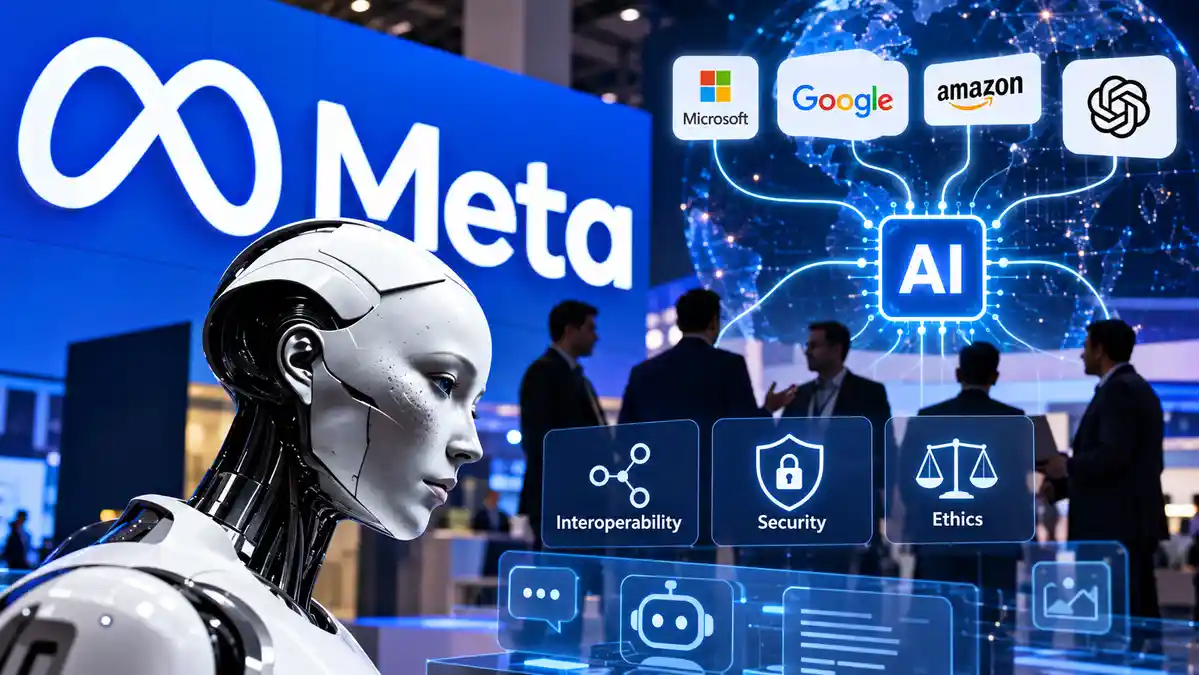

Meta Leads Charge to Standardize AI Bot Interactions, Combatting Digital Chaos
Meta Platforms, the social media and metaverse giant, has formally joined a burgeoning consortium of leading technology firms and industry stakeholders with a singular, urgent objective: to tame the escalating 'chaos' currently characterizing business interactions with artificial intelligence bots. This collaborative effort, first highlighted by CNBC, marks a pivotal moment in the rapidly evolving AI landscape, signaling a concerted industry push towards establishing much-needed interoperability, security protocols, and ethical guidelines for AI-driven services.
The Unfolding 'Chaos' in AI-Driven Business
The term 'chaos' aptly describes the current fragmented state of AI bot interactions. As generative AI models and conversational agents proliferate across e-commerce, customer service, content creation, and enterprise operations, businesses face a labyrinth of proprietary systems, inconsistent APIs, and varying performance standards. This fragmentation leads to significant challenges: "The current environment is akin to the early days of the internet where every website had its own unique way of handling basic functions, before HTTP and HTML became universal," explains Dr. Anya Sharma, a senior analyst at Tech Insights Group. "Without standardization, the true potential of AI in business remains bottlenecked by friction and unpredictability."
Meta's Strategic Imperative and Historical Context
Meta's involvement is particularly significant given its extensive investments in AI research and development, including its Llama large language models and its ambitious metaverse vision, which heavily relies on sophisticated AI agents for immersive experiences. The company, with its vast global user base and extensive advertising ecosystem, stands to gain immensely from a more predictable and trustworthy AI environment. Historically, Meta has navigated complex challenges in platform governance, content moderation, and data privacy. Its experience in establishing community standards and battling misinformation on its social platforms provides a unique perspective on the need for robust frameworks in the nascent AI bot economy. For Meta, ensuring a stable, secure, and ethical AI ecosystem is not just an industry good but a strategic necessity for its future growth and reputation.
"Our goal is to foster an open and collaborative ecosystem where AI bots can interact seamlessly, securely, and ethically across platforms," stated a Meta spokesperson, who requested anonymity to discuss ongoing consortium deliberations. "This isn't just about technical specifications; it's about building trust and unlocking the full economic potential of AI for everyone."
The Consortium's Vision: Standards, Security, and Ethics
The coalition, which includes a diverse array of technology companies, AI developers, and industry bodies, aims to develop a comprehensive set of standards. Key areas of focus include:
This proactive approach by the industry could potentially preempt a patchwork of restrictive government regulations, which might stifle innovation if not carefully crafted. The global AI market is projected to reach trillions of dollars in the coming decade, and a standardized, secure foundation is crucial for realizing this economic potential.
Stakeholder Perspectives and Future Outlook
Businesses are keenly awaiting these developments. "The ability to integrate AI bots from various vendors without proprietary lock-ins would be a game-changer for efficiency and innovation," says Sarah Chen, CEO of a global e-commerce firm. "It means we can focus on delivering value, not on wrestling with integration challenges." Developers are also eager for clearer guidelines. "Standardized frameworks mean less redundant work and more focus on creative problem-solving," notes Rajesh Kumar, a lead AI engineer. "It democratizes access to advanced AI capabilities." Consumer advocates, however, remain cautiously optimistic. "While standardization is good for security and consistency, we must ensure these efforts prioritize user privacy and protection against algorithmic manipulation," warns Elena Rodriguez from Digital Rights Watch. "Transparency in how AI bots operate and handle personal data must be non-negotiable." The path ahead for the consortium will not be without its challenges, including achieving consensus among competing interests and adapting to the rapid pace of AI innovation. However, Meta's involvement, alongside other industry stalwarts, signals a serious commitment to bringing order to the burgeoning AI bot ecosystem, paving the way for a more predictable, secure, and ultimately, more beneficial future for AI in business and daily life.
Frequently Asked Questions
Sadashiv Shinde
Senior EditorSadashiv Shinde is an editorial writer and journalist for Digital Bharat Times, specializing in verified news reporting, regional developments, and national policy analysis.














Comments (0)
Leave a Comment
No comments yet. Be the first to comment!