

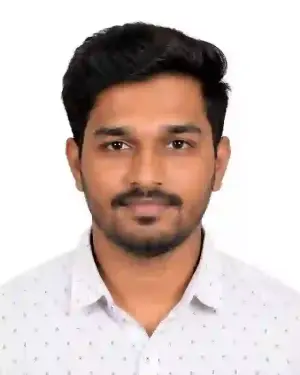
The Mumbai Police have registered a First Information Report (FIR) naming Indian Institute of Technology (IIT) Bombay faculty member and former Dean of Student Affairs, Professor Suryanarayan Doolla, alongside unnamed administrative staff, for abetment of suicide and offenses under the Scheduled Castes and Scheduled Tribes (Prevention of Atrocities) Act. The enforcement action follows the death by suicide of 20-year-old second-year B.Tech Energy Science student Sahil Wakode in his hostel room on Friday evening. The tragedy sparked massive student mobilizations on campus and an overnight standoff at Rajawadi Hospital mortuary, where the deceased student's family refused to claim the mortal remains until senior police leadership reassigned the case to the Mumbai Police Crime Branch under an Assistant Commissioner of Police (ACP).
The Examination Confrontation, Allegations, and Ground Protests
The sequence of events began on Friday afternoon during a third-semester examination, when invigilators removed Wakode from the examination hall over allegations of accessing an unapproved mobile device to run test prompts through artificial intelligence tools. While campus eyewitnesses claimed the student faced threats of immediate academic de-registration and disciplinary summons, the IIT Bombay administration asserted that faculty members conducted routine academic counseling and provided assurances that the student's standing was not irreversibly compromised.
However, the student's father, Ravindra Wakode, a resident of Yavatmal, lodged a detailed police complaint alleging persistent caste-based intimidation, targeted slurs, and threats of institutional expulsion by Prof. Doolla over the preceding three months. The incident triggered demonstrations by more than 400 students outside the institute's main administrative complex, demanding an independent judicial probe. The deceased student's family held a vigil outside Rajawadi Hospital for over seven hours until Joint Commissioner of Police (Law & Order) Manoj Kumar Sharma intervened to confirm the immediate transfer of the investigation to specialized Crime Branch investigators.
"Our demand was straightforward: a fair, transparent investigation uninfluenced by institutional hierarchies. The transfer to the Crime Branch is a critical step forward," legal representatives for the Wakode family stated.
Statutory Enforcement Under BNS and SC/ST Atrocities Act
The Powai Police Station registered the primary FIR under Bharatiya Nyaya Sanhita (BNS), 2023 Section 108 (abetment of suicide), combined with mandatory provisions of the Scheduled Castes and Scheduled Tribes (Prevention of Atrocities) Act, 1989. Because allegations invoke non-bailable clauses under special statutory protections, procedural rules mandate supervision by an officer not below the rank of Deputy Superintendent or Assistant Commissioner of Police.
In an official statement, IIT Bombay Director Prof. Shireesh Kedare rejected allegations of institutional bias, maintaining that academic evaluation frameworks operate with anonymized identifiers that shield demographic and caste records from teaching faculty. Concurrently, an internal communication released by the institute's SC/ST Students and Staff Cell stated that no prior formal or informal grievance had been lodged by the student with the grievance panel before Friday's incident.
Institutional Repercussions and Systemic Oversight Demands
Sahil Wakode's death marks the third student suicide recorded within the Powai campus during 2026, intensifying national scrutiny over student support systems, honor code procedures, and the social climate inside premier technological institutions. Advocate Nikhil Kamble, representing the Wakode family, has formally moved the state administration to designate a Special Public Prosecutor and expedite statutory victim relief measures under the SC/ST Atrocities Rules.
The incident has also prompted student rights organizations to appeal to the Ministry of Education, demanding the establishment of independent, external ombudsman frameworks across all Centrally Funded Technical Institutions (CFTIs) to adjudicate academic integrity allegations independently of internal faculty committees.
Frequently Asked Questions
Ketan
adminPassionate journalist and digital news editor committed to delivering accurate, timely, and fact-checked news.
Related Articles

Latest Articles

Trump, Tech Giants Ink Voluntary AI Pact Amid Glob...
Oct 01, 2026
Khanna Targets 'Recursive' AI with Landmark Safety...
Oct 01, 2026
Election Commission–SIR Row: INDIA Bloc Announces...
Oct 01, 2026
WHO Unveils Critical Global Guidance to Combat Hea...
Oct 01, 2026
Comments (0)
Leave a Comment
No comments yet. Be the first to comment!