

Trump Convenes Tech Titans for Voluntary AI Safeguards Pledge
Former President Donald Trump, alongside a consortium of prominent technology executives, recently convened to sign a voluntary agreement pledging to implement “robust” safeguards for artificial intelligence development. This high-profile gathering underscores the escalating global debate over AI governance and the industry’s persistent push for self-regulation amidst growing calls for legislative oversight.
The Urgency of AI Governance
The pact emerges at a critical juncture, following the rapid proliferation of sophisticated generative AI tools like OpenAI’s ChatGPT and Google’s Bard, which have ignited both excitement and profound apprehension across industries and governments worldwide. Concerns span a wide spectrum, including the potential for deepfakes and misinformation, job displacement, algorithmic bias, national security threats, and the erosion of privacy. While the Biden administration has issued an executive order on AI and the European Union is advancing its comprehensive AI Act, this voluntary initiative signals a distinct approach, prioritizing industry-led commitments over immediate governmental mandates.
Key Pillars of the Voluntary Commitment
While specific details of the “robust” safeguards remain under wraps, such voluntary pacts typically encompass several critical areas:
The voluntary nature of these pledges, however, immediately raises questions about enforceability and accountability, contrasting sharply with the legally binding frameworks being debated in other jurisdictions.
Stakeholder Perspectives: Innovation vs. Regulation
The agreement reflects a strategic alignment between certain political factions and tech industry leaders who advocate for fostering innovation with minimal governmental intervention. Proponents argue that an agile, industry-led approach allows for quicker adaptation to rapidly evolving technology, preventing innovation from being stifled by slow-moving bureaucracy.
“We want to ensure America remains at the forefront of AI innovation, not bogged down by overzealous regulations that could hand our technological advantage to adversaries,” a source close to the former administration indicated, emphasizing the drive to maintain a competitive edge.
Conversely, critics and many policy experts express skepticism. They contend that voluntary agreements, while a positive step, often lack the teeth necessary to ensure universal compliance and protect public interest adequately. “History has shown that self-regulation, while well-intentioned, frequently falls short when confronted with immense commercial pressures,” stated Dr. Anya Sharma, a technology policy analyst at the Global Digital Ethics Institute. “The stakes with AI are too high for anything less than a comprehensive, enforceable regulatory framework.”
The Broader Regulatory Landscape
This pact enters a complex global landscape where nations are grappling with how to govern AI. The European Union’s AI Act, for instance, proposes a risk-based approach, imposing stricter rules on “high-risk” AI applications. China, too, has introduced regulations focusing on generative AI content. The U.S. approach remains fragmented, with various government agencies and legislative bodies exploring different avenues. The voluntary pact, therefore, could be seen as an attempt by the industry to shape the narrative and potentially preempt more stringent federal legislation.
As AI continues its exponential growth, with global AI market revenue projected to reach hundreds of billions of dollars within the next few years, the debate between fostering innovation and ensuring robust, enforceable safeguards will only intensify. The effectiveness of this voluntary pact will ultimately be judged not by its signing, but by its tangible impact on AI safety and its ability to build public trust in this transformative technology.
Frequently Asked Questions
Related Articles



Latest Articles

Khanna Targets 'Recursive' AI with Landmark Safety...
Oct 01, 2026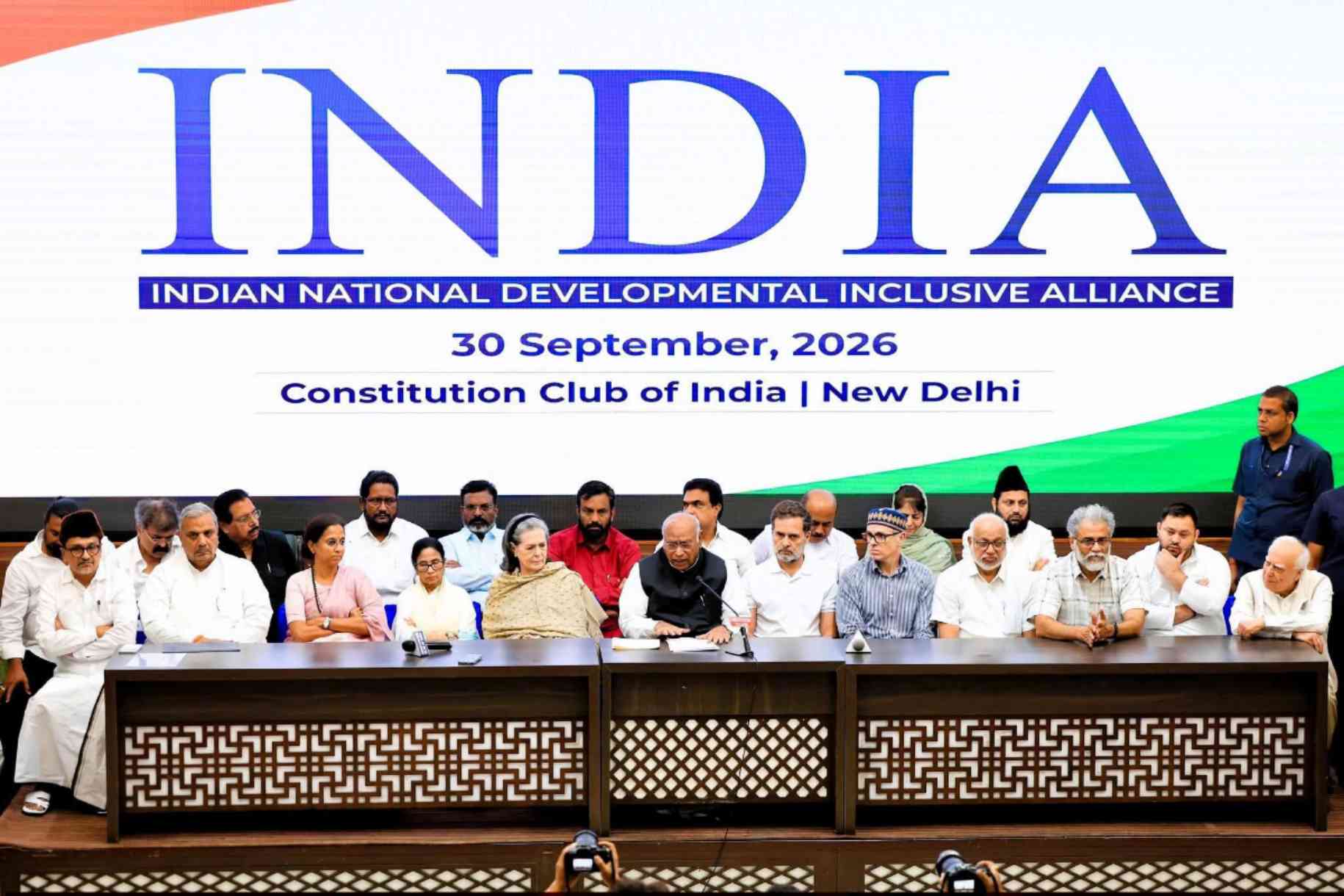
Election Commission–SIR Row: INDIA Bloc Announces...
Oct 01, 2026
WHO Unveils Critical Global Guidance to Combat Hea...
Oct 01, 2026
Beverage Blueprint: Fortifying Bones & Joints Amid...
Oct 01, 2026
Comments (0)
Leave a Comment
No comments yet. Be the first to comment!