

India's Ambitious Deep-Sea Human Mission Set for 2028 Launch
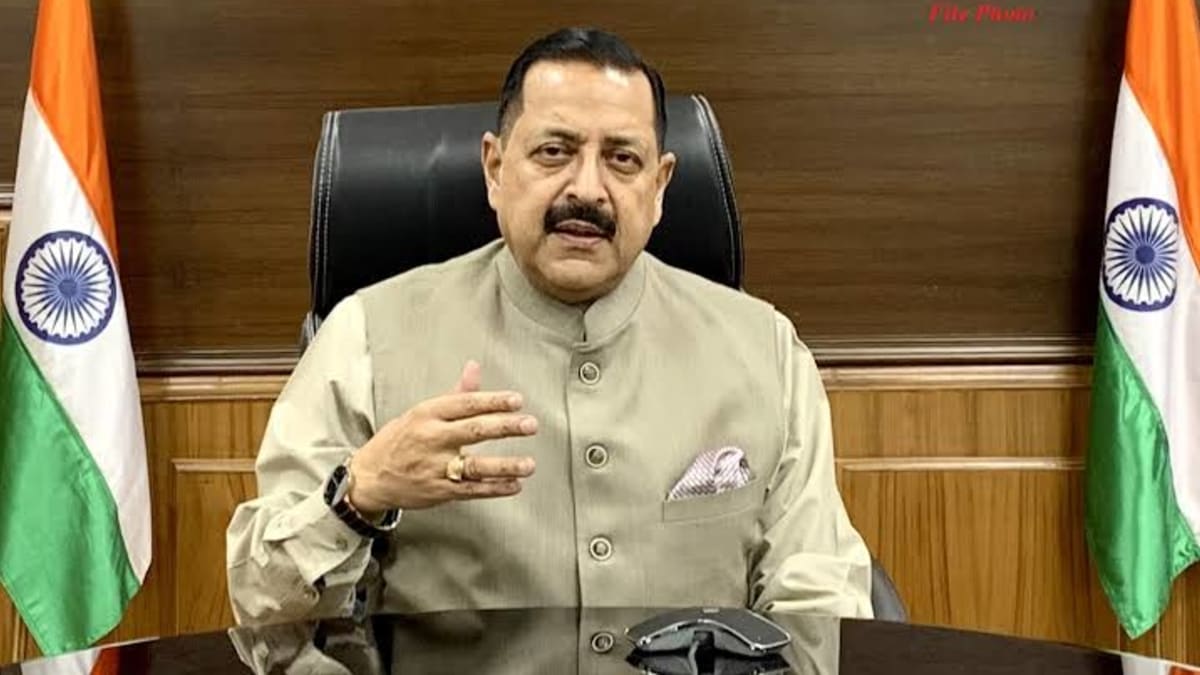
New Delhi, India – India is rapidly advancing towards deploying its first human deep-sea mission, targeting a descent to an unprecedented depth of 6,000 meters by the year 2028. This significant national endeavor was confirmed by Union Minister of State for Science and Technology, Dr. Jitendra Singh, during an official statement in New Delhi on Wednesday, November 5. The mission, dubbed 'Samudrayaan', marks a pivotal moment in India's scientific and technological prowess, mirroring its achievements in space exploration.
'Matysa 6000' Submersible to Lead the Charge
At the heart of the 'Samudrayaan' project is the development of the indigenously built deep-sea submersible, 'Matysa 6000'. This advanced vehicle is designed to carry a crew of three personnel into the abyssal depths of the ocean. According to officials familiar with the project, the submersible will be equipped with a suite of scientific sensors and tools, enabling comprehensive studies of marine biodiversity, mineral resources, and oceanographic phenomena at extreme pressures.
- Target Depth: 6,000 meters (approximately 3.7 miles)
- Crew Capacity: Three human occupants
- Projected Launch: By 2028
- Key Vehicle: 'Matysa 6000' deep-sea submersible
Strategic Imperative: Unlocking the Blue Economy
The 'Samudrayaan' mission is not merely a scientific curiosity; it is a strategic imperative aligned with India's broader vision for a 'Blue Economy'. This initiative seeks to harness ocean resources sustainably for economic growth, improved livelihoods, and ocean ecosystem health. Exploring the deep sea opens avenues for discovering new mineral reserves, understanding climate change impacts, and developing cutting-edge marine technologies.
The Ministry of Earth Sciences (MoES) is spearheading this ambitious project, with significant contributions from institutions like the National Institute of Ocean Technology (NIOT). The development of 'Matysa 6000' is a testament to India's 'Make in India' initiative, fostering self-reliance in critical technologies.
Parallels with Human Spaceflight Ambitions
Dr. Singh highlighted the parallel advancements in both deep-sea exploration and human spaceflight. Just as the Gaganyaan mission aims to send Indian astronauts to low Earth orbit, 'Samudrayaan' seeks to establish India's presence in the largely unexplored deep ocean. Both missions underscore India's growing capabilities in complex engineering and life support systems under extreme conditions.
The successful execution of 'Samudrayaan' would place India among a select group of nations possessing the technology and expertise for human deep-sea exploration. This achievement is expected to significantly boost India's standing in global marine science and technology, fostering international collaborations and attracting talent to these frontier fields.
Future Outlook for Ocean Science
The deep ocean remains one of the planet's last unexplored frontiers, holding secrets vital to understanding Earth's past, present, and future. India's commitment to deep-sea exploration through missions like 'Samudrayaan' is poised to yield groundbreaking scientific discoveries, contribute to sustainable resource management, and inspire a new generation of scientists and engineers to look beneath the waves.
Frequently Asked Questions
Sushant
Senior EditorSushant is an editorial writer and journalist for Digital Bharat Times, specializing in verified news reporting, regional developments, and national policy analysis.















Comments (0)
Leave a Comment
No comments yet. Be the first to comment!