
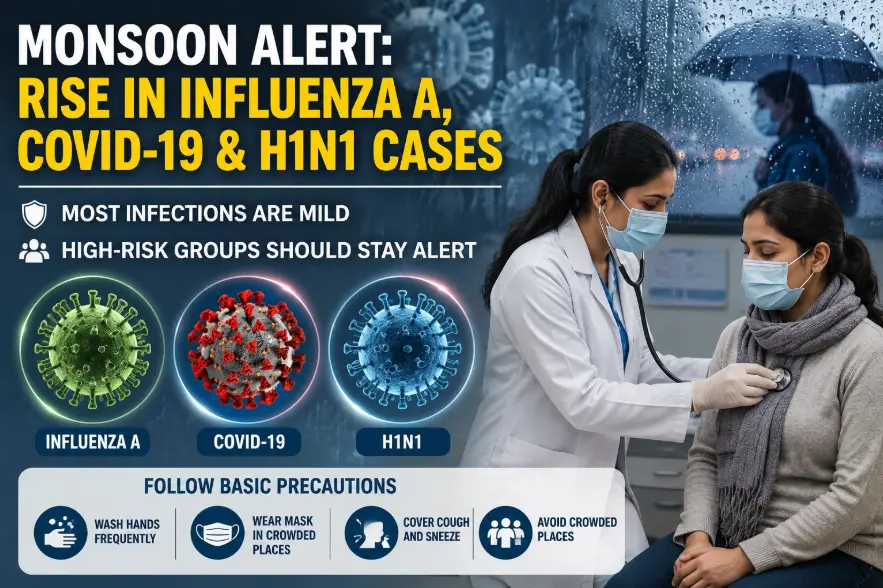

Doctors are reporting a seasonal rise in Influenza A, COVID-19 and H1N1 this monsoon. Most infections are mild, but high-risk groups should stay alert and follow basic precautions.
- Monsoon conditions are driving a seasonal rise in Influenza A, COVID-19 and H1N1.
- Most cases are mild, but high-risk groups should seek medical care early.
- Prevention measures like masks, handwashing and ventilation remain important.
Monsoon Respiratory Surge
Doctors are reporting a seasonal rise in respiratory infections this monsoon, with Influenza A, COVID-19 and H1N1 cases increasing across Indian cities. Health experts say the pattern is consistent with the monsoon season, when humidity, fluctuating weather and indoor crowding help viruses spread more easily.
Most reported cases are mild and recover with rest, hydration and supportive care, but doctors are advising people not to ignore symptoms. Testing is especially important for older adults, pregnant women, children and people with chronic illnesses or weakened immunity.
Symptoms and Risks
Common symptoms overlap across these infections and may include fever, cough, sore throat, runny or blocked nose, body aches, fatigue and headache. Because symptoms can look similar, medical experts say people should avoid self-diagnosis and seek care if breathing problems, persistent high fever or worsening weakness develop.
Doctors also warn against unnecessary antibiotic use, since these illnesses are viral. High-risk groups are being urged to act early, since complications can become serious even when most cases remain mild.
Prevention Advice
Health experts recommend basic precautions such as wearing masks in crowded indoor spaces, washing hands regularly, improving ventilation and staying home when sick. People at higher risk should stay up to date with flu and COVID-19 vaccines and consult a doctor promptly if symptoms appear.
Frequently Asked Questions
Admin
adminPassionate journalist and digital news editor committed to delivering accurate, timely, and fact-checked news.
Related Articles


Latest Articles
Nitesh Tiwari's 'Ramayana: Part 1' Trailer Unveile...
Jul 30, 2026
Gulveer Singh Scripts History with CWG 2026 10,000...
Jul 30, 2026
E20 Janta Party: New Online Movement Demands Pure...
Jul 28, 2026
Anti-Paper Leak Bill Tabled in Lok Sabha, Debate o...
Jul 28, 2026
Comments (0)
Leave a Comment
No comments yet. Be the first to comment!