


NEW DELHI — In an extraordinary turn of events within the national capital's law-enforcement apparatus, personnel of the Delhi Police staged a sit-in demonstration outside the Delhi Police Headquarters. The protest, which saw frontline officers openly express discontent against their own departmental leadership, marked a rare breakdown in institutional hierarchy and brought longstanding administrative tensions into sharp public focus.
Origin of the Dispute: The Shahdara Confrontation
The friction traces back to an altercation between advocates and police personnel at the Shahdara police station. Following allegations by lawyers of official misconduct and mistreatment, bar members launched an agitation demanding administrative action against the involved police staff.
In response, the administration ordered the transfer of two police officers associated with the incident. Rather than defusing the standoff, the disciplinary transfer sparked widespread resentment among the rank and file, who characterized the measure as an asymmetrical concession made under institutional and public pressure without adequate regard for on-duty personnel.
Grievances and Operational Demands
Gathering outside the police headquarters, protesting personnel highlighted structural challenges and procedural vulnerabilities that they argue impede their ability to perform lawful duties:
-
Allegations of Disproportionate Pressure: Protesters stated that field personnel are routinely subjected to conflicting pressures from the executive, the judiciary, and local political circles, leaving them vulnerable to unilateral administrative measures during disputes.
-
Workplace Safety and Dignity: Personnel raised urgent concerns regarding safety within police stations, alleging recurring instances of confrontation and intimidation by legal practitioners during routine procedures.
-
Staffing Shortages and Working Conditions: The demonstration brought to light broader systemic strain, including extended duty hours, persistent personnel shortages, and the resultant physical and mental toll on the constabulary.
Deadlock with Senior Command
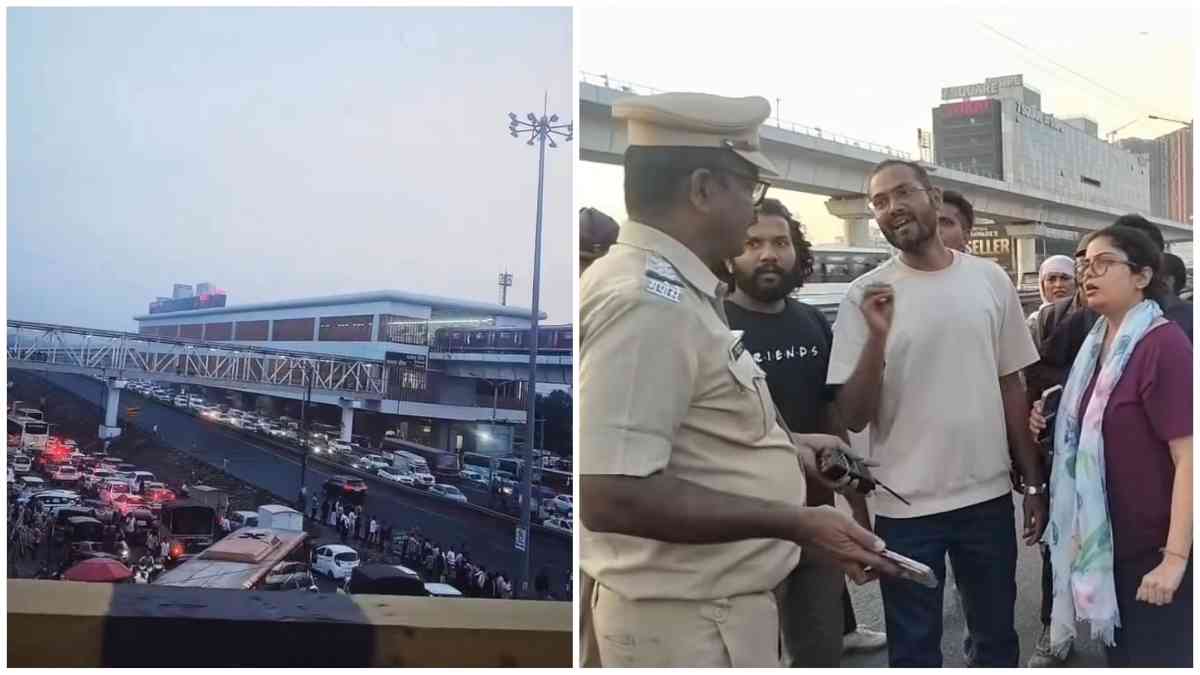
The standoff intensified as senior leadership, including Deputy Commissioners of Police (DCPs), utilized public address systems to urge the agitating officers to disperse from the public area and delegate representatives for closed-door discussions inside headquarters.
The agitating personnel declined the initial calls to move indoors, demanding immediate, concrete assurances regarding legal safeguards, review of the transfer orders, and institutional backing for on-duty staff facing external altercations.
Institutional Implications
The demonstration outside the police headquarters underscores the complex balance between police accountability and institutional morale. While administrative transfers are standard mechanisms to defuse jurisdictional tensions and facilitate impartial inquiry, the protest reflects an underlying perception among the constabulary that routine procedures can render them unprotected when clashing with organized professional groups.
The episode highlights not only the immediate friction between legal practitioners and local policing units, but also the pressing need to address broader systemic issues—including duty hour regulations, transparent inquiry protocols, and inter-institutional conflict resolution mechanisms—within India's primary urban police force.
Sadashiv Shinde
Senior EditorSadashiv Shinde is an editorial writer and journalist for Digital Bharat Times, specializing in verified news reporting, regional developments, and national policy analysis.










Comments (0)
Leave a Comment
No comments yet. Be the first to comment!