
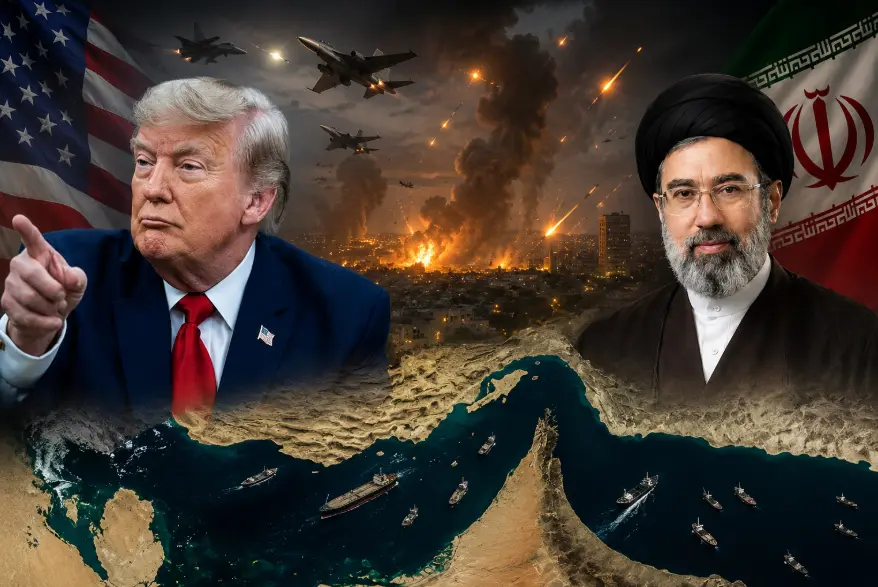

A Fragile Ceasefire Collapses
The conflict between the United States and Iran, which first erupted in late February 2026 with a coordinated US-Israeli aerial campaign against Iranian military infrastructure, has entered a dangerous new phase. A ceasefire agreement signed around June 17 had briefly calmed the region and allowed oil prices to slide back toward pre-war levels. That calm has now unraveled. President Donald Trump said in mid-July that the memorandum of understanding "didn't mean much," and within days both sides were exchanging strikes again.
Six Nights of US Strikes
As of Thursday, July 16, the US military had launched airstrikes against Iran for six consecutive nights, according to US Central Command, which says the goal is to further degrade Iranian military capability, particularly its ability to threaten shipping in the Strait of Hormuz. Explosions have been reported repeatedly in and around the southern port city of Bandar Abbas, a key hub on the strait, along with strikes in Iran's Lorestan province and elsewhere.
Iran's state media has not detailed casualty figures for the latest round of strikes, and Washington and Tehran have shown no public sign of diplomatic movement. Iran's Foreign Ministry has said it currently has no plans for negotiations and accuses the US of having disregarded the ceasefire from the outset.
Gulf Allies Caught in the Crossfire
The renewed fighting has rippled well beyond Iran's borders. Qatar, a key negotiator throughout the conflict, has come under Iranian fire twice in recent days, including an intercepted missile attack reported on Friday, July 17, that was heard by journalists in Doha. Jordan's military said it intercepted several missiles that entered its airspace from Iranian territory. The UAE has reported Iranian missiles striking two of its tankers in Omani waters, and Iran's military claims to have struck and disabled two tankers it described as "rogue." Iran's Revolutionary Guard has also claimed a strike on US forces at the al-Tanf garrison in Syria, framing it as retaliation for US strikes elsewhere in Iran, though US Central Command has not confirmed the claim.
The Strait of Hormuz Chokepoint
At the center of the crisis is the Strait of Hormuz, a narrow waterway between Iran and Oman that normally carries roughly a fifth of the world's oil and a large share of global liquefied natural gas exports. Iran's Revolutionary Guard has warned that as long as US military action in the strait continues, no oil or gas will be allowed to leave the region through it. Shipping traffic through the strait has collapsed to a small fraction of pre-war levels, with maritime intelligence tracking only a handful of vessels crossing per day compared with well over a hundred daily transits before the war began.
Oil Markets on Edge
Energy markets have swung repeatedly with each escalation. Brent crude, the international benchmark, has risen more than 3 to 4 percent on several trading days in July as fighting resumed, reversing a dip back toward pre-war prices that followed June's ceasefire. The US has also revoked a temporary sanctions waiver that had allowed limited sales of Iranian oil, cutting off transactions after July 17. Analysts have cautioned that prices are likely to stay elevated as long as conditions in the strait remain hazardous.
A Rare Diplomatic Gesture
Amid the escalation, one development stood out: Trump announced that Iran released an American woman who had been detained since December 2024, calling it a gesture of goodwill from Tehran. It remains unclear whether the release signals any broader opening for renewed talks, given Iran's continued insistence that it currently has no plans to negotiate.
What to Watch Next
With both sides continuing to trade strikes and no ceasefire talks publicly underway, attention is turning to how long Gulf states can absorb the spillover, whether shipping through the Strait of Hormuz can resume at any meaningful scale, and whether oil markets face a prolonged period of volatility reminiscent of past energy shocks.
Frequently Asked Questions
Ketan
adminPassionate journalist and digital news editor committed to delivering accurate, timely, and fact-checked news.
Related Articles


Latest Articles

Diveagar Beach Tragedy: 8 Students From Alandi's W...
Oct 02, 2026
Indian Share Market Falls: Sensex Drops 571 Points...
Oct 01, 2026
Minister Mandates Swift Clearance of 7,000+ Pendin...
Oct 01, 2026
OpenAI Unlocks AI Power for Small Businesses, Brid...
Oct 01, 2026
Comments (0)
Leave a Comment
No comments yet. Be the first to comment!