
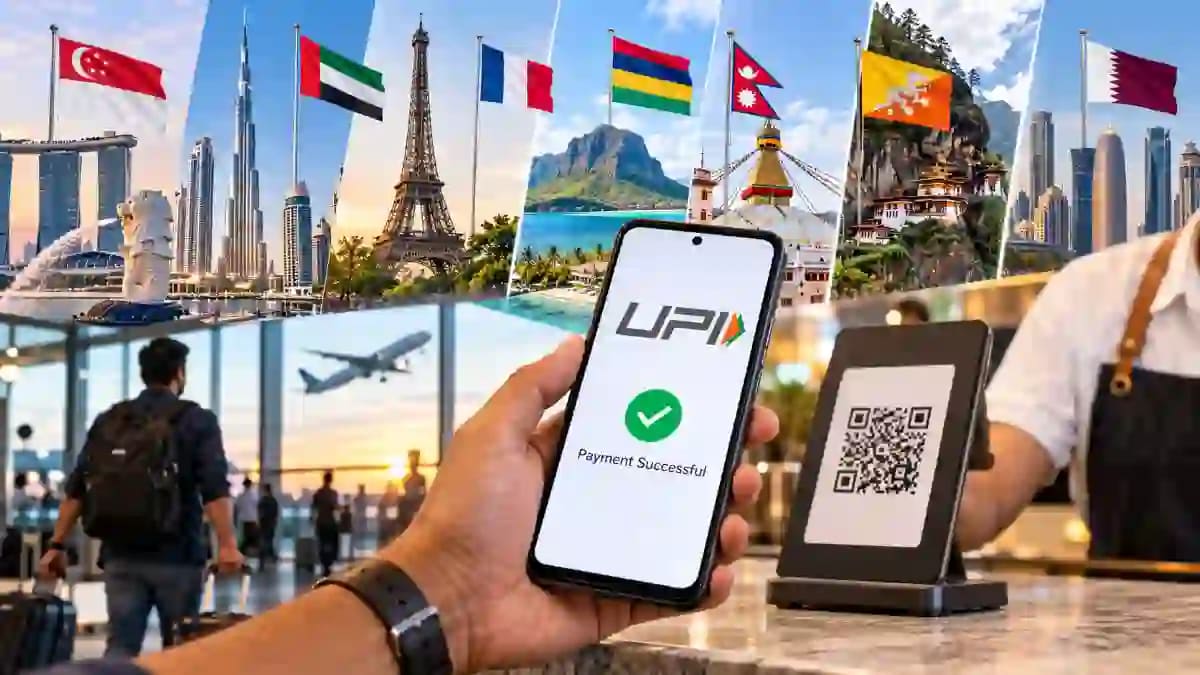

India’s Unified Payments Interface (UPI) is entering a new phase of international expansion. After transforming everyday digital payments within India, the next opportunity for the country’s payments ecosystem is increasingly shifting toward cross-border interoperability—connecting India’s instant-payment infrastructure with payment systems in other countries.
The supplied research says UPI is now available to Indian users through 13 country-market arrangements, although the exact number varies depending on how international acceptance and remittance arrangements are counted. The Government of India’s August backgrounder separately listed UPI as live in 11 foreign countries.
UPI Is No Longer Just an Indian Payment System
The scale of UPI inside India provides the foundation for its international ambitions. In May 2026 alone, UPI processed 23.2 billion transactions, according to the supplied Business Today report. Government data separately shows that in July 2026, UPI processed 2,365.8 crore transactions worth ₹29.87 lakh crore, with 741 banks live on the ecosystem.
The international strategy is being developed largely through NPCI International Payments Limited (NIPL), which works with overseas banks and payment networks to establish local acceptance and cross-border payment links.
From Singapore to Greece, Cambodia and the Maldives
Singapore was among the earliest international markets for UPI. UPI-based person-to-merchant payments began there in 2021, while the UPI–PayNow linkage later enabled person-to-person transfers.
The international network expanded further in 2026. Greece introduced UPI-based cross-border remittances, Cambodia launched UPI acceptance through a partnership involving ACLEDA Bank, and the Maldives connected its instant-payment system, Favara, with India’s UPI for cross-border remittances.
This expansion means Indian travellers can increasingly use familiar QR-based payment experiences abroad where participating merchants support UPI. However, availability depends on the country, participating merchant or payment network, supported bank or application and the specific international UPI service activated by the user.
The Bigger Opportunity Is Interoperability
The important development is not simply adding more countries. The next stage is connecting different real-time payment systems with one another.
Countries around the world are developing their own instant-payment networks. According to the supplied Business Today report, a Boston Consulting Group global payments report found that 137 countries had state-owned or mandated 24/7 instant-payment systems by June 2026.
If these systems can be connected, a consumer could potentially send money or pay a merchant abroad directly from their domestic banking application without relying exclusively on traditional card networks.
Why This Matters for Indian Travellers
UPI’s international acceptance can reduce the need for travellers to carry large amounts of foreign currency or depend entirely on international cards.
NPCI’s UPI Global Acceptance service allows eligible users to scan supported international QR codes and make payments directly from participating Indian bank accounts. Users can review the amount in foreign and Indian currency along with applicable exchange rates or fees before completing the transaction.
International UPI is not universal. Availability depends on the country, participating merchant or payment network, supported bank or application and the specific international UPI service activated by the user.
UPI’s Global Expansion Comes as Its Domestic Model Changes
The international expansion is happening at the same time as India’s domestic UPI payment model is evolving.
From October 15, 2026, a new MDR framework is scheduled to apply to certain higher-value merchant UPI transactions, while peer-to-peer transactions and most merchant transactions remain free under the announced framework. The Department of Financial Services says 96% of merchant UPI transactions will remain free.
NPCI CEO Dilip Asbe has said the new revenue structure is intended to support continued investment and ecosystem development. According to the supplied Times of India reference, NPCI estimates that the new framework could generate ₹13,000–15,000 crore in its first year.
UPI’s next international phase is increasingly about connecting payment systems rather than simply expanding the list of countries where Indian users can scan QR codes.
What Could Come Next?
The next major opportunity is likely to be deeper connections between national instant-payment systems rather than simply increasing the number of countries where Indian users can make QR payments.
Interoperability could eventually make cross-border payments between participating countries feel closer to domestic transactions, subject to foreign-exchange rules, regulatory requirements and participating institutions.
The international payments market is also economically significant. Business Today, citing BCG’s global payments outlook, reports that global payments revenue is expected to increase from nearly $2 trillion in 2025 to around $2.6 trillion by 2030.
For India, the strategic question is therefore changing from “How many countries accept UPI?” to “How many payment systems can UPI connect with?”
That shift—from international acceptance to payment interoperability—could become an important next chapter in India’s digital-payments expansion.
Frequently Asked Questions
Ketan
adminPassionate journalist and digital news editor committed to delivering accurate, timely, and fact-checked news.
Related Articles




Latest Articles

Trump, Tech Giants Ink Voluntary AI Pact Amid Glob...
Oct 01, 2026
Khanna Targets 'Recursive' AI with Landmark Safety...
Oct 01, 2026
Election Commission–SIR Row: INDIA Bloc Announces...
Oct 01, 2026
WHO Unveils Critical Global Guidance to Combat Hea...
Oct 01, 2026
Comments (0)
Leave a Comment
No comments yet. Be the first to comment!