


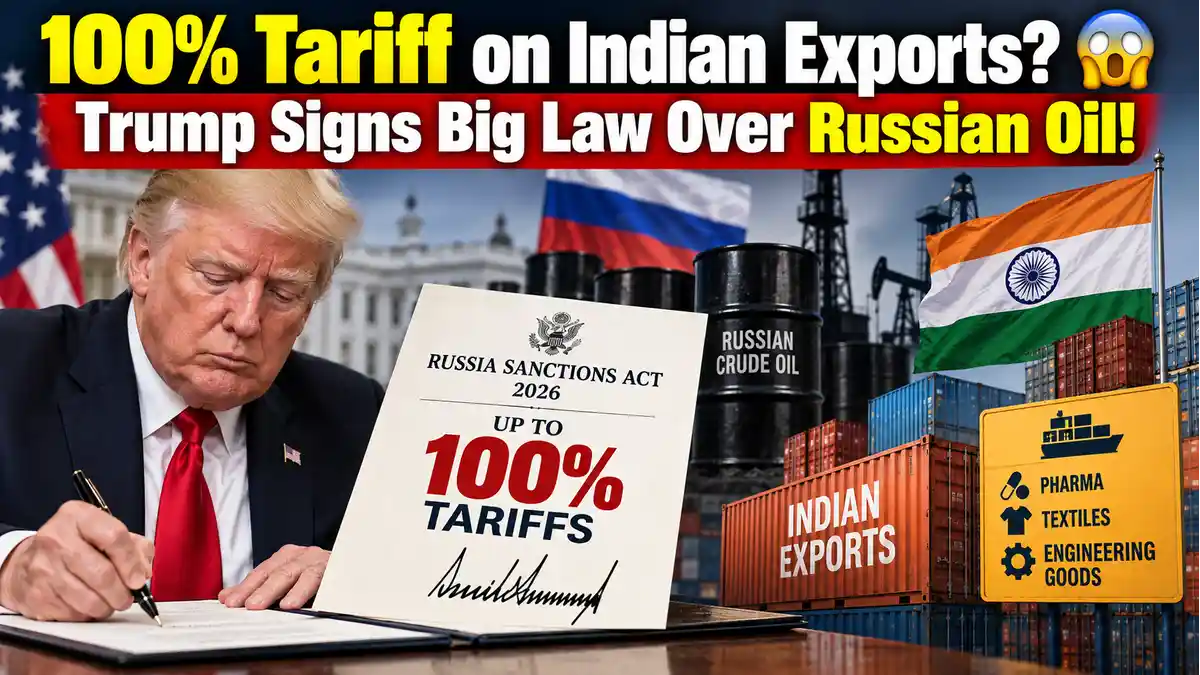
Following the enactment of the bipartisan Lindsey O. Graham Sanctioning Russia and Iran Act of 2026, India's Ministry of Petroleum and Natural Gas (MoPNG) faces a complex geoeconomic realignment. Under Section 113 of the statute, the White House holds discretionary authority to levy additional ad valorem tariffs of up to 100% on imports from the top five sovereign buyers of Russian petroleum unless those nations demonstrate verifiable volumetric cuts. For India—where total petroleum consumption averages 4.7 million barrels per day (mbpd), with Russian Urals accounting for nearly 45% to 50% of seaborne arrivals—a total withdrawal from Moscow would trigger immediate retail fuel inflation. Instead, New Delhi is pursuing a calibrated compositional substitution strategy: trimming Russian intake, scaling term liftings from traditional Persian Gulf suppliers, and expanding purchases of American West Texas Intermediate (WTI) alongside liquefied natural gas (LNG) as a bilateral negotiating shield.
The Refining Architecture: Deploying the 'Dumbbell Blend' Solution
India's primary coastal refineries operated by Indian Oil Corporation (IOCL), Bharat Petroleum (BPCL), and Reliance Industries Limited (RIL) feature high Nelson Complexity Indices (NCI 10–21). These facilities are chemically engineered to crack medium and heavy sour grades into high-margin middle distillates like ultra-low sulfur diesel (ULSD) and aviation turbine fuel (ATF). Completely halting discounted Russian Urals would severely dent Gross Refining Margins (GRMs).
To absorb U.S. crude without re-engineering secondary catalytic crackers, domestic refiners utilize dumbbell blending. Because export-grade American barrels like WTI Midland are light and sweet (API ~40° with low sulfur), refiners combine them with heavy, high-sulfur grades from Iraq (Basrah Heavy) or resumed Venezuelan flows (Merey 16). This engineered composite mimics the exact density and sulfur profile of Russian Urals, enabling high secondary-unit utilization.
"The statutory language under Section 113 hinges on demonstrable reductions. By adjusting Russian liftings from peak 2.2 mbpd runs to an estimated 1.1–1.3 mbpd, India creates a quantifiable trajectory of volumetric moderation that satisfies U.S. waiver criteria," noted energy market analysts.
The Middle Eastern Pivot: Re-Anchoring the Gulf Baseline
Data from the Petroleum Planning & Analysis Cell (PPAC) underscores that traditional Middle Eastern producers remain the geographic foundation of India's energy logistics. Allocations from Iraq's State Organization for Marketing of Oil (SOMO) and term contracts with Saudi Aramco provide immediate replacement volumes. A Very Large Crude Carrier (VLCC) from the Persian Gulf reaches west coast terminals like Sikka, Vadinar, and Mundra within 3 to 5 days, compared to the 28- to 35-day voyage required for shadow-fleet tankers departing Russian Baltic ports. As spot discounts on Urals shrink, Middle Eastern official selling prices (OSPs) have regained economic competitiveness on a landed cost basis.
However, geopolitical bottlenecks persist. Continued maritime security risks across the Strait of Hormuz and the Red Sea corridor prevent India from relying exclusively on Gulf supplies, ensuring New Delhi maintains diversified Eurasian supply routes as a strategic hedge.
The American Offset: Scaling WTI and Long-Term LNG Offtakes
To substantiate an executive waiver under Section 113(d), New Delhi is accelerating U.S. energy purchases to 8%–10% of its overall import slate (350,000 to 450,000 bpd), expanding beyond historical allocations of ~150,000 bpd. These lighter American barrels will primarily displace West African grades, preserving refinery configurations.
Concurrently, state-owned utility GAIL (India) Limited is negotiating long-term 20-year contracts with U.S. Gulf Coast export terminals like Sabine Pass and Freeport. Substantial dollar-denominated purchases of U.S. LNG directly narrow the bilateral goods trade surplus, providing the White House with actionable commercial metrics to justify an exemption. External Affairs Minister S. Jaishankar has repeatedly emphasized that Indian consumption absorbs surplus global oil, preventing benchmark Brent prices from escalating toward $130 per barrel—a stabilization dynamic that protects Western economies and domestic consumers alike.
Frequently Asked Questions
Ketan
adminPassionate journalist and digital news editor committed to delivering accurate, timely, and fact-checked news.
Related Articles


Latest Articles

Trump, Tech Giants Ink Voluntary AI Pact Amid Glob...
Oct 01, 2026
Khanna Targets 'Recursive' AI with Landmark Safety...
Oct 01, 2026
Election Commission–SIR Row: INDIA Bloc Announces...
Oct 01, 2026
WHO Unveils Critical Global Guidance to Combat Hea...
Oct 01, 2026
Comments (0)
Leave a Comment
No comments yet. Be the first to comment!