
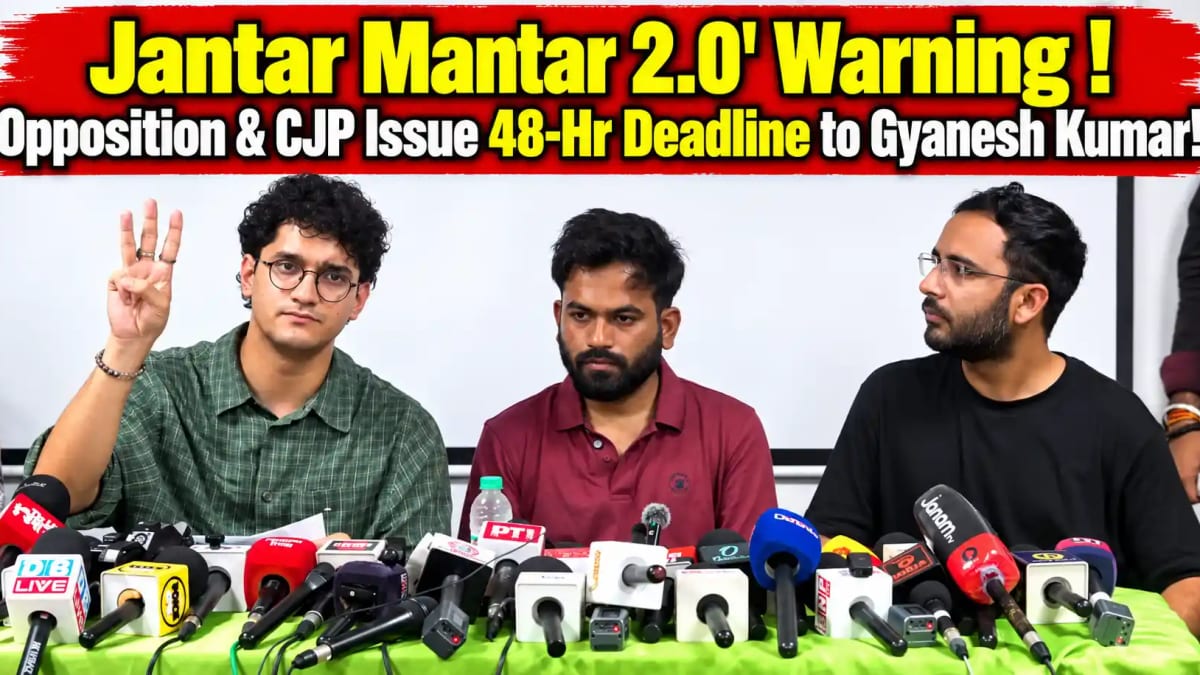

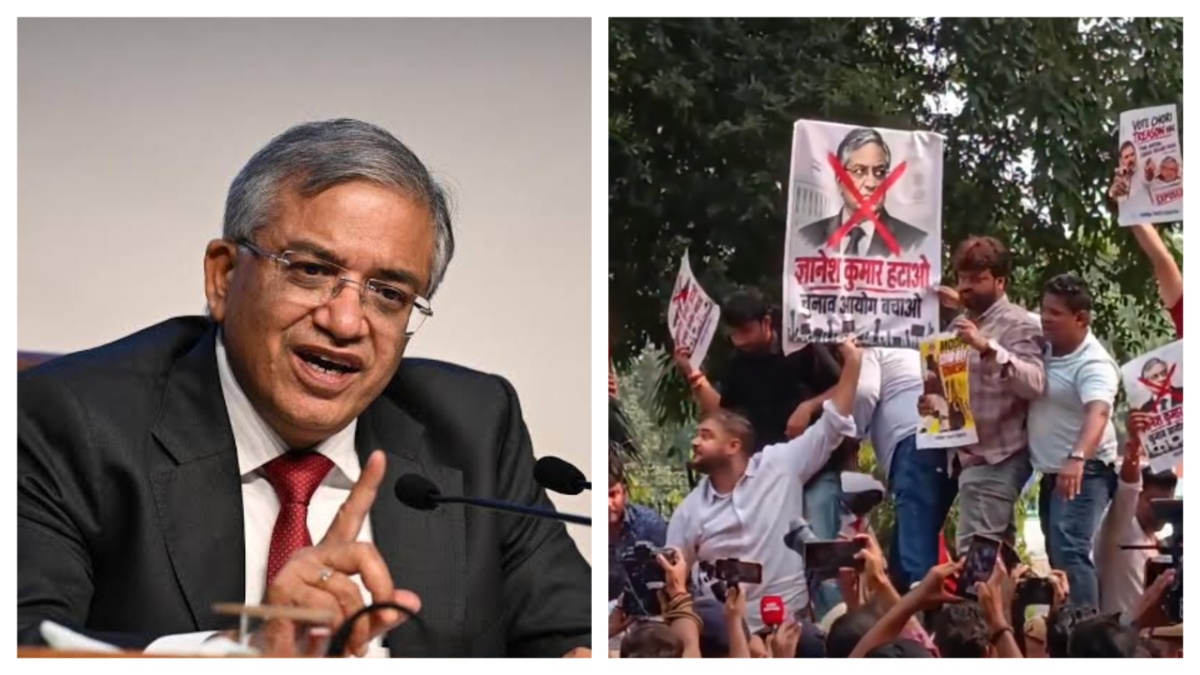
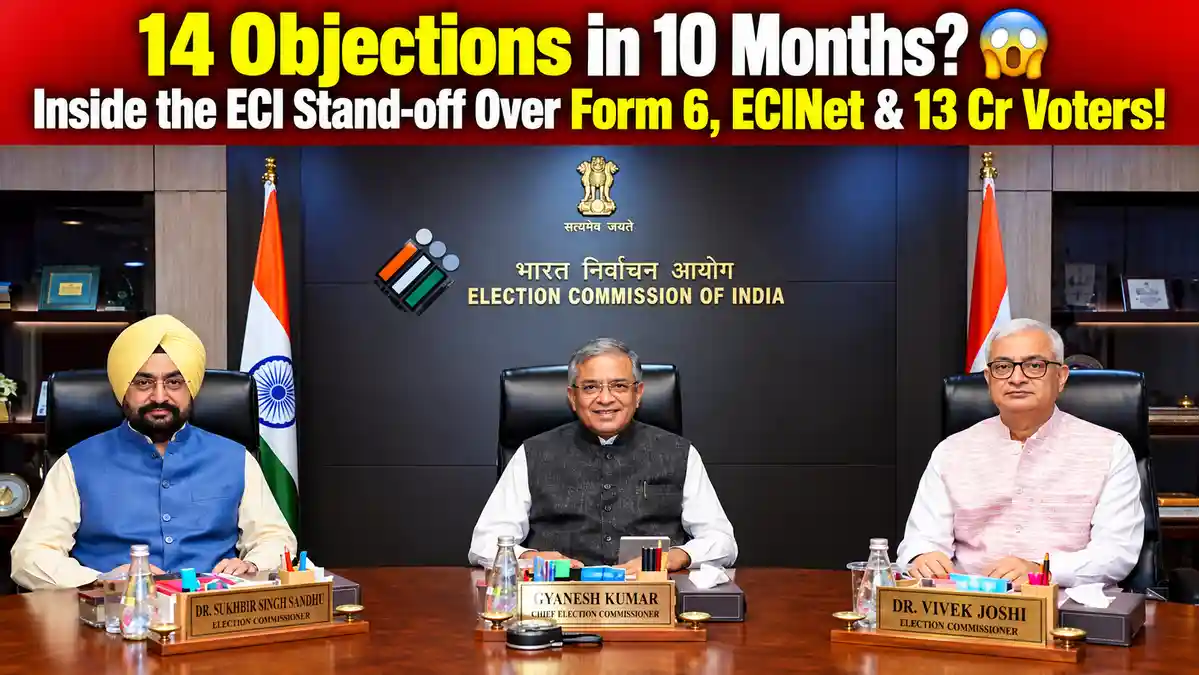
The institutional crisis enveloping the Election Commission of India (ECI) escalated into a full-blown political confrontation on September 24, 2026, after Leader of the Opposition in the Lok Sabha Rahul Gandhi demanded the immediate resignation of Chief Election Commissioner (CEC) Gyanesh Kumar. Addressing a crowded press conference in New Delhi, Gandhi linked his demand directly to investigative disclosures revealing that Election Commissioners Sukhbir Singh Sandhu and Vivek Joshi had registered at least 14 formal written objections over a 10-month span concerning unilateral decisions on electoral roll management, statutory modifications to Form 6, and the controversial Special Intensive Revision (SIR). Compounding the administrative pressure, political outfit Cockroach Janta Party (CJP) issued a 48-hour ultimatum for Kumar to vacate office, warning of an indefinite capital sit-in dubbed 'Jantar Mantar 2.0'.
The Catalyst: 14 Objections and the 13-Crore Draft Roll Scrutiny
The controversy originates from an exhaustive investigation documenting sustained internal friction inside Nirvachan Sadan between November 2025 and August 2026. The two commissioners repeatedly questioned administrative orders executed without collegiate consultation:
- Statutory Alteration of Form 6: In May 2026, Commissioner Vivek Joshi objected to the unilateral insertion of a declaration in Form 6 requiring first-time voter applicants to certify whether their ancestors appeared in historical SIR voter registers. On August 13, Commissioner Sandhu formally recorded a dissent classifying the alteration as 'unauthorised and illegal' under the Registration of Electors Rules, 1960.
- Scale of the SIR Exercise: Initiated in Bihar in June 2025 before being expanded across 30 States and Union Territories, the SIR process saw over 13 crore names excluded from draft electoral rolls. While civil society groups and opposition leaders termed these exclusions a massive voter purge, election officials clarified that draft roll omissions represent verification stages subject to statutory claims and objections rather than verified permanent deletions.
- Technological Centralization via ECINet: Commissioners Sandhu and Joshi flagged the concentration of database overrides within the central IT cell, warning that centralized software systems undermined the statutory powers of field-level Electoral Registration Officers (EROs) under the Representation of the People Act, 1950.
"Gyanesh Kumar must resign immediately. The revelation that two Election Commissioners repeatedly objected to unauthorized voter modifications proves that the institution's collegiate character has been compromised," asserted Rahul Gandhi during his press briefing.
CJP Issues 48-Hour Deadline: 'Jantar Mantar 2.0' Announced
Expanding the dispute beyond parliamentary corridors, the Cockroach Janta Party (CJP), led by founder and national convenor Abhijeet Dipke alongside co-convenors Saurav Das and Ashutosh Ranka, held a press briefing demanding Kumar's resignation within 48 hours. The outfit announced three mandatory demands:
- Immediate Resignation: Step-down of CEC Gyanesh Kumar over the suppression of fellow commissioners' dissenting notes.
- Freeze on SIR Exclusions: A complete moratorium on SIR-linked roll exclusions and the provisional restoration of the January 2025 baseline voter registers pending independent audit.
- Repeal of the 2023 Appointment Act: Revocation of the Chief Election Commissioner and Other Election Commissioners Act, 2023, which replaced the Chief Justice of India on the selection panel with a Union Cabinet Minister.
CJP leadership affirmed that if the 48-hour deadline lapses without the CEC's resignation, the organization will launch a nationwide campaign entitled 'Election Commission Thik Karo', culminating in an indefinite demonstration in New Delhi framed as 'Jantar Mantar 2.0'.
"Jantar Mantar 2.0 will definitely happen if CEC Gyanesh Kumar doesn't resign. We cannot allow the bedrock of Indian democracy to be dismantled through centralized software algorithms," declared Abhijeet Dipke.
The Commission's Defense: Unanimity and Collegiate Functioning
In response to the mounting political firestorm, the Election Commission maintained its institutional defense. Rebutting claims of dysfunction, official ECI communications stated that differing opinions, internal queries, and file notes represent standard, healthy deliberative practices in a constitutional collegium. The Commission reiterated that all finalized regulatory orders—including the nationwide rollout of the SIR—were adopted with the unanimous approval of Chief Election Commissioner Gyanesh Kumar, Commissioner Sukhbir Singh Sandhu, and Commissioner Vivek Joshi.
Under Article 324 of the Constitution and Section 18 of the 2023 Act, the Commission's business is structured to be transacted unanimously whenever feasible, and by majority vote in the event of formal division. Constitutional experts emphasize that under Indian law, removing a sitting Chief Election Commissioner requires a rigorous impeachment motion in Parliament under Article 124(4), demanding a two-thirds majority in both Houses on grounds of proven misbehavior or incapacity. With the 48-hour ultimatum ticking down and opposition parties coordinating strategy, attention turns to whether the Supreme Court of India will be petitioned to review the SIR framework.
Frequently Asked Questions
Ketan
adminPassionate journalist and digital news editor committed to delivering accurate, timely, and fact-checked news.
Related Articles

Latest Articles

Trump, Tech Giants Ink Voluntary AI Pact Amid Glob...
Oct 01, 2026
Khanna Targets 'Recursive' AI with Landmark Safety...
Oct 01, 2026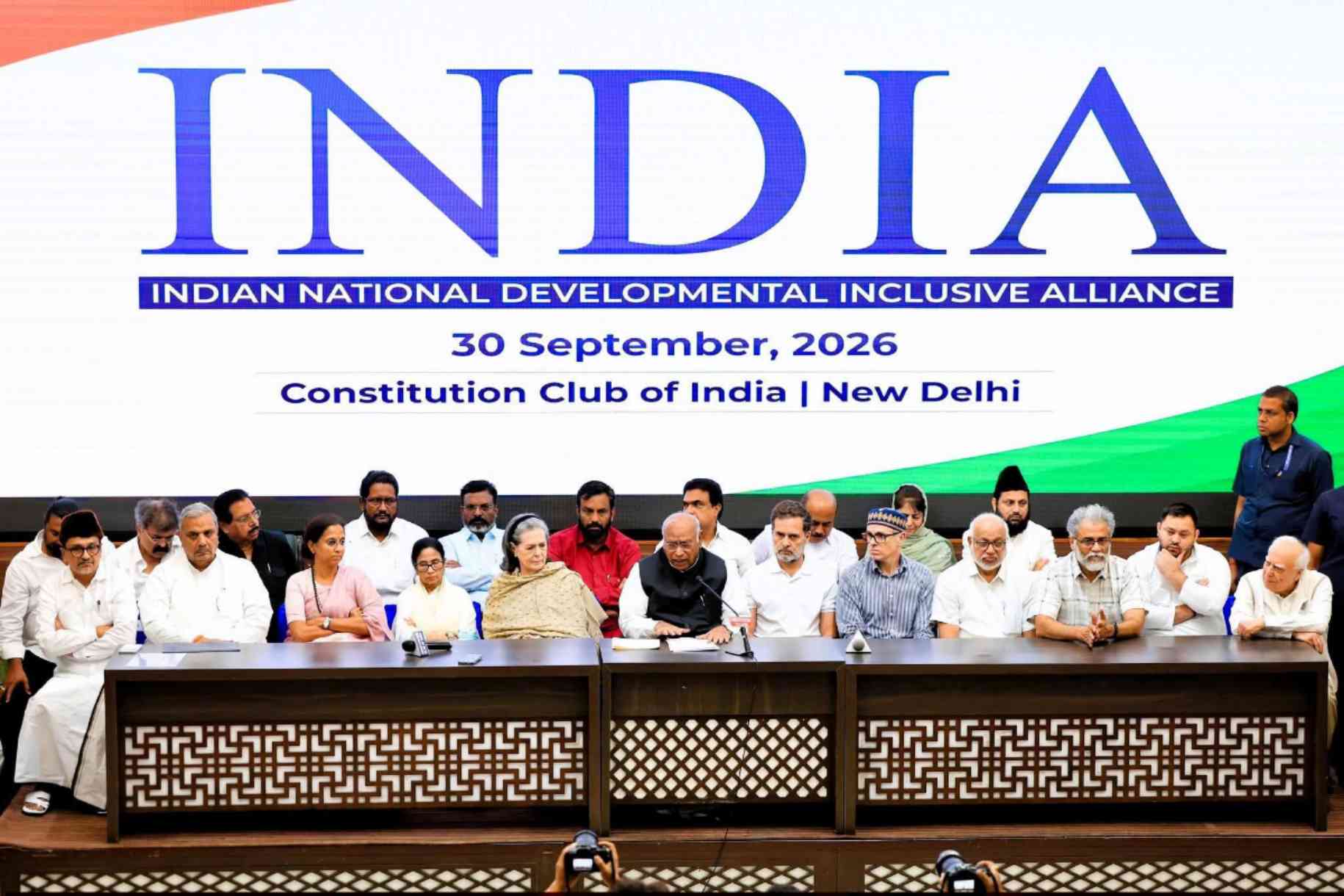
Election Commission–SIR Row: INDIA Bloc Announces...
Oct 01, 2026
WHO Unveils Critical Global Guidance to Combat Hea...
Oct 01, 2026
Comments (0)
Leave a Comment
No comments yet. Be the first to comment!