


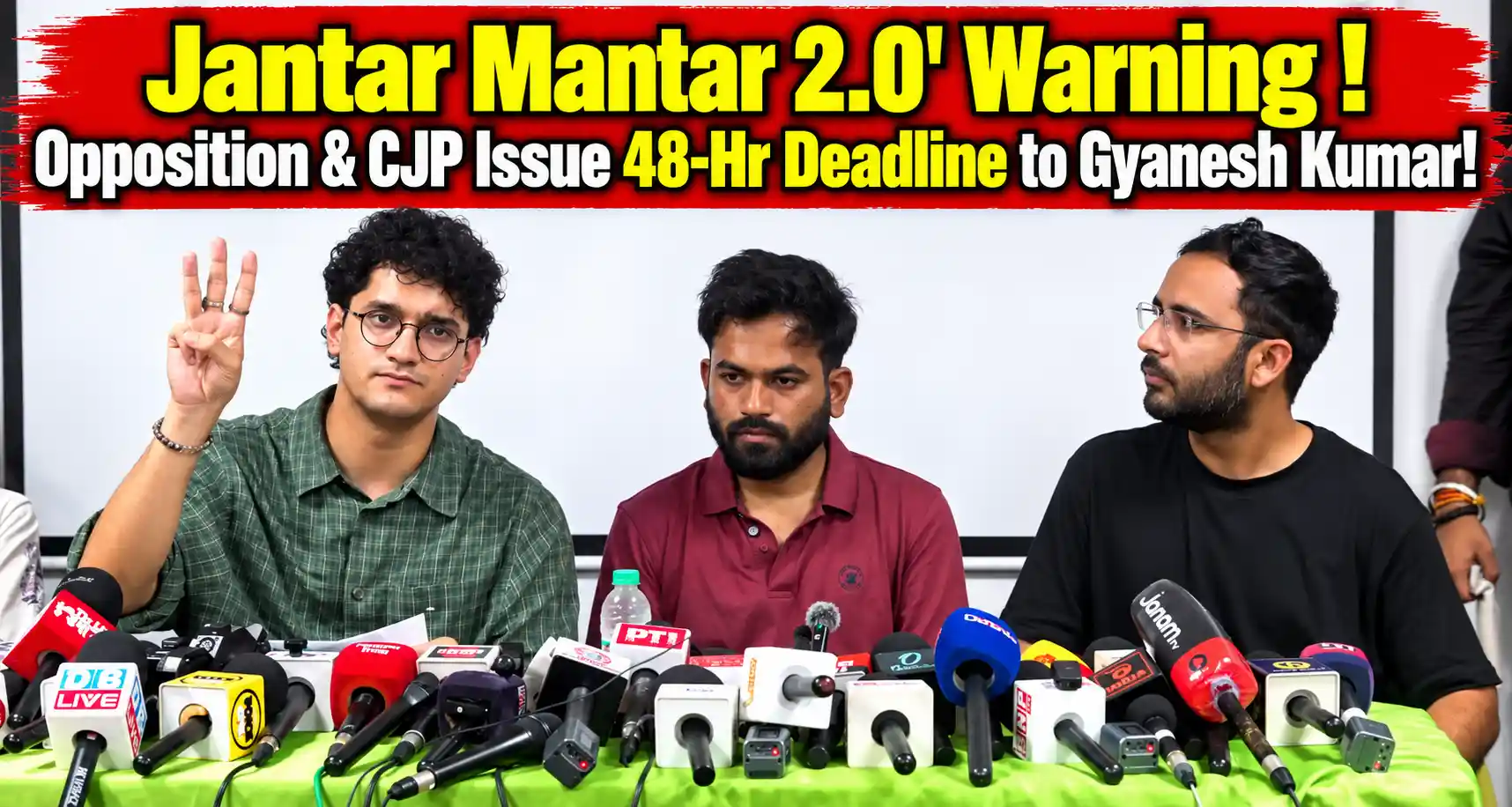
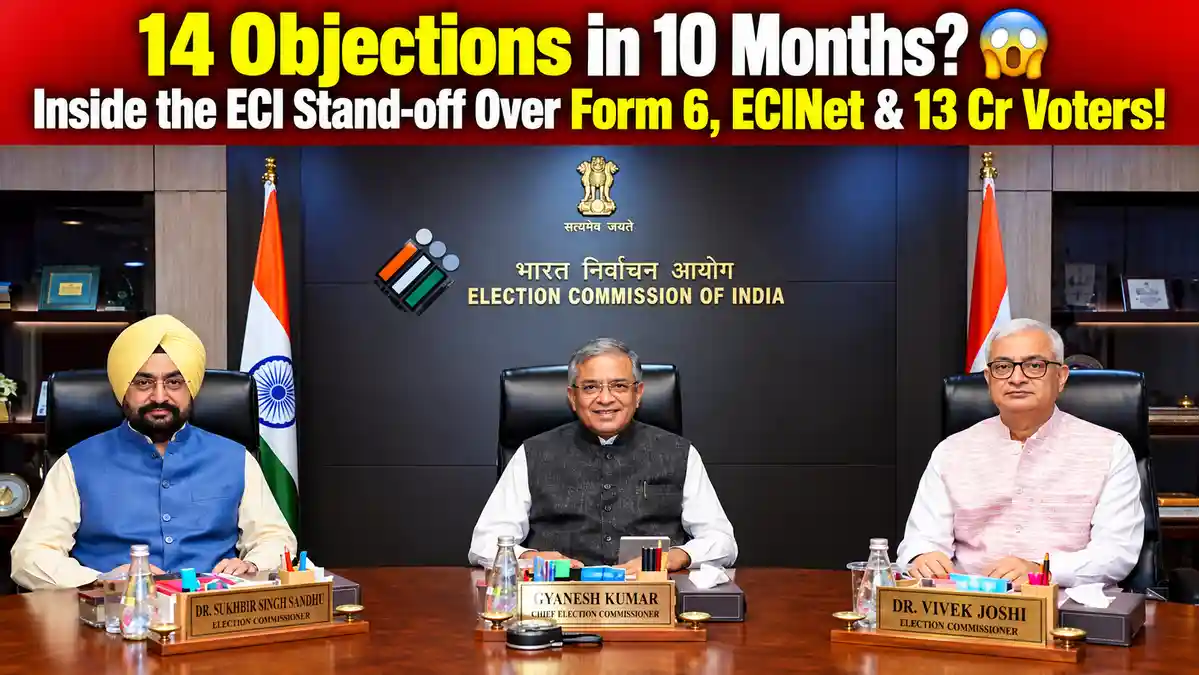
The institutional row surrounding the Election Commission of India (ECI) took to the streets of the national capital on Wednesday, September 23, 2026, as hundreds of Indian Youth Congress (IYC) workers staged an aggressive protest against Chief Election Commissioner (CEC) Gyanesh Kumar in New Delhi. Visuals captured by photojournalists, including Sushil Kumar Verma, documented demonstrators raising slogans, carrying anti-CEC placards, and clashing with Delhi Police barricades near Nirvachan Sadan. The street mobilization followed investigative disclosures revealing that Election Commissioners Sukhbir Singh Sandhu and Vivek Joshi had registered at least 14 formal written objections over a 10-month span, alleging that decisions regarding voter registrations and statutory roll revisions were executed unilaterally without collegiate consensus.
The Core Catalyst: Sidelined Commissioners and Voter Roll Scrutiny
The political agitation stems directly from concerns over the procedural integrity of India's apex election conducting body. Since 1993, the Commission has functioned as a three-member constitutional bench governed by Article 324 and Section 18 of the Chief Election Commissioner and Other Election Commissioners Act, 2023, which requires decisions to be taken unanimously or resolved through majority voting.
Opposition leadership—spearheaded by the Congress and the Trinamool Congress (TMC)—asserted that CEC Gyanesh Kumar effectively sidelined fellow commissioners when making unilateral modifications to Form 6 and executing the nationwide Special Intensive Revision (SIR). The opposition alleged that the centralized tech system, ECINet, bypassed state-level Electoral Registration Officers (EROs), leading to the arbitrary deletion of millions of legitimate voters across election-bound and politically sensitive states including Haryana, West Bengal, and Goa.
"The revelation of 14 written dissents proves that the constitutional checks inside the Election Commission have been systematically neutralized. The Chief Election Commissioner must be held accountable for subverting multi-member consensus," stated IYC demonstrators during the Delhi agitation.
The Commission's Rebuttal and Institutional Defense
In response to the growing political confrontation and the street agitations in the capital, the Election Commission issued an emphatic defense of its internal governance model. Commission sources clarified that internal dissents, written queries, and administrative notes represent standard deliberative procedures in any constitutional collegium. The ECI reiterated that all statutory decisions—including the execution of the SIR across 30 States and Union Territories—had the full, documented consent and signature of all three commissioners.
Former Chief Election Commissioner S.Y. Quraishi noted that while differences of opinion are standard in collegiate bodies, keeping statutory disagreements unresolved without recorded majority votes invites legitimate legal and constitutional scrutiny. The controversy unfolds against ongoing debates before the Supreme Court of India concerning the institutional independence of the appointment mechanism for election commissioners, further intensifying public and parliamentary demands for administrative transparency.
Frequently Asked Questions
Ketan
adminPassionate journalist and digital news editor committed to delivering accurate, timely, and fact-checked news.
Related Articles

Latest Articles

Trump, Tech Giants Ink Voluntary AI Pact Amid Glob...
Oct 01, 2026
Khanna Targets 'Recursive' AI with Landmark Safety...
Oct 01, 2026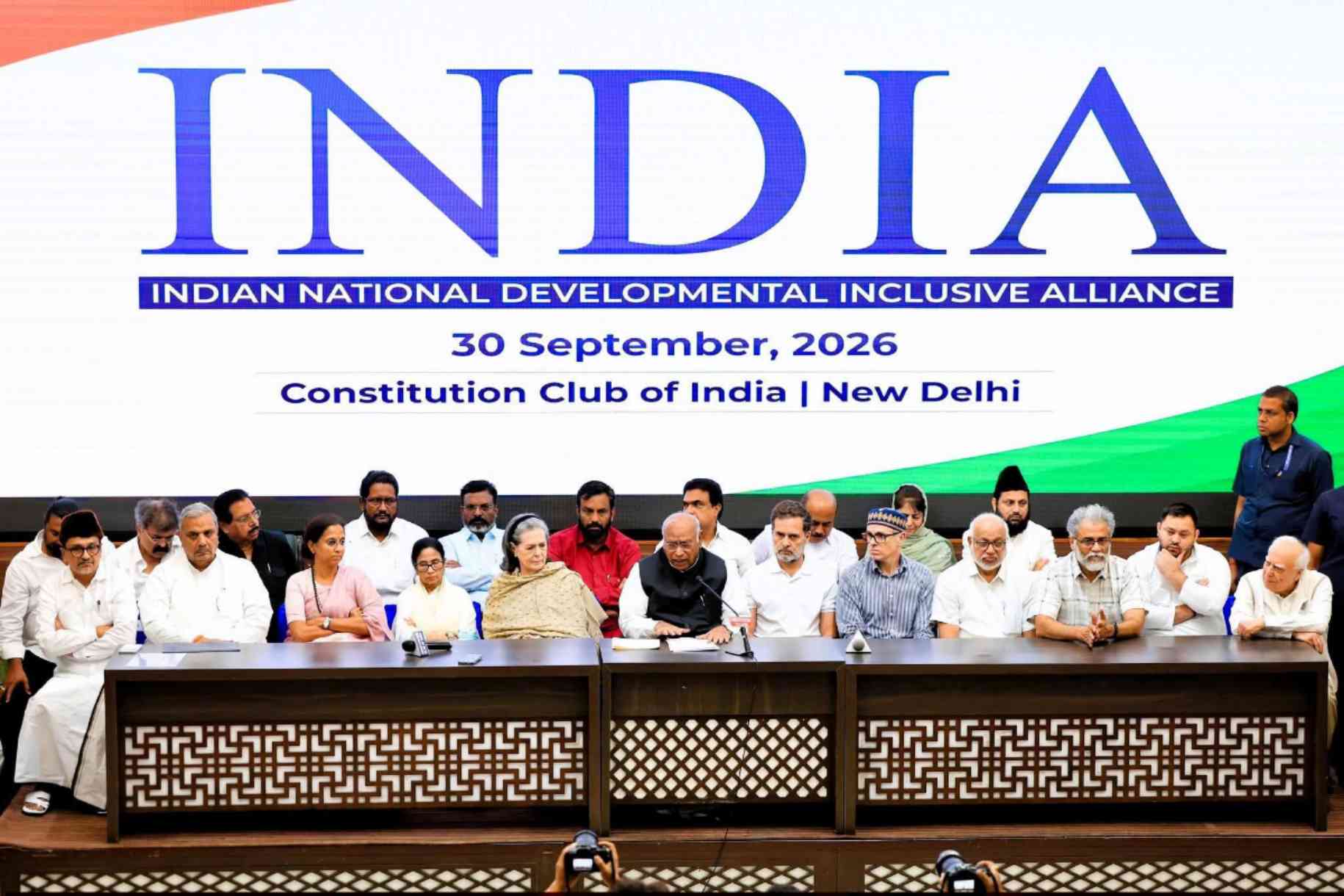
Election Commission–SIR Row: INDIA Bloc Announces...
Oct 01, 2026
WHO Unveils Critical Global Guidance to Combat Hea...
Oct 01, 2026
Comments (0)
Leave a Comment
No comments yet. Be the first to comment!