
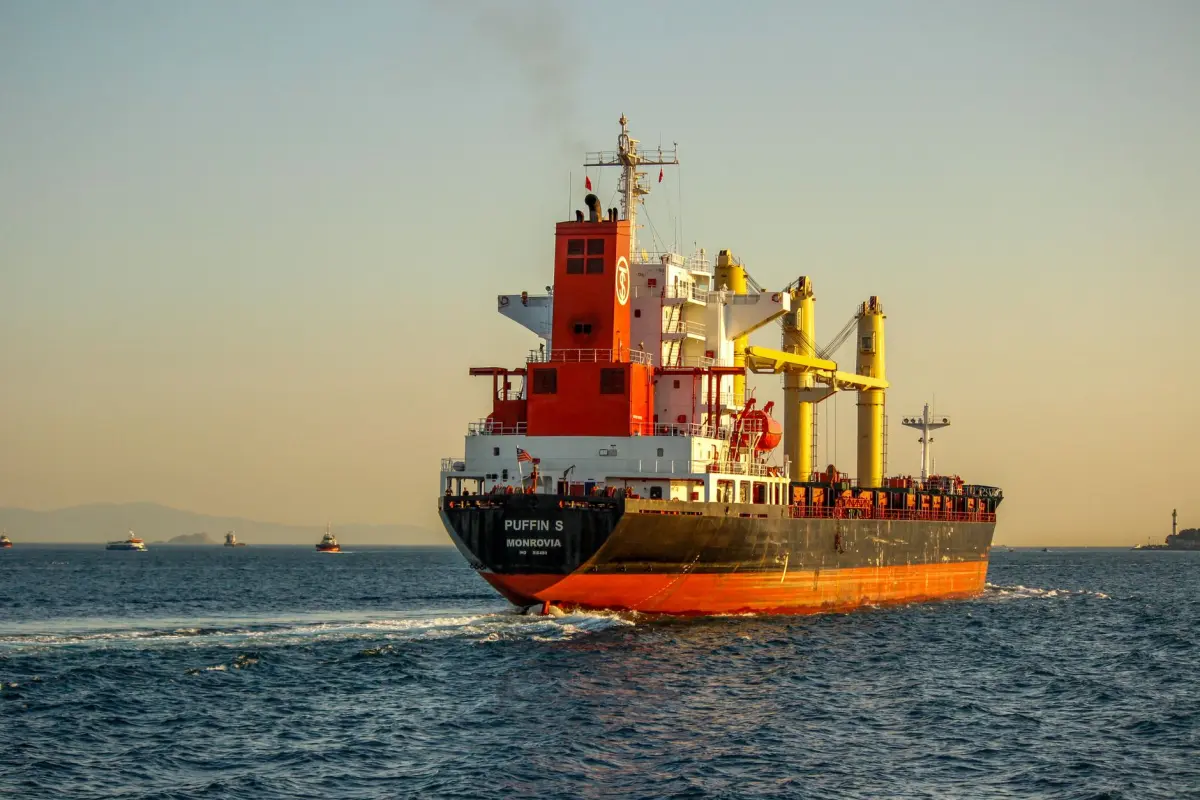

This breaking news report details the July 14, 2026, cruise missile attacks by Iran against two UAE tankers in the Strait of Hormuz, resulting in Indian casualties. The report cleanly synthesizes the regional fallout from Trump's newly declared shipping blockade, the responses from Abu Dhabi and Tehran, and the immediate impact on global benchmarks.
- An Iranian cruise missile strike on UAE oil tankers Mombasa and Al Bahiyah killed one Indian sailor and injured six others in Omani waters.
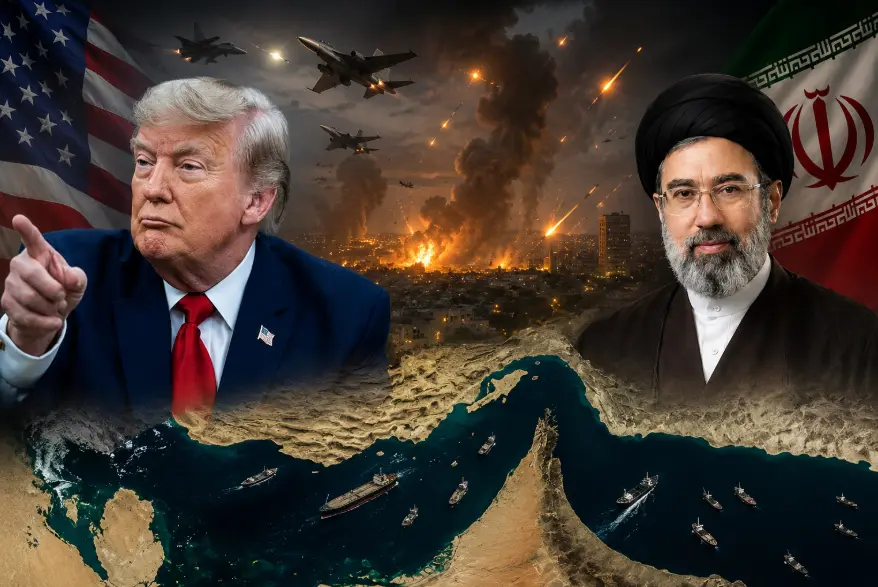
- The escalation occurred immediately after US President Donald Trump announced a reinstated naval blockade on Iran and a proposed 20% transit protection fee.
- Iran's Revolutionary Guards claimed the ships breached safety protocols, while the UAE slammed the strike as piracy and asserted its right to respond.
The escalating West Asia conflict has struck a direct and tragic blow to international mariners. On Tuesday, July 14, 2026, the United Arab Emirates (UAE) Ministry of Defence confirmed that two of its commercial oil tankers—the Mombasa and the Al Bahiyah—were struck by Iranian cruise missiles while transiting the vital Strait of Hormuz maritime corridor.
The precision strike took place in the southern shipping lane of the strait, positioned within Omani territorial waters. The attack resulted in the immediate death of an Indian merchant navy crew member serving aboard the Mombasa. Eight other seafarers were wounded, four of them critically; the casualties include six Indian nationals and two Ukrainian crew members. Both vessels sustained substantial structural damage as onboard fires erupted, which were later contained by the surviving crew.
Conflicting Stances: UAE Retaliation Warnings vs. Iranian Justifications
Condemning the incident in the strongest terms, the UAE Ministry of Foreign Affairs characterized the missile strikes as a "blatant attack" and a grave breach of international maritime law that threatens global economic stability. Officials in Abu Dhabi stated that the UAE "reserves its full right to respond to this escalation" and is taking all necessary national security measures to protect its sovereign and maritime interests.
"Targeting commercial shipping and using the Strait of Hormuz as a tool of economic coercion or blackmail constitutes an act of piracy and poses a direct threat to regional stability and global energy security."
In response, Iran's Islamic Revolutionary Guard Corps (IRGC) issued a statement acknowledging that its forces targeted and disabled two "offending" supertankers. Tehran claimed that the vessels had disabled their transponder tracking systems, willfully ignored repeated naval warnings, and attempted to navigate an unauthorized, mined route under direct encouragement from the United States military.
The Trump Shipping Blockade and Regional Fallout
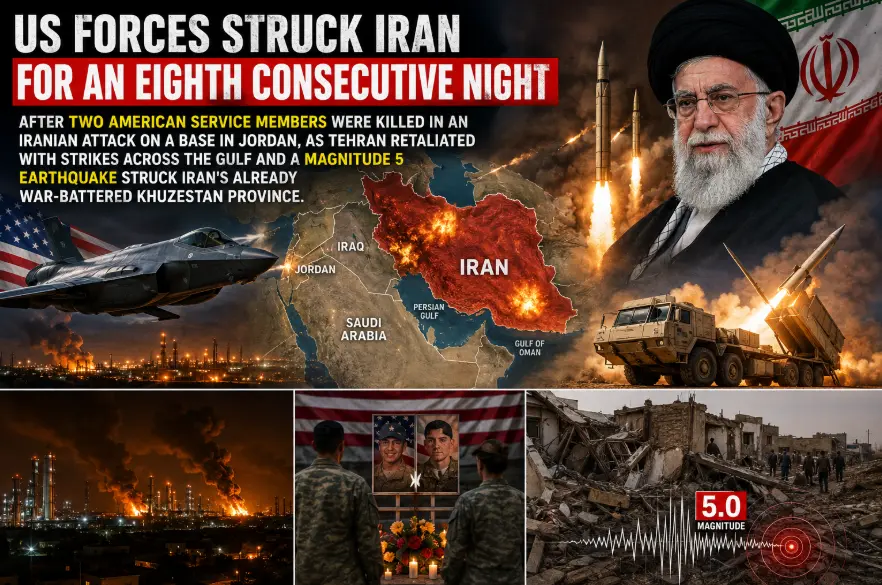
This high-stakes maritime confrontation follows a highly volatile 24-hour cycle between Washington and Tehran. U.S. Central Command (CENTCOM) executed its third consecutive night of heavy airstrikes against coastal missile silos, drone infrastructure, and air defense systems inside Iran. The military action was synchronized with an announcement by U.S. President Donald Trump reinstating a strict naval blockade on all Iranian shipping. Crucially, the Trump administration declared that the U.S. military would secure the Strait of Hormuz but proposed charging commercial vessels a 20% transit protection fee to use the passage.
The escalation immediately triggered regional alerts, with missile warning sirens sounding across Bahrain near the headquarters of the U.S. Navy's Fifth Fleet following retaliatory Iranian rocket fire. The developments have effectively upended the fragile, interim U.S.-Iran diplomatic agreement signed just last month, which had aimed to temporarily halt hostilities and keep the shipping channels clear.
Global Energy Shockwaves and New Delhi's Dilemma
The Strait of Hormuz serves as the world's premier energy chokepoint, historically facilitating the daily movement of roughly 20% of global seaborne petroleum and liquefied natural gas (LNG). Following the news of the missile strikes on the Emirati vessels, global energy markets reacted sharply, sending benchmark Brent crude oil prices surging as traders priced in heightened maritime war-risk premiums.
For New Delhi, the incident represents an acute humanitarian and economic crisis. India's Ministry of External Affairs is facing intense pressure to secure the safety of thousands of its nationals working aboard commercial fleets in the Persian Gulf. Diplomatic backchannels are actively engaging both regional powers and international maritime organizations to demand immediate de-escalation and the protection of innocent merchant sailors.
Frequently Asked Questions
Admin
adminPassionate journalist and digital news editor committed to delivering accurate, timely, and fact-checked news.
Related Articles


Latest Articles

Nitesh Tiwari's 'Ramayana: Part 1' Trailer Unveile...
Jul 30, 2026
Gulveer Singh Scripts History with CWG 2026 10,000...
Jul 30, 2026
E20 Janta Party: New Online Movement Demands Pure...
Jul 28, 2026
Anti-Paper Leak Bill Tabled in Lok Sabha, Debate o...
Jul 28, 2026
Comments (0)
Leave a Comment
No comments yet. Be the first to comment!