
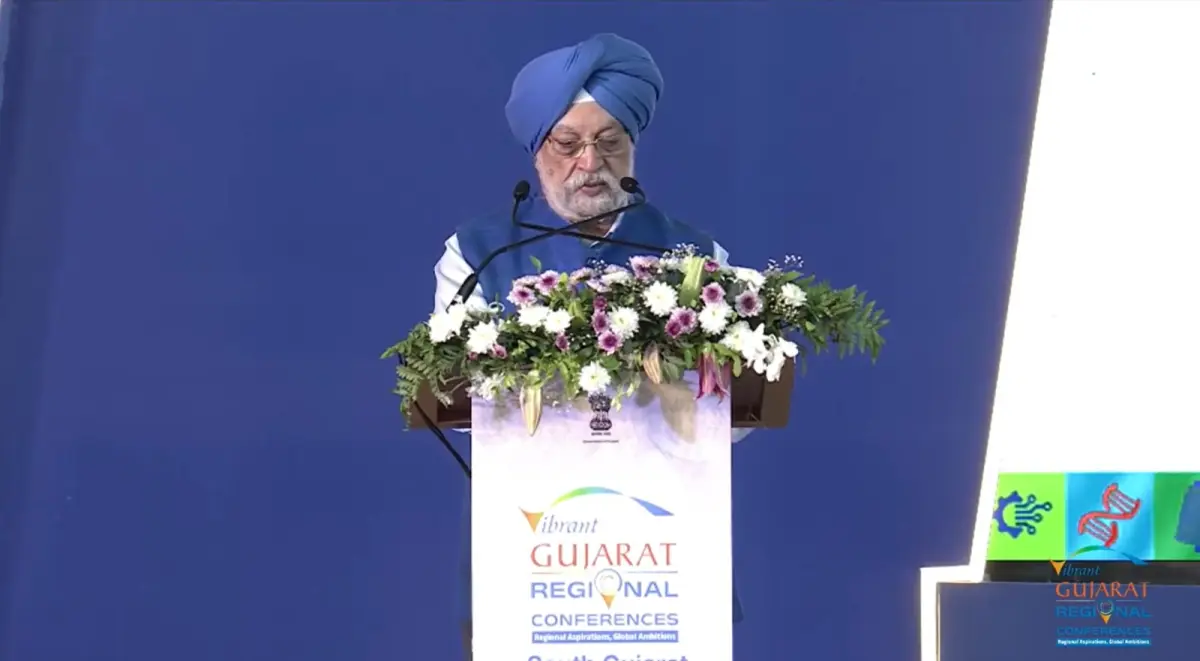

Ethanol Improves Acceleration in Racing Cars, Says Minister Hardeep Puri
New Delhi: Union Petroleum Minister Hardeep Singh Puri on Friday defended the government's push for higher ethanol blending in petrol, citing its use in racing cars and positive effects on engine performance. He addressed concerns regarding mileage drop and financial losses faced by oil marketing companies amid global crude price fluctuations.
Key Points from Minister's Statement
Puri clarified that while higher ethanol blends may cause a slight reduction in mileage, they improve acceleration and reduce engine knocking. "It is now well established that ethanol is even used in racing cars," he said, adding that the government is proceeding cautiously after consulting stakeholders like SIAM and ARAI.
He emphasized that India’s growing market has space for multiple technologies, including electric vehicles, hybrids, CNG, and biofuel-blended petrol. The current E20 blend (20% ethanol) will only increase to E25 after thorough testing.
Financial Impact on Oil Companies
The minister acknowledged significant under-recoveries by oil companies, which stood at ₹74,781 crore for petrol, diesel, and LPG sales below cost until June 30. Total under-recoveries for April-June reached ₹1,88,871 crore due to elevated global crude prices triggered by Middle East tensions. Puri noted that prices have since moderated, but companies are still processing older, costlier stocks.
When asked about potential retail fuel price cuts, Puri described it as hypothetical, depending on sustained lower crude prices for 2-3 months.
Global Context and Benefits of Ethanol
Many countries, including the US (E10-E15), Brazil (E27+), and several European nations, have successfully adopted higher ethanol blends. Ethanol’s high octane rating (around 108 RON) provides superior anti-knock properties and cooling effects, making it ideal for high-performance engines.
India’s Ethanol Blended Petrol (EBP) programme has grown significantly, delivering substantial foreign exchange savings, farmer payments, crude oil substitution, and CO₂ emission reductions.
The government continues to promote biofuels as part of its energy security and environmental goals.
Frequently Asked Questions
Ketan
adminPassionate journalist and digital news editor committed to delivering accurate, timely, and fact-checked news.
Related Articles


Latest Articles

Trump, Tech Giants Ink Voluntary AI Pact Amid Glob...
Oct 01, 2026
Khanna Targets 'Recursive' AI with Landmark Safety...
Oct 01, 2026
Election Commission–SIR Row: INDIA Bloc Announces...
Oct 01, 2026
WHO Unveils Critical Global Guidance to Combat Hea...
Oct 01, 2026
Comments (0)
Leave a Comment
No comments yet. Be the first to comment!