

Europe Battles Extreme Heatwave in June-July 2026
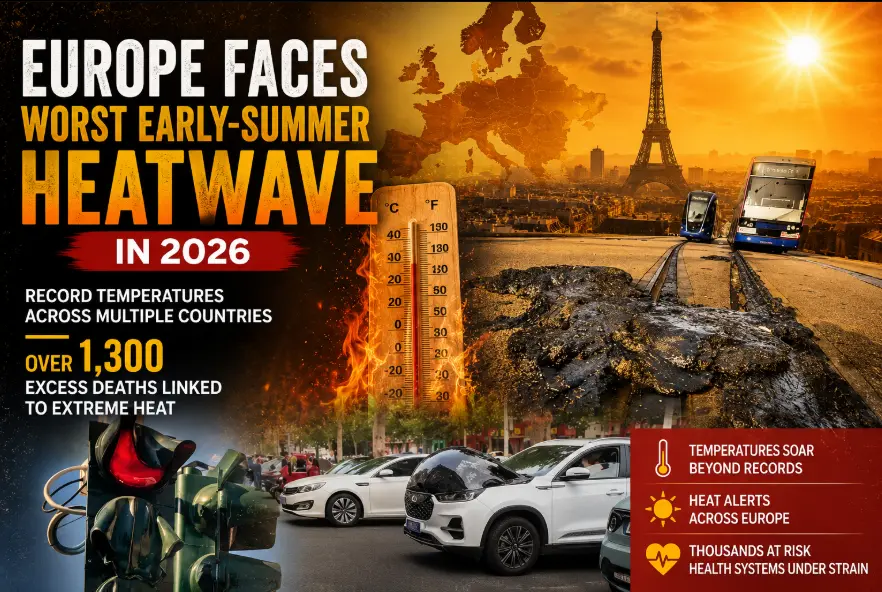
Europe is enduring one of its most intense heatwaves in history during the early summer of 2026. What started in late May has intensified dramatically, breaking numerous temperature records and causing widespread impacts on public health, infrastructure, and daily life.
Record Temperatures Across the Continent
Several countries reported unprecedented highs. France experienced its hottest June day ever with temperatures reaching 44.3°C in some areas. Germany, the Czech Republic, and Denmark also shattered all-time records, with parts of Germany hitting 41.5°C. Spain recorded its hottest January-to-June period on record.
The heat dome, fueled by climate patterns and human-caused warming, has affected millions across Western, Central, and Southern Europe, with forecasts indicating the extreme conditions shifting toward the Balkans and Eastern Europe.
Tragic Human Cost
The World Health Organization (WHO) has reported more than 1,300 excess deaths linked to the heat since June 21. France alone recorded around 1,000 excess deaths, while Spain reported over 1,000 heat-related fatalities in June. Vulnerable populations, including the elderly and children, have been most affected, with additional deaths from drowning incidents as people sought relief in unsafe waters.
Infrastructure and Daily Life Disrupted
Roads melted in the UK and Germany, while tram tracks buckled under extreme heat. Energy grids faced massive strain, and outdoor activities were severely restricted. Cities like Paris saw residents flocking to waterways despite safety warnings.
Climate Change Link
Scientists from World Weather Attribution described this event as the most severe heatwave recorded in the studied region, stating that such June heat would have been virtually impossible without human-induced climate change. This early-season extreme serves as a stark reminder of the accelerating impacts of global warming.
As the heatwave continues to shift eastward, authorities urge residents to stay hydrated, avoid direct sunlight during peak hours, and check on vulnerable neighbors.
Frequently Asked Questions
Ketan
adminPassionate journalist and digital news editor committed to delivering accurate, timely, and fact-checked news.
Related Articles




Latest Articles

Trump, Tech Giants Ink Voluntary AI Pact Amid Glob...
Oct 01, 2026
Khanna Targets 'Recursive' AI with Landmark Safety...
Oct 01, 2026
Election Commission–SIR Row: INDIA Bloc Announces...
Oct 01, 2026
WHO Unveils Critical Global Guidance to Combat Hea...
Oct 01, 2026
Comments (0)
Leave a Comment
No comments yet. Be the first to comment!