


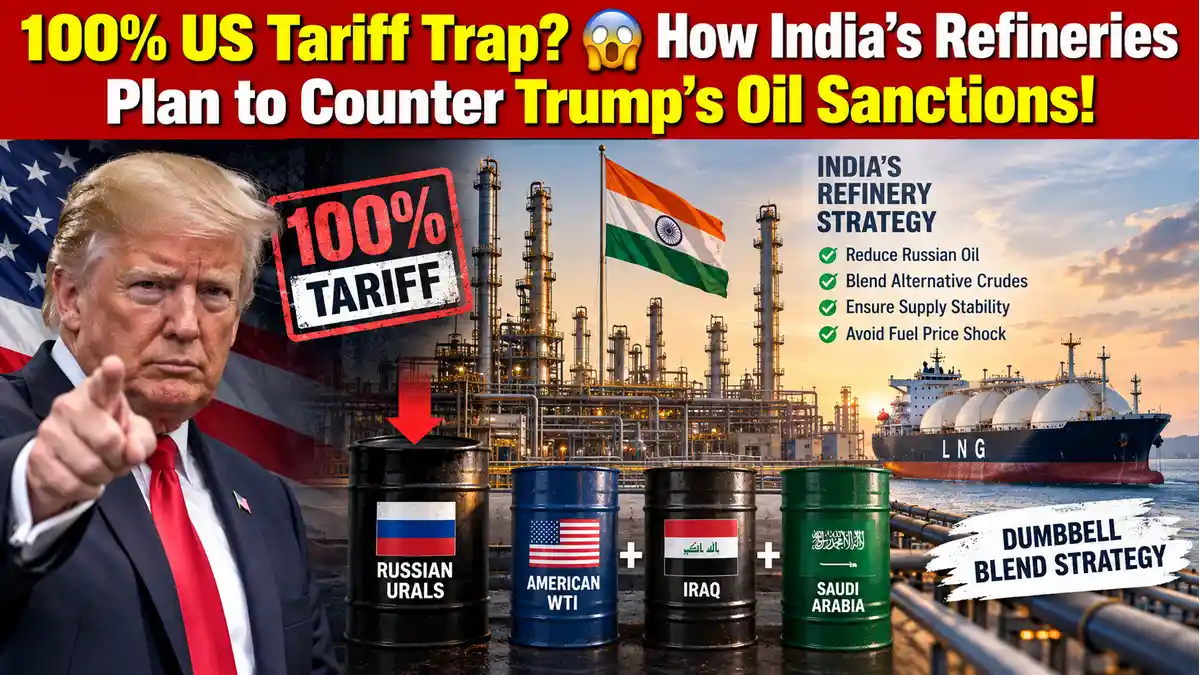
Washington / New Delhi: In a major geopolitical development with far-reaching consequences for international trade and energy markets, the United States House of Representatives passed the bipartisan Lindsey O. Graham Sanctioning Russia and Iran Act of 2026 by a 262–159 vote on Wednesday. Having previously cleared the Senate with an overwhelming 86–11 majority, the legislation now heads to President Donald Trump's desk for signature. The bill grants the Executive branch sweeping statutory authority to impose retaliatory tariffs of up to 100% on goods from the top five sovereign buyers of Russian crude oil and natural gas, directly putting India and China in the crosshairs of severe economic penalties. For comprehensive statutory texts and congressional filings, visit the United States Congress Legislative Portal.
Legislative Triggers: The 100% Tariff Provision and Shadow Fleet Crackdown
Rather than mandating an automatic, across-the-board flat tax, the Act introduces a structured secondary tariff mechanism:
- Top-Five Sovereign Buyer Rule: Section 113 authorizes the U.S. President to impose punitive import tariffs ranging from 0% to 100% on all merchandise originating from the five largest sovereign importers of Russian petroleum over the trailing 12 months. The Office of the U.S. Trade Representative (USTR) is mandated to review and recalibrate this importer index every 180 days.
- Targeting Maritime Logistics and Shadow Fleets: The legislation codifies secondary sanctions against unflagged or flagged commercial maritime logistics firms, cargo underwriters, and shipping vessels operating within Russia's crude oil 'shadow fleet', while extending statutory provisions under the Iran Sanctions Act for an additional five years.
- Presidential National Interest Waiver: The bill maintains an executive waiver allowing the White House to adjust, reduce, or suspend tariffs if a target nation demonstrates measurable volumetric reductions in Russian imports or if enforcement severely harms U.S. strategic national security interests.
India's Energy Security Stakes and the MEA's Sovereign Stance
Russian seaborne Urals crude has constituted 45% to 51% of India's overall petroleum basket over recent fiscal procurement cycles. Sourced by both state refiners (IOCL, BPCL, HPCL) and private entities (Reliance Industries, Nayara Energy), discounted crude has acted as a critical hedge against domestic inflation and West Asian supply volatility.
Responding to the congressional vote, the Ministry of External Affairs (MEA) in New Delhi reiterated that India's energy acquisition policy remains strictly non-ideological, sovereign, and dictated by free-market economics. Indian diplomats underscored to counterparts in Washington that penalizing Indian refining operations would eliminate a major source of refined diesel and aviation turbine fuel (ATF) from global supply chains, inevitably triggering price shocks across international energy markets. Meanwhile, prominent House Democrats, led by House Foreign Affairs Committee Ranking Member Gregory Meeks, voiced opposition, arguing that unchecked executive tariff authority risks alienating critical Indo-Pacific Quad partners and fueling domestic U.S. consumer inflation.
Downstream Fallout: Over $75 Billion in Indian Exports at Risk
Should the White House activate Section 113 secondary tariffs, India's merchandise export footprint to the United States—which exceeds $75 billion annually—faces severe margin erosion:
- Pharmaceuticals and Generic Formulations: Indian manufacturers supply nearly 40% of all generic prescription medicines consumed in the U.S. Heavy import tariffs would induce immediate cost increases and supply constraints across American hospitals and healthcare networks.
- Textiles, Apparel, and Gems: Labor-intensive export clusters across Gujarat, Tamil Nadu, and Maharashtra would struggle under prohibitive tariff overheads, risking market share losses to regional competitors such as Vietnam and Bangladesh.
- Automotive Components and Engineering Assemblies: High-precision engineering components and hardware products would face direct margin contraction in North American supply chains.
As Dalal Street and currency markets evaluate potential rupee volatility, bilateral negotiators are actively pursuing structured carve-outs within the ongoing U.S.–India Trade Framework, including proposals for reciprocal imports of U.S. West Texas Intermediate (WTI) crude and liquefied natural gas (LNG) to secure statutory waiver exemptions.
Frequently Asked Questions
Ketan
adminPassionate journalist and digital news editor committed to delivering accurate, timely, and fact-checked news.
Related Articles


Latest Articles

Trump, Tech Giants Ink Voluntary AI Pact Amid Glob...
Oct 01, 2026
Khanna Targets 'Recursive' AI with Landmark Safety...
Oct 01, 2026
Election Commission–SIR Row: INDIA Bloc Announces...
Oct 01, 2026
WHO Unveils Critical Global Guidance to Combat Hea...
Oct 01, 2026
Comments (0)
Leave a Comment
No comments yet. Be the first to comment!